Challenges are mounting against efforts to slow the advance of solar and wind energy in Mexico.
Under the pretext of energy security during the COVID-19 crisis, regulator Cenace, with the help of energy ministry Sener, halted testing of new wind and solar plants, preventing them from coming online.
But Italian energy giant Enel and other firms have secured court orders that put the government on the defensive and forced some backtracking, while business groups and governors also increase pressure.
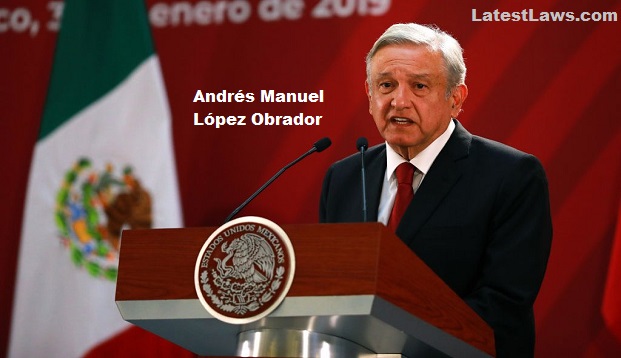
President Andrés Manuel López Obrador (AMLO), the CEO of public electricity utility CFE, Manuel Bartlett, energy minister Rocío Nahle, and Cenace director Alfonso Morcos Flores all claimed that the intermittency of solar and wind would threaten stable energy supply for hospitals that treat COVID-19 patients.
Such arguments mix with claims about collusion between the previous administration and private renewables firms, the allegedly high costs of wind and solar power, and a desire to select projects that best suit CFE.
RECORD LOW PRICES
John McNeece, a senior fellow for energy and trade at the University of California San Diego, wrote in a paper distributed at the La Jolla energy virtual conference that the government’s reasoning is faulty.
The winning bids for solar and wind power in the last clean energy auction before AMLO was elected averaged US$20.57/MWh, including clean energy certificates. According to McNeece, these were “among the lowest prices ever bid internationally.”
McNeece also wrote, “according to the CFE director of finances, a proper cost accounting must include the cost of backup power for when the sun does not shine and the wind does not blow (intermittency), the cost of integrating clean energy onto the grid; and the cost of new transmission capacity to support clean energy.”
Yet, “even taking account of CFE’s concerns, electricity from renewable energy sources can be cheaper than electricity from conventional power plants” because of rapidly advancing energy storage technology.
STORAGE STRATEGIES
Batteries can “smooth out” intermittency and extend the supply period, McNeece wrote. And they can help grid integration by absorbing excess power when supply exceeds demand and through frequency regulation to correct short-term supply and demand imbalances, and voltage regulation.
“All of this can be done at a very low price,” McNeece said. “Mexico does not yet have much experience with energy storage projects, but Mexican energy planners should consider energy storage as an effective mechanism to offset the limitations of renewable energy.”
While batteries cannot solve all intermittency issues, institutions like the US’ Western Energy Imbalance Market (EIM) could help. The EIM helps integration of solar and wind resources and to obtain complementary annual and daily production peaks.
Further measures could include improved wind and solar forecasting, often tied to five-minute dispatch resolutions, demand response programs, and increasing flexibility of conventional power plants to serve as backup.
The international renewable energy research agency (Irena) believes energy storage in emerging markets will increase by over 40% annually until 2025.
GROWING OPPOSITION
Technical arguments, however, don’t address the government’s intentions, business groups, companies and legal experts claim.
Employer association Coparmex recently wrote, “let us not be fooled: the ultimate objective of this policy is to displace the generation of private companies, which is cheaper and more efficient, using dirty energy from CFE plants that run on fuel oil.“
The result “will be more expensive energy, which will pollute more, and which will require more public resources to subsidize rates or to increase rates when there are no resources to subsidize them.”
During the weekend, industrial chamber Concamin even accused Bartlett of lying when he said private firms would not pay for transmission lines. On Sunday, CFE replied, insisting private companies mostly don’t pay for the use of transmission lines — “only in some cases.”
The company added that energy regulator CRE sometimes allows it to charge solar and wind generators “well below the costs of transmission” and “at great detriment to its own finances.”
Days earlier, the governors of Coahuila, Nuevo León, Tamaulipas, Durango, Michoacán, Jalisco, and Colima signed a manifesto “in favor of the human right to a clean environment and the development of renewable energies.” They said the freeze on testing endangers nearly US$9.12bn in renewable energy investments.
“This new agreement runs counter to international commitments, such as the Paris Agreement, signed by Mexico and 194 other countries, and also contradicts the Mexican Governors Climate Alliance, a commitment we signed just last February.”
Tamaulipas’ governor, Francisco García, told daily El Economista, the policy’s impact in the state would come “close to US$3.5bn,” with 11 wind farms in operation, four more about to be connected to the grid, and eight projects in the pipeline.
“We request the definitive cancellation of the agreement published by Cenace…and endorsed by the federal government,” García said.
Pic Courtsey: Time Magazine
Source Link