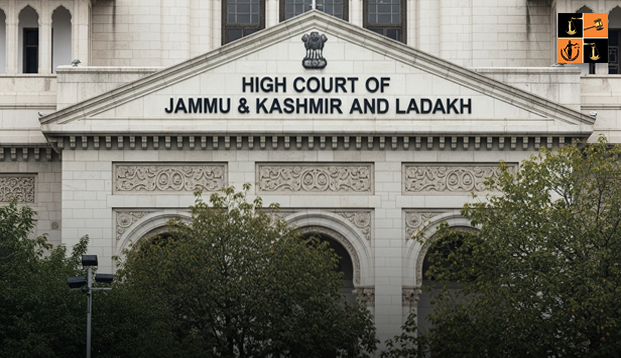
Recently, the Jammu and Kashmir High Court dealt with a sensitive plea concerning a minor survivor seeking permission for medical termination of pregnancy beyond the statutory limit prescribed under the Medical Termination of Pregnancy Act, 1971. The matter raised significant questions relating to reproductive rights, bodily autonomy, and the extent to which constitutional courts can intervene when expert medical opinion indicates serious danger to the life and health of the victim.
Brief Facts :
The case arose from an incident in which a minor girl became pregnant following alleged sexual assault, after which an FIR was registered under the relevant provisions relating to sexual offences. Medical examination revealed that the pregnancy had crossed the statutory limit ordinarily prescribed under the Medical Termination of Pregnancy Act, 1971. The Child Welfare Committee declared the girl a “Child in Need of Care and Protection” and recommended urgent legal, medical, and psychological assistance. However, the medical authorities stated that termination could not be carried out without permission from a competent court because the pregnancy had advanced beyond the permissible statutory period.
Contentions of the Petitioner :
The counsel for the Petitioner contended that continuation of the pregnancy would cause grave physical and mental trauma to the minor and would violate her rights under Article 21 of the Constitution of India. Reliance was placed upon Explanation 2 to Section 3 of the Medical Termination of Pregnancy Act, 1971, which presumes grave injury to mental health where pregnancy is alleged to have resulted from rape. It was further argued that continuation of the pregnancy would adversely affect the minor’s education, rehabilitation, dignity, emotional recovery, and future prospects. Reliance was also placed upon a recent Supreme Court judgment permitting termination of pregnancy beyond the statutory limit in appropriate circumstances.
Contentions of the Respondents :
The counsel for the Respondents relied upon the report of the Medical Board constituted pursuant to the Court’s directions. The Medical Board opined that termination at such an advanced stage carried extremely high medical and obstetric risks and could pose a serious threat to the life and health of the minor. The report highlighted risks including severe complications, intensive medical intervention, and possible long-term health consequences.
Observations of the Court :
The High Court observed that constitutional courts cannot disregard expert medical opinion, particularly in matters involving serious medical complications and risk to life. The Court emphasized that once a duly constituted Medical Board categorically opines against termination, the Court cannot substitute its own view over specialized medical assessment.
The Court observed that “The paramount consideration in such cases has to be the preservation of life and the minimization of risk to the health of the minor.”
Referring to the Medical Board’s findings, the Court noted that termination at the advanced stage of pregnancy could lead to severe medical and obstetric complications, including hysterectomy, postpartum hemorrhage, intensive care requirement, and long-term reproductive consequences.
The Court further remarked that “Sympathy alone cannot be a ground for issuance of directions by a constitutional court when the same may potentially endanger the life of the person concerned.” The Court also highlighted that judicial discretion must operate within the framework of medical science and statutory safeguards, especially where the Medical Board has warned of grave risks to the life and health of the victim.
Decision of the Court :
In view of the Medical Board’s categorical opinion regarding the serious risk posed by termination at the advanced stage of gestation, the High Court declined permission for medical termination of pregnancy. However, the Court directed the authorities to ensure complete medical care, confidentiality, counseling, rehabilitation, security, and post-delivery assistance to the minor survivor and ordered regular compliance reports regarding her welfare and medical condition.
Case Title: Minor X v. Union Territory of Jammu and Kashmir & Ors.
Case No.: WP(C) 1016/2026
Coram: Hon’ble Mr. Justice Wasim Sadiq Nargal
Advocate for the Petitioner/Appellant: Ms. Asifa Rashid, Advocate
Advocate for the Respondent: Mr. Faheem Nisar Shah, GA and Mr. Waseem Gul, GA
Read Judgment @Latestlaws.com