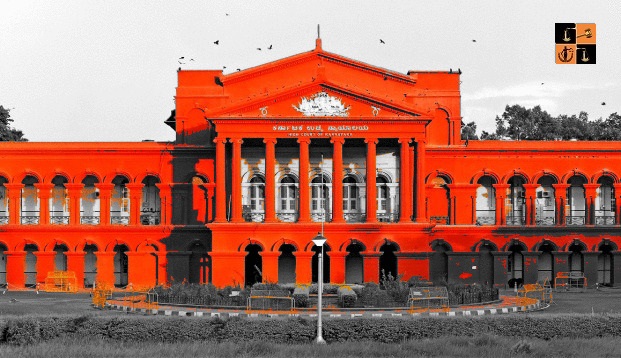
Recently, the Karnataka High Court held that mere possession of a mobile phone inside an examination hall can attract stringent penalties under the Central Board of Secondary Education’s (CBSE) Unfair Means (UFM) regulations, even if the device was not used during the examination. The Court overturned a Single Judge’s order that had granted relief to the student and directed the declaration of his results. Emphasising institutional autonomy in academic regulation, the Court observed that when an expert body consciously categorises an act as misconduct, courts cannot dilute the rule by substituting their own opinion.
Brief facts:
The case arose from an incident during a CBSE Class XII board examination where a student was found carrying a mobile phone inside the examination hall shortly after the exam had commenced. The device was seized by the invigilator, and although the student was allowed to continue the examination with a fresh answer script and later permitted to sit for the remaining papers, the matter was referred to the Board’s Unfair Means Committee for enquiry. During the enquiry, the student maintained that the phone had been carried inadvertently and had not been used during the examination. The committee’s inspection also revealed no examination-related material on the device.
Despite this, the CBSE treated the possession of the mobile phone as a Category-3 offence under its Unfair Means guidelines, which prescribed cancellation of the current as well as the next year’s examinations. The disciplinary order was subsequently challenged before a Single Judge, who set aside the penalty and directed the declaration of the student’s results. Aggrieved by this relief granted to the student, the CBSE preferred an intra-court appeal before the Division Bench.
Contentions of the Appellants:
The Appellant contended that its Examination Bye-Laws treat possession or use of prohibited materials or electronic devices during examinations as an act of unfair means. The Counsel argued that the regulatory framework had been amended to place mobile phones and similar devices in a stricter category due to the significant risk of communication, question paper leakage, and disruption of the examination process. Since the student had admittedly carried a mobile phone into the examination hall, the Board maintained that the penalty imposed was strictly in accordance with the applicable rules. The Appellant further submitted that the Single Judge erred in granting relief by relying on an earlier decision rendered before the revised guidelines introducing the stricter categorisation were brought into force.
Contentions of the Respondent:
On the other hand, the Respondent defended the Single Judge’s ruling, arguing that no evidence existed showing that the mobile phone was used for copying or communicating during the examination. The Unfair Means Committee itself had recorded that no incriminating material related to the subject was found on the device and that the student had not copied any answers using the phone. The Counsel argued that the petitioner was a meritorious student who had secured 92% in the CBSE Class X examination and had also qualified the IIT–JEE Advanced examination, demonstrating that the incident was merely inadvertent negligence. The Respondent submitted that the guidelines should be interpreted with fairness and that the benefit of doubt should be extended where no foul intent is established, as recognised in earlier judicial precedents.
Observation of the Court:
The Bench examined the CBSE Examination Bye-Laws and the revised UFM guidelines introduced in 2024, which placed possession or use of electronic devices, including mobile phones, under Category–3 offences carrying severe penalties. The Court noted that the amendment followed deliberations by the Board’s expert bodies, which concluded that treating mobile phones more leniently than other electronic devices was unreasonable because such devices pose a “high degree of risk involved in leakage of question papers and sabotage of examination.”
While the Court acknowledged that the enquiry committee had found no proof that the student used the mobile phone during the examination, it emphasised that the revised guidelines specifically treated mere possession of a mobile phone within the examination centre as misconduct. The Court further held that the Single Judge’s reliance on the earlier decision in Shuchi Mishra Vs. Joint Secretary, Department of School Education and Literacy and Ors. was misplaced because that judgment was rendered before the new categorisation of UFM cases was introduced.
The Bench emphasised the limits of judicial review in matters involving policy decisions taken by expert educational bodies. It observed that the categorisation and penalties under the UFM guidelines were consciously adopted and ratified by CBSE’s governing body, and therefore, the Court could not dilute or reinterpret them merely because the facts of a particular case appeared sympathetic. The Court remarked that “the question of reading down an aspect which has been specifically removed from Category-1 and inserted in Category-3 by an expert body is not liable to be interfered with by this Court.”
The Court held that once an expert regulatory authority has deliberately classified an act, such as possession of a mobile phone in the examination hall, as misconduct warranting strict punishment, courts should refrain from rewriting or diluting those rules in judicial review proceedings.
The decision of the Court:
In light of the foregoing discussion, the Court allowed the writ appeal filed by CBSE and set aside the Single Judge’s order, thereby restoring the penalty imposed on the student under Category 3 of the UFM guidelines.
Case Title: Central Board of Secondary Education and Anr. Vs. Donthi Saathvik Reddy
Case No.: Writ Appeal No. 1532 of 2025
Coram: Hon'ble Mr. Chief Justice Vibhu Bakhru, Hon'ble Mr. Justice C.M. Poonacha
Advocate for the Petitioner: Adv. Ananditha Reddy
Advocate for the Respondent: Adv. Rajeswara P N
Read Judgment @Latestlaws.com