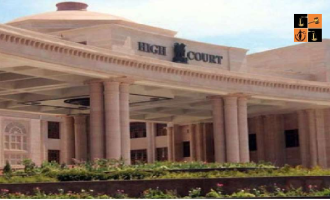
Recently, the Supreme Court held that appellate courts cannot casually interfere with compensation determined by the Motor Accident Claims Tribunal (MACT) without a thorough reappreciation of evidence, in a motor accident compensation appeal restoring enhanced compensation to the claimant. The Court emphasised that substituting findings without sound reasoning undermines the statutory objective of ensuring just relief to victims.
Brief Facts:
The case arose from a motor accident claim where the injured claimant suffered severe head injuries leading to cognitive impairment and was assessed with 63% permanent disability. The Motor Accident Claims Tribunal (MACT), after evaluating medical evidence and the impact on earning capacity, awarded compensation of ₹65.53 lakh. However, in appeal, the Madras High Court reduced the functional disability to 30% and consequently lowered the compensation to ₹35.61 lakh, without undertaking a detailed analysis of the medical and evidentiary record. Aggrieved by this substantial reduction, the claimant approached the Apex Court seeking restoration of the original assessment and compensation.
Contentions of the Appellant:
The Appellant contended that the High Court arbitrarily reduced the disability assessment and compensation without a proper evaluation of medical evidence. The Counsel argued that the MACT had conducted a detailed examination of expert testimony and records, and any interference with such findings required strong, reasoned justification. The reduction, it was submitted, defeated the purpose of granting “just compensation” under the Motor Vehicles Act.
Contentions of the Respondent:
The Respondent supported the High Court’s approach, arguing that functional disability need not strictly correspond to physical disability and that appellate courts are empowered to reassess compensation. The Counsel contended that the High Court had exercised its discretion in recalibrating the award based on its understanding of the claimant’s earning capacity.
Observation of the Court:
The Court held that appellate interference with factual findings, particularly concerning disability and loss of earning capacity, must be backed by a “thorough reappreciation of the evidence” and “cogent, clear and convincing reasons.” The Bench noted that the High Court had merely substituted its own view without undertaking such an exercise, rendering its approach legally unsustainable.
The Bench observed that “The statutory framework is designed to advance social justice… Any interference with a reasoned award of the Motor Accidents Claims Tribunal must… be supported by sound judicial reasoning.”
The Court further reiterated, while referring to the case Raj Kumar v. Ajay Kumar, that while functional disability may differ from medical disability, any deviation must be justified through evidence-based reasoning. The absence of such reasoning in the High Court’s judgment was found to be a serious flaw.
The decision of the Court:
In light of the foregoing discussion, the Apex Court allowed the appeal, setting aside the High Court’s reduction and enhancing the compensation to ₹97.73 lakh, thereby restoring and strengthening the MACT’s approach.
Case Title: R. Halle vs. Reliance General Insurance Company Limited
Case No.: Diary No(s).37186 of 2023
Coram: Hon'ble Justice Prashant Kumar Mishra, Hon'ble Justice Sandeep Metha
Advocate for the Petitioner: Sr. Adv. Haripriya Padmanaban, Adv. S. Prabu Ramasubramanian, AOR. Raghunatha Sethupathy B, Adv. Manoj Kumar A., Adv. Trisha Chandran, Adv. Vinayaga
Advocate for the Respondent: AOR. Prerna Mehta,
Read Judgment @Latestlaws.com