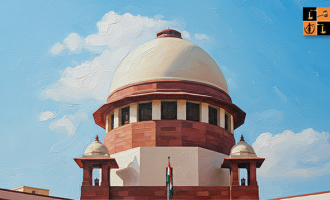
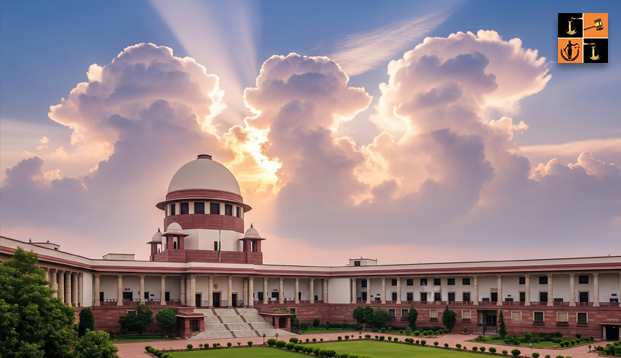
On Thursday, the Supreme Court sent a strong message on corporate accountability while cancelling the bail of a businessman, holding that personal liberty cannot be secured by diverting company funds in violation of statutory safeguards. Drawing a clear line between individual liability and corporate resources, the Court cautioned that bail conditions must be complied with in both letter and spirit, observing that corporate funds cannot be treated as a convenient fallback for personal obligations.
Brief Facts:
The case traces back to a batch of FIRs lodged against the petitioner in connection with alleged financial irregularities in the ‘Grand Venice’ project, which culminated in proceedings before the Apex Court under Article 32 of the Constitution seeking consolidation of FIRs and grant of bail. By an order issued in 2019, the Top Court granted bail subject to stringent conditions, including the deposit of ₹50 crore as a precondition. Over time, multiple applications were filed by aggrieved allottees seeking cancellation of bail, alleging non-compliance with settlement obligations and misuse of company funds. During the course of proceedings, it emerged that the ₹50 crore deposit had not been sourced from the petitioner’s personal funds but from Bhasin Infotech and Infrastructure Pvt. Ltd. (BIIPL) and related entities, raising questions under Section 185 of the Companies Act, 2013. Simultaneously, insolvency proceedings against the company and disputes with authorities like UPSIDA added layers of financial and legal complexity to the matter.
Contentions of the Petitioner:
The Petitioner contended that the ₹50 crore deposit was arranged through legitimate financial structuring, partly sourced from group entities and reflected in company accounts as a “surety deposit.” It was argued that no objection had been raised at the time of deposit, and even if there were technical violations under company law, such infractions would not invalidate the bail condition compliance. The Petitioner further maintained that the arrangement was undertaken bona fide to secure liberty and facilitate settlement with investors, and that subsequent objections, particularly by the Interim Resolution Professional (IRP), were barred by limitation principles under the Insolvency and Bankruptcy Code.
Contentions of the Respondent:
The Respondents, including the IRP and aggrieved allottees, argued that the bail condition required compliance in the petitioner’s individual capacity, which was fundamentally breached by diverting company funds. The Counsel submitted that the transaction violated Section 185 of the Companies Act, as no special resolution had been passed to authorize such a loan to a director. The Respondents further contended that the arrangement amounted to misappropriation of corporate funds, lacking any commercial justification or safeguards, and was indicative of continued financial misconduct.
Observation of the Court:
The Division Bench of Justice Sanjay Karol and Justice Nongmeikapam Kotiswar Singh observed that “a company cannot directly or indirectly give a loan to its director without passing a special resolution in a general meeting or unless the funds correlate to the principal business activities of the company. In the present case, it cannot be said that the loan to secure bail for the petitioner was connected to the company's principal business activities by any stretch of imagination. Therefore, the deposit of the amount through the purported loan taken by the petitioner from BIIPL, in the absence of any documentary approval or compliance with statutory requirements of Section 185 of the Companies Act, 2013, cannot be sustained.”
The Court observed that the bail condition requiring the deposit of ₹50 crore was imposed on the petitioner strictly in his individual capacity, and therefore demanded genuine and lawful compliance. It held that such a condition cannot be diluted by indirect arrangements or financial engineering through corporate entities. The Bench made it clear that compliance must not only be technical but also bona fide in substance, particularly where liberty is granted subject to strict conditions. Any deviation from this standard would strike at the very foundation of judicial trust underlying bail orders.
The Bench held that the source of the ₹50 crore deposit was undeniably traced back to the funds of the petitioner’s company and its related entities, which was impermissible in law. It rejected the petitioner’s attempt to justify the transaction as a “loan,” noting that such a characterization cannot override statutory requirements. The Bench emphasised that corporate funds cannot be treated as a personal reservoir for directors, especially when the transaction lacks transparency and legal sanction. The arrangement was thus viewed as a clear circumvention of both company law safeguards and bail conditions.
The Court emphasised that Section 185 of the Companies Act, 2013, places a strict embargo on companies advancing loans to directors unless backed by a special resolution in a general meeting and aligned with the company’s principal business activities. In the present case, the Court found no such compliance or justification. It categorically rejected the notion that securing bail could ever fall within the ambit of a company’s legitimate business purpose. The absence of statutory approval rendered the entire transaction legally unsustainable.
The Bench further observed that the financial arrangement lacked even the most basic elements of commercial prudence, such as provision of security, collateral, or safeguards. It noted with concern that the petitioner had not contributed any personal funds and had instead derived an interest-free benefit from the company, which made no commercial sense. This, according to the Court, demonstrated not only a lack of bona fides but also a pattern of misuse of corporate structure for personal gain. Such conduct was found to be inconsistent with lawful financial discipline.
The Court held that the petitioner cannot escape liability by arguing that no objection was raised at the time of deposit or that the issue is barred by limitation under insolvency laws. It clarified that where transactions are tainted by illegality or intended to defraud stakeholders, statutory protections cannot be invoked as a shield. The role of the Interim Resolution Professional (IRP) was upheld, with the Court recognising its authority to question such transactions irrespective of timelines. The Bench thus reinforced that illegality cannot be legitimised by passage of time or procedural silence.
The decision of the Court:
In light of the foregoing discussion, the Court cancelled the petitioner’s bail and ordered forfeiture of the deposited amount, directing that ₹5 crore be transferred to NALSA and the remaining sum be utilized in ongoing insolvency proceedings.
Case Title: Satinder Singh Bhasin Vs. Government of Nct of Delhi & Ors
Case No.: Miscellaneous Application No.239 of 2024
Coram: Hon'ble Mr. Justice Sanjay Karol, Hon'ble Mr. Justice Nongmeikapam Kotiswar Singh
Advocate for the Petitioner: Sr. Adv. Gopal Sankaranarayanan, AOR Megha Karnwal, AOR Ritika Gambhir Kohli, AOR Shashwat Tripathi , AOR Viresh B. Saharya, Adv. Saket Sikri, Adv. Ajay Pal Singh Kuller, Adv. Nikhil Kohli, Adv. Nalin Talwar, Adv. Mani Mehta, Adv. Manish Singhal, Adv. Ishan Gaur, Adv. Akshaya Ganpath, Adv. Kushank Garg, Adv. Saumya Tiwari, Adv. Ahmar Shad, Adv. Tushar Mudgil, Adv. Kritika Khurana, Adv. Tushar Srivastava, Adv. Akshat Agarwal, Adv. Rishabh Mathur, Adv. Praney Sharma, and Ors.
Advocate for the Respondent: Sr. Adv. Atmaram N.S. Nadkarni, Sr. Adv. Jitendra Mohan Sharma, AOR Chirag M. Shroff, AOR Viresh B. Saharya, AOR Garvesh Kabra, AOR Mukesh Kumar Maroria, AOR Arvind Kumar Sharma, A.S.G K.M. Nataraj Ld, Adv. Saket Sikri, Adv. Ajay Pal Singh Kuller, Adv. Nikhil Kohli, Adv. Nalin Talwar, Adv. Mani Mehta, Adv. Manish Singhal, Adv. Ishan Gaur, Adv. Akshaya Ganpath, Adv. Kushank Garg, Adv. Saumya Tiwari, Adv. Ahmar Shad, Adv. Tushar Mudgil, Adv. Kritika Khurana, Adv. Tushar Srivastava and Ors.
Read Judgment @Latestlaws.com