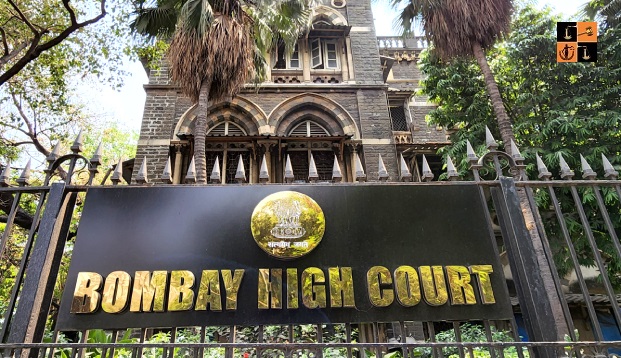
Recently, the Bombay High Court examined the legality of an arbitral tribunal’s unilateral fee revision in an ongoing arbitration and held that arbitrators cannot unilaterally determine or enforce their own remuneration. The matter concerned an arbitral tribunal that had revised its fee structure mid-proceedings and thereafter failed to continue with the arbitration. The Court observed that such conduct triggered the statutory consequences under the Arbitration and Conciliation Act, particularly regarding mandate termination and the parties’ right to seek substitution.
Brief Facts:
The dispute arose out of an agreement between the parties that had been referred to arbitration. After commencement, the arbitral tribunal proposed a revised fee structure which the parties did not agree to.
Despite the absence of consent, the tribunal continued to withhold progress in the proceedings and did not either resign or advance the arbitration further. As delays accumulated, the statutory timeline for completion of the arbitral process under the Act continued to lapse, prompting the petitioner to approach the Court seeking termination of the tribunal’s mandate and appointment of a substitute arbitrator.
Contentions of the Petitioner:
The petitioner argued that the tribunal’s conduct amounted to an impermissible unilateral imposition of fees and a failure to conduct proceedings as mandated by law. It was submitted that under Sections 29A, 14, 15 and 39 of the Arbitration Act, arbitrators cannot demand revised fees without party consent, nor can they indefinitely stall the arbitration. The petitioner contended that the tribunal’s refusal to proceed triggered statutory consequences, making it necessary for the Court to intervene and appoint a new arbitrator so that the dispute could continue without further delay.
Observations of the Court:
The Court undertook an extensive analysis of the statutory scheme governing arbitral remuneration and relied heavily on the Supreme Court’s authoritative judgment in ONGC v. Afcons Gunanusa. The Court reiterated the Apex Court’s core holding, “Arbitrators do not have the power to unilaterally issue binding and enforceable orders determining their own fees… arbitrators cannot be a judge of their own private claim against the parties regarding their remuneration.”
The Court noted that while arbitrators may propose a fee structure, it has no binding force unless accepted by the parties, as party autonomy remains central to arbitration. Quoting the Apex Court, the Court emphasised, “The Arbitral Tribunal can only exercise a lien over the delivery of the arbitral award if the payment to it remains outstanding under Section 39(1)… A party may approach the Court to review the fees demanded if it believes the fees are unreasonable under Section 39(2).”
Further, the Court stressed that arbitrators must either proceed with the arbitration or resign, they cannot hold the proceedings in abeyance while simultaneously insisting on revised fees. Such inaction, the Court noted, leads to the “time ticking inexorably under Section 29A,” ultimately resulting in the termination of mandate. Summarising the legal position, the Court observed that arbitral fees are always subject to mutual agreement between the tribunal and the parties, and any unilateral revision is merely a proposal that cannot attain binding force without express consent. If such a proposal is rejected, the tribunal may choose to resign, but it cannot withhold progress or stall the proceedings.
The Court noted that a failure to act reflects an unwillingness to proceed and consequently attracts the operation of Sections 14, 15 and 29A of the Arbitration Act. As a result, with the efflux of time and continued inaction, the mandate of the arbitral tribunal stands terminated, necessitating the appointment of a new arbitral tribunal to carry the proceedings forward.
The decision of the Court:
Finding that the arbitral tribunal had neither resigned nor proceeded with the matter, thereby letting statutory timelines lapse, the Court held that its mandate had effectively come to an end. It accordingly allowed the petition and directed Presolv360 to appoint a sole arbitrator within two weeks, with proceedings to be conducted online unless otherwise agreed.
The Court clarified that arbitral costs shall initially be shared equally and that the newly appointed arbitrator will take over the matter from its present stage. Concluding, the Court reiterated that party autonomy, statutory timelines, and the bar on unilateral fee determination remain fundamental to the arbitral process, and tribunals must function strictly within the framework of the Top Court’s directives and the Arbitration Act.
Case Title: S.S. Trading Company Limited Vs. S.N.C. Trading Company
Case No.: Arbitration Petition No. 196 of 2024
Coram: Justice Somasekhar Sundaresan
Advocate for Petitioner: Adv. Aliabbas Delhiwala, Ankita Karmokar
Advocate for Respondent: Adv. Makarand M. Kale
Read Judgment @Latestlaws.com