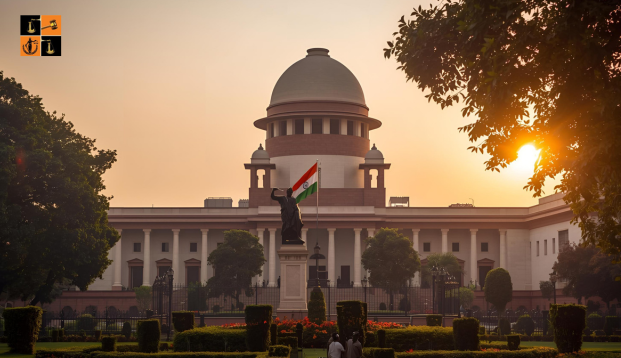
On Friday, the Supreme Court drew a firm line protecting the confidentiality between lawyers and their clients, making it clear that investigating agencies cannot summon advocates simply because they represent or advise an accused person. The Court’s directions aim to ensure that the sanctity of professional privilege remains untouched, a cornerstone of every fair legal system.
Opening with the evocative words, “The first thing we do, let’s kill all the lawyers,” the Bench explained that Shakespeare’s line was never a dig at lawyers, but rather a warning that eliminating them would pave the way for tyranny. Lawyers, the Court observed, are guardians of liberty, and any attempt to coerce them into revealing client communications strikes at the heart of justice.
The Bench comprising Chief Justice BR Gavai, Justice K Vinod Chandran and Justice NV Anjaria stated in unambiguous terms that “the investigating agency, prosecuting agency or the police cannot directly summon a lawyer appearing in a case to elicit details of the case, unless there is something the Investigating Officer has knowledge of, which falls under the exceptions in Section 132 of the Bharatiya Sakshya Adhiniyam, 2023.”
The case stemmed from an incident in Gujarat, where an advocate, after successfully securing bail for his client, was summoned by the police to know true details of the facts and circumstances of the case. The Court found such a move wholly unjustified, declaring it “illegal and against the provisions of Section 132,” and describing it as an “abject failure of the investigating agency.”
The Court examined the scope of Section 132 of the Bharatiya Sakshya Adhiniyam, 2023, which shields communications between lawyers and clients from disclosure. The provision allows exceptions only when:
- The client expressly consents;
- The communication furthers an illegal or fraudulent purpose; or
- The lawyer observes a crime or fraud committed after the commencement of the engagement.
It further clarified that this protection is not confined to courtroom matters but extends to all professional advice, including non-litigious and pre-litigation consultations.
Emphasising that the law already provides sufficient clarity, the Court refrained from framing new guidelines. Instead, it reiterated that investigating officers must strictly follow existing legal safeguards. Key directions include:
- Advocates cannot be summoned to disclose client communications unless the request squarely fits within the exceptions recognised in Section 132.
- Any such summons must carry prior written approval from a senior officer not below the rank of Superintendent of Police, with reasons recorded in writing.
- The summons and reasons recorded will remain open to judicial review under Section 528 of the Bharatiya Nagarik Suraksha Sanhita (BNSS).
- The Court reminded that “the power to summon is not the power to interfere with privileged communications between a lawyer and client, as long as the Constitutional Courts sit in this country.”
On the question of digital evidence, the Court directed that if an advocate’s laptop or mobile phone is seized, it must first be produced before a jurisdictional court. The advocate and client must be notified and allowed to be present when the device is examined, with a technical expert of their choice assisting. The confidentiality of other clients must remain inviolable, and the inspection should be confined strictly to what is legally relevant.
The Court used the occasion to reflect on the role of lawyers in society, noting that they stand as essential intermediaries between citizens and justice. “The position of trust the advocate occupies vis-à-vis his client cannot be put to test by an attempt to breach professional confidence conferred with a solemn privilege under Section 132,” the Bench observed.
It acknowledged that a few may misuse privilege, but stressed that such instances cannot justify routine intrusion into the professional independence of lawyers or the erosion of clients’ right to fair representation. The Court also rejected proposals to set up committees or judicial filters for issuing summonses, reasoning that such measures could “frustrate the cause of justice” and inadvertently harm the very clients such protections seek to serve.