Sunday, 03, May, 2026


Expand O P Jindal Global University
 

Temple control debate Intensifies, Centre says Govt not interested


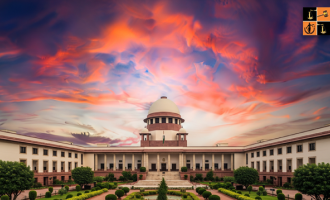
Top Court.png
22 Apr 2026
Categories: Latest News

On Tuesday, the Supreme Court witnessed a sharp constitutional exchange on the extent of state control over religious institutions, as the Union government clarified that it does not support direct governmental control over temples, even as it defended the constitutional framework allowing regulation of their secular aspects.

The matter arose during hearings before a nine-judge Constitution Bench led by Chief Justice Surya Kant, examining the broader conflict between religious freedoms and fundamental rights. The debate touched upon the interpretation of Articles 25 and 26 of the Constitution, particularly in the context of state oversight of temples through statutory bodies such as Devaswom Boards.

Across several states, temple administration is currently overseen by government-backed institutions. For instance, Kerala has multiple Devaswom Boards managing thousands of temples, while Tamil Nadu’s Hindu Religious and Charitable Endowments Department supervises tens of thousands of temples. Similar frameworks exist in Andhra Pradesh, Karnataka, and Uttarakhand.

Senior Advocate Gopal Sankaranarayanan argued that the submissions made by Solicitor General Tushar Mehta and Senior Advocate Abhishek Manu Singhvi suggested an interpretation that could justify state control over temples.

Responding to this, the Solicitor General firmly rejected the claim, stating that the Union government had no intention of exercising control over religious institutions. He clarified that his arguments were limited to explaining the constitutional scope of Article 25, particularly the provision allowing the state to regulate economic, political, and other secular activities associated with religion.

During the hearing, Justice Ahsanuddin Amanullah questioned whether the government’s stance against control applied uniformly across all religions or was limited to Hindu institutions. In reply, the Solicitor General emphasised that constitutional interpretation must remain religion-neutral and cannot be viewed through the lens of any particular faith.

Justice Dipankar Datta Bagchi (Bagchi, J.) further remarked that such an interpretation must be grounded in the perspective of citizens rather than religious identities.

The Solicitor General also highlighted the diversity across various religions, including Hinduism, Islam, Christianity, and Buddhism, to underline the need for a balanced constitutional approach.

The Court has not yet delivered a ruling on the issue. The matter remains under consideration as the Constitution Bench continues to examine the contours of religious freedom vis-à-vis state regulation of secular activities linked to religious institutions.


Download the LatestLaws.com Mobile App
 
 
Latestlaws Newsletter
 

Publish Your Article


Campus Ambassador


Media Partner


Campus Buzz


LatestLaws Guest Court Correspondent

LatestLaws Guest Court Correspondent Apply Now!
 

LatestLaws.com presents: Lexidem Offline Internship Program, 2026


LatestLaws.com presents 'Lexidem Online Internship, 2026', Apply Now!


LatestLaws Partner Event : Smt. Nirmala Devi Bam Memorial International Moot Court Competition


Latestlaws Newsletter