August 24,2017:
The 9 Judge Bench enunciated that, "Right to Privacy is an integral part of Right to Life and Personal Liberty guaranteed in Article 21 of the Constitution".
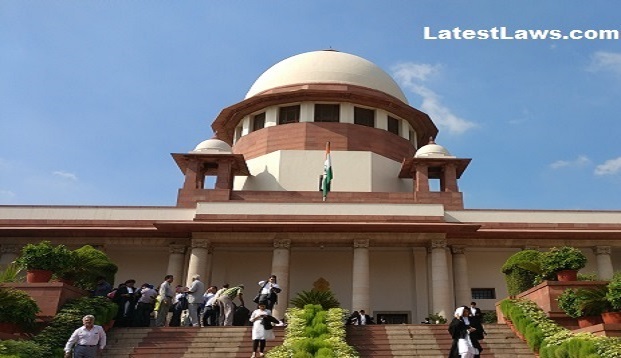
On Thursday, Supreme Court expounded that, "Privacy is a fundamental right because it is intrinsic to Right to Life".
Apex Court's judgement has comes as a blow to Aadhaar as the Centre now has to convince SC that forcing the citizens to give a sample of their fingerprints and their iris scan does not violate the privacy.
Apex Court's 9 Judge Bench comprised of CJI Khehar, Justice J Chelameswar, Justice S A Bobde, Justice R K Agrawal, Justice R F Nariman, Justice A M Sapre, Justice D Y Chandrachud, Justice Sanjay K Kaul and Justice S Abdul Nazeer.
Supreme Courts decision will touch lives of 134 crore Indians. Court was not meant to decide on fate of the Aadhaar, but just on Whether the privacy of an individual was a part of their inviolable fundamental rights.
Five-judge bench of Apex Court will test validity of the Aadhaar on touchstone of the privacy as a the fundamental right.
K K Venugopal, Attorney General , who had argued that the Right to Privacy cannot be a fundamental right, welcomed Apex Court'sdecision.
This hearing saw a number of senior advocates; including Attorney General K. K. Venugopal, Additional Solicitor General Tushar Mehta, Anand Grover, Arvind Datar, Kapil Sibal, Gopal Subramaniam, Shyam Divan, Rakesh Dwivedi & C A Sundaram advancing arguments either in favor/against the inclusion of Right to privacy.
This contentious issue emerged when Supreme Court was dealing with a batch of petitions challenging the Centre's move to make Aadhaar mandatory for availing the benefits of numerous social welfare schemes.
Initially, on 7th July, a 3-judge bench had said that all issues arising out of Aadhaar should finally be decided by a larger bench. This matter was then mentioned before CJI Khehar who set up a 5-judge constitution bench.
However, the 5-judge constitution bench on 18th July decided to set up a 9 judge bench to decide if the right to privacy can be declared a Fundamental right.
The decision to set up the 9 judge bench was taken to examine the correctness of 2 Supreme Court judgements delivered in the cases of Kharak Singh(1960) & M P Sharma(1950), decided by 6 & 8 judge benches respectively, in which it was held that this right wasn't a fundamental right.
On 2nd August, the bench had voiced concern over the possible misuse of personal info. in the public domain.
During the arguments, the bench had on 19th July observed that the right to privacy can't be an absolute right & the state may have some power to put reasonable restrictions.
The Attorney General had contended that Right to Privacy can't fall in the bracket of the Fundamental rights.
Read Text of Judgment in Free Downloadable Format here:
Supreme Court Judgment on Right to Privacy
Related News @ Latest Laws-
1.8.2017 - Right to Privacy case: Highlights of Day 6 proceedings before the Constitution bench
26.7.2017 - Right to Privacy case: Highlights of today’s proceedings before the 9-Judge Bench of SC
20.7.2017 - Right to Privacy case: Live Reporting of SC 9 Judge Bench by LatestLaws
19.7.2017 - Supreme Court expounds: Privacy is not absolute, State can regulate it by imposing reasonable restrictions
18.7.2017 - Supreme Court’s 9 Judge Bench to decide tomorrow: Whether Privacy is a Fundamental Human Right?
30.4.2017 - Facebook to SC: Users can quit if they find WhatsApp Privacy Policy unacceptable
5.4.2017 - SC refers WhatsApp privacy policy matter to Five Judge Constitution Bench