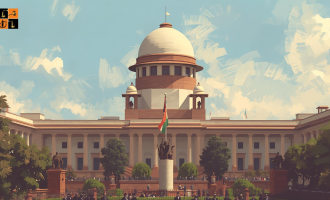
Signalling a strong push for reform, the Supreme Court has urged a return to the long-abandoned practice of holding criminal trials on a day-to-day basis. In an order, the Division Bench of Justice JB Pardiwala and Justice KV Viswanathan criticised the growing trend of prolonged trials that drag on for years, despite clear statutory provisions requiring speedy and continuous hearings.
The Bench drew attention to Section 309 of the Code of Criminal Procedure, now Section 346 of the Bharatiya Nagarik Suraksha Sanhita, 2023, which expressly requires that trials and inquiries proceed continuously until witnesses in attendance are examined. The Court noted that trial courts have drifted away from the earlier convention, followed decades ago, of hearing criminal cases on successive days, resulting in undue delays that compromise justice.
Directing all High Courts to initiate institutional measures, the Bench held, “It is necessary to understand the current social, political and administrative scenario including the way the police are functioning. All the high courts need to constitute a committee to discuss this issue very seriously for the benefit of their respective district judiciaries.” The Court also instructed Chief Justices of High Courts to issue administrative circulars ensuring strict adherence to the guidelines.
The order lays down a strict protocol for trial courts to prevent unnecessary delays. It mandates that witnesses must be examined on a day-to-day basis until their depositions are completed. Where witnesses are present in court, adjournments are not to be granted except on exceptional grounds, such as a bereavement in counsel’s family, and even then only upon a written request. Further, if adjournments are granted despite witnesses being available, trial judges are required to record specific and “special reasons” in their orders to justify the deviation.
Along with tightening adjournment rules, the guidelines empower trial courts with remedial measures to curb deliberate delays. If a delay appears to stem from collusion between the accused and their counsel, the Court may initiate proceedings to cancel bail. Likewise, if the accused fails to appear despite witnesses being present, bail can be revoked immediately. In situations where the defence counsel alone obstructs the trial, the Court is authorised to appoint an amicus curiae to ensure continuity of proceedings. Further, to discourage repeated inconvenience to witnesses, trial Courts may impose costs proportionate to the expenses they incur due to repeated summons.
By invoking the language of statutory mandate and embedding operational safeguards, the Court has sought to ensure that trial courts no longer succumb to routine adjournments or tactical stalling. The ruling is positioned as both a reminder of legislative intent and a directive for structural reform, compelling High Courts to deliberate on implementation strategies tailored to their jurisdictions.
Case Title: The Central Bureau Of Investigation Vs. Mir Usman @ Ara @ Mir Usman Ali
Case No: Special Leave to Appeal (Crl.) No(s). 969/2025
Coram: Justice J.B. Pardiwala, Justice K.V.Viswanathan
Advocate for Appellant: A.S.G. Archana Pathak Dave, AOR Mukesh Kumar Maroria, Advs. Sayooj Mohandas, V V V Pattabhi Ram, Chitrangda Rastaravara, Rahul Thanwani
Advocate for Respondent: AOR Vishal Arun Mishra, Advs. Anjan Datta, Tamal Taru Panda, Ishita Srivastava, Sumon Pathak