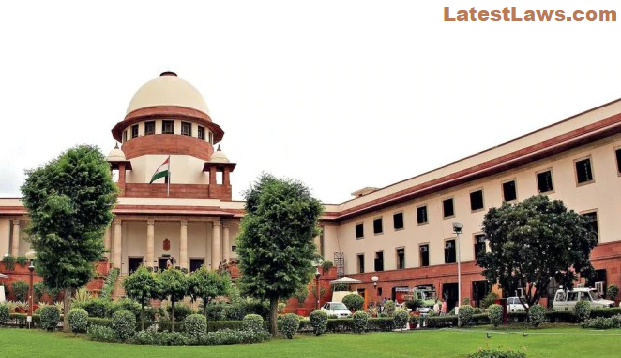
In the case titled Reepak Kansal v. Secretary General, Supreme Court of India and ors., the Supreme Court while dismissing the petition observed that, “We expect members of the noble fraternity to respect themselves first. They are an intellectual class of the society. What may be proper for others may still be improper for them, the expectations from them are to be exemplary to the entire society, then only the dignity of a noble profession and judicial system can be protected. “
The judgment was delivered by Honourable Justice Arun Mishra on 6th July 2020.
Facts of the Case
The present petition was filed by practicing advocate under Article 32 of the Constitution of India against various officers of the Registry of this Court and the Union of India. The petition prayed before to the Apex Court to issue an appropriate Writ, Order or Direction in the nature of Mandamus directing the respondents not to give preference to the cases filed by influential lawyers/ petitioners, law firms, etc.
Additionally, prayer was also made to direct the respondents to give equal treatment to the cases filed by ordinary lawyers/ petitioners and not to point out unnecessary defects, and likes.
The petitioner in the present case, Mr. Reepak Kansal filed a writ petition on 16th April 2020 and the Registry pointed out three defects in it and also, according to him another writ petition filed by him on 12th May 2020 has not been listed and he was informed that there were no defects.
Similarly, the petitioner placed before the Supreme Court various other instances of irregularities by the Registry.
The decision of the Court
The Supreme Court observed that because of COVID-19, the Registry of the Court is working with less strength, and found no justification for the petitioner to allege discrimination vis-à-vis to him and to favor any particular individual. The defects were there in all the three cases filed by the petitioner.
The Apex Court observed that, “It has become a widespread practice to blame the Registry for no good reasons. To err is human, as many petitions are filed with defects, and defects are not cured for years together. A large number of such cases were listed in the recent past before the Court for removal of defects which were pending for years. “
The Court held that “The Registry is nothing but an arm of this Court and an extension of its dignity. The bar is equally respected and responsible part of the integral system, Registry is part and parcel of the system, and the system has to work in tandem and mutual reverence. We also expect from the Registry to work efficiently and effectively. At the same time, it is expected of the lawyers also to remove the defects effectively and not to unnecessarily cast aspersions on the system.”
The Supreme Court ultimately dismissed the petition and imposed the cost of Rs.100 on the petitioner as a token to remind his responsibility towards the noble profession and that he ought not to have preferred such a petition.
Read Judgment @LatestLaws.com
Publish Your Article
Campus Ambassador
Media Partner
Campus Buzz
LatestLaws.com presents: Lexidem Offline Internship Program, 2026
LatestLaws.com presents 'Lexidem Online Internship, 2026', Apply Now!