In the judgment of the case, The Director General (Road Development) National Highways Authority of India –NHAI v. Aam Aadmi Lokmanch & Others, a 3-judge bench of the Supreme Court consisting of Justices Rohinton Fali Nariman, S. Ravindra Bhat and V. Ramasubramanian , has provided lot of clarity regarding powers of the National Green Tribunal-NGT.
According to the Apex-Court, the NGT is remedial, not restitutionary and has power in appropriate cases to issue guideline to avoid or prevent injury to environment.
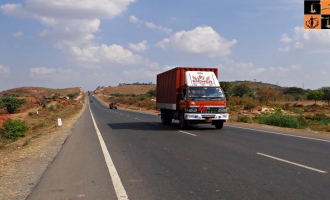
On June 6, 2013, when Ms Vishakha Wadekar, was driving her car with her young daughter Sanskruti, she had no inkling that danger lurked round the corner of the highway; over- mining at the height of 75 x 30 feet, in Gut No. 112,resulted in the destruction of a small hill by the side of the national highway. The resultant debris and a part of the hill collapsed and slid down to the road, claiming the lives of Vishakha and her daughter.
The directions made by the Pune Bench of the NGT, on an application by a registered organization –Lokmanch are the subject matter of the 4 civil appeals including the one by the NHAI before the Supreme Court.
The other appeals by special leave question the judgments and orders of the Bombay High Court, which upheld the regulations framed pursuant to the orders of the NGT. The HC negatived the challenge to those regulations in the writ petitions presented before it.
The material produced before the NGT by the State of Maharashtra through the affidavit revealed that large scale destruction of hills by individuals and concerns who had been given short term mining licenses , had occurred. There were 62 cases, and in many of them “hill-cutting” was resorted to by the developers. The State had apparently imposed fines and penalties for these illegal activities.
The NGT, in its impugned order commented on the role of respondet - Rathod, while justifying the imposition of liability on him and pointed out that it appears from the record that land Survey No. 112 is owned by the respondents No. 5 and 6 and their family members. There are hills in the said land. They illegally cut hills without permission and extract minor mineral, which reduced height of hill, circumference of the hill and or peripheral nature, surface of the hill in question. Acts of these respondent-land-owners made area of hill fragile, susceptible to danger to the ecology and support of natural soil .In such a case, mere recovery of additional royalty would not be a proper remedial measure. At many places, the hill cutting is noticed prior to and after the pathetic incident and now inquiry has been undertaken by the concerned revenue officials.
Thereafter, the NGT has issued directions based on its reasoning that the regulation of some activities, especially involving anything affecting hills has to be strictly regulated. The cutting of hill by the respondents 5 and 6-the land-owners, created destruction to render a part of land useless, including development thereof for plantation of trees.
It goes without saying that the destruction of hill could not have occurred without connivance or at least purposeful act or omission by the respondent –NHAI. There is no significant material to show that the NHAI has taken reasonable steps to avoid the untoward incident. The incident of raining in which Mrs Wadekar and her daughter had flown away is said to have occurred on July10, 2013. Obviously, the NHAI remained silent for about two years, inspite of knowledge that the work of hill-cutting was going on.
After considering the probability and circumstances on record the NGT has held that there has been degradation of environment to large extent due to hill-cutting at Katraj near Pune. It further held that hill-cutting occurred due to illegal act of respondent-land-owners and with due to act of omission of the NHAI. They are liable to pay compensation to the Legal Representatives of the victims of the incident in question. They are also liable to pay restitution charges and penalty for causing damage to the environment, in order to avoid such incident in future.
The SC has pointed out that the terms of the agreement, which NHAI entered into with the concessionaire clearly contemplated the safety of highway users and an elaborate highway monitoring mechanism. The agreement also required any unusual occurrences to be reported.
Having regard to the duty imposed on the NHAI by virtue of sections 4 and5 of the Highways Act, read with section 16 of the NHAI Act, there can be no manner of doubt that the NHAI was responsible for the maintenance of the highways.
Turning next to the question of correctness of the general directions contained in para 17(e) of the NGT’s order, this Court has no manner of doubt that such directions were improper and not justified in the facts of the case. Based on limited inputs, by way of SDM’s report and a report commissioned about the nature of the incident, the NGT concluded without any rationale, scientific or technical evidence or experts’ opinion, that development and construction should not be carried out within 100 feet of a “lowest slope i.e. incline of any hill within its territorial limits, as well as hill-tops”. The due procedure was wholly overlooked by the NGT in this case. As a result ,the SC has held that the NGT’s directions in para 17(e) of its order are improper and procedurally indefensible and set aside these directions.
In this case, the State Govt. has not shown any material or file containing the reasons behind its directive of November 14, 2017. It is not in dispute that the direction was consequential to, and solely based on the directions of the NGT in para 17 (e) of its order. As the SC has noticed earlier those directions were not based on any scientific evidence or report of any technical expert. Furthermore, even the impugned notification does not specify what constitutes “hills”, and how they can be applied in towns and communities set in undulating areas and hilly terrain. This is not only vague, but makes the directions arbitrary as they can be applied at will by the concerned authorities. These directions amount to a blanket change of all regional and development plans.
Complete absence of reasons as to why these directions have been issued without any expert input makes it an arbitrary exercise. These also underline the lack of any application of mind on the part of the State, while issuing them.
The SC held the impugned Bombay High Court judgment unsustainable and set aside that. consequently the directions in the notification issued on November 14, 2017 under section 154 of the MRTP Act have been also quashed.
Read Judgment @LatestLaws.com: