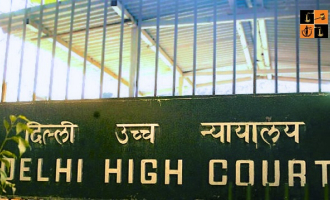
Reminding all stakeholders that the public must not be made to run from one hospital to another for different Coronavirus tests when the number of infections has already exceeded 1.16 lakh in Delhi, on Thursday, the High Court of Delhi ordered Indian Council of Medical Research (ICMR) & healthcare accreditation body National Accreditation Board for Testing & Calibration Laboratories (NABL) to fast-track the process of granting approvals to private labs & hospitals to conduct rapid antigen & RT-PCR tests.
“Hospitals & labs cannot wait for one month. After all the public is also waiting & it doesn’t help if they have to run from pillar to post. Shorten the timeline for accreditation, make sure NADL doesn’t drag its feet,” a bench of Justices Hima Kohli & Subramonium Prasad remarked while hearing a petition on ramping up testing facilities in the city.
“Considering the fact that as on July 15, there are a total of 1,16,993 COVID cases in Delhi, of which 17,807 are active, in our opinion the window of one month given by ICMR for applicants to complete the procedural formalities is too long,” the bench noted, while saying that NABL must “hasten the inspection” so that applicants can complete the formalities required by ICMR at the earliest.
The HC’s direction came after ICMR said it has been granting approvals to private hospitals & labs to conduct the rapid antigen & RT-PCR tests, where it gives them one month’s time to apply for the same after getting accreditation by NABL.
During the hearing, the Court also granted time till July 27 to National Centre of Disease Control (NCDC) to place before it its preliminary report of the “sero survey” carried out in Delhi to assess prevalence of COVID-19 infection at the community level.
It had earlier sought to know from these agencies how many labs & private hospitals in Delhi had been allowed to conduct rapid antigen & RT-PCR tests, as well as the status of the sero survey carried out in the city.
The news agency had reported that in an affidavit before the HC, while seeking a minimum of one week to make its findings public, NCDC had said the study was done “to assess the prevalence of infection at the community level & is primarily used for evidence-based public health response.”
Alleging that the exercise had to be done methodically & was a “time consuming” process, NCDC argued that imposing timelines for declaration of result for these studies “will lead to a compromise in the quality of the analysis & can have a detrimental impact on the evidence-based results.”
During the hearing conducted via videoconferencing, the HC was informed by the Govt. of Delhi counsel, Satyakam, that from June 18 to July 15, a total of 2,81,555 rapid antigen detection tests had been carried out, of which 19,480 had tested positive for COVID-19. Of the remaining 2,62,075 who tested negative, there were 1,365 who were still showing symptoms & were subjected to RT-PCR tests, where 243 were found to be COVID positive.
The bench then sought to know why there was such a variation in the figures of testing done through RT-PCR & RAT method.
Satyakam explained that as per ICMR norms, once a person was tested through RAT mode & was found to be positive, he/she was taken to be a COVID-19 patient & no further follow up test through RT-PCR was required to be conducted. It was only in cases where a patient was found symptomatic but his results were negative in the RAT test, were they required to undergo the RT-PCR gold standard test.
Source Link