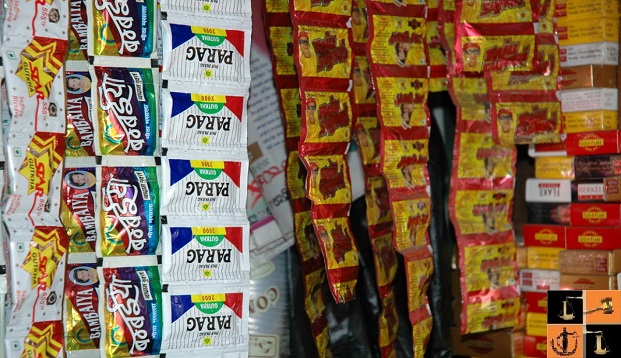
A writ has been filed in the Allahabad High Court praying for squashing the state’s order permitting production, distribution and sale of paan masala as it ‘sans any public interest’ given that spitting in public spaces could speed the spread of COVID-19.
On April 1, the Union health ministry had asked all states to prohibit the use and spitting of smokeless tobacco in public places to prevent the spread of coronavirus. In a letter issued to the chief secretaries of all states and Union territories the ministry had said,
“Chewing smokeless tobacco products, paan masala and areca nut (supari) increases the production of saliva followed by a very strong urge to spit. Spitting in public places could enhance the spread of the COVID-19 virus”.
Uttar Pradesh had, however, issued the suggested ban on March 25 itself, citing ‘public health’ as a reason. However, on May 6, the state’s Commissioner, Food Safety and Drug Administration announced the immediate removal of the ban on paan masala, though the ban on tobacco and nicotine laced products was to remain.
The writ, filed by senior journalist Sanjay Sharma, draws attention to the fact that the state had issued its order to ban paan masala when there were just 42 COVID-19 positive cases and lifted the ban when cases were on the rise.
The writ terms the withdrawal of the March 25 order as “absolutely illegal and unwarranted, because it neither discloses the reasoning, nor the intent, nor the logic behind the revocation of the earlier order which was indeed issued in public interest and the same also contained reasons…it is not clear as to how the Commissioner, Food Safety and Drug Administration reached a conclusion that the paan masala would no more cause contamination, or whether the pan masala now become edible and need not to be spitted out. The situation is certainly scary…”
The paan masala market in India was worth Rs 42,180 crore in 2019. UP is a leader in its consumption followed by Bihar, Maharashtra, Madhya Pradesh, Odisha, Jharkhand and Delhi. It is a high revenue earner with a 28 per cent GST and a 60% cess levied on it. Varieties which contain gutka attract 204% cess. The state has been asking for levying of cess on paan masala at the production stage to prevent tax evasion which takes place as it is available in small sachets bought mostly in cash which makes tracking of final supplies difficult.
In response to the PIL, DS group, makers of Rajnigandha one of the most popular paan masala brands, has pointed out that it is ‘aware if its responsibilities in the grim moment’ and has contributed Rs 10 crores to the PM CARES fund and a further Rs 10 crore to ‘aid and assist’ such organisations which are fighting the pandemic.
On the company website is a listing of the ingredients that go into making, what it dubs ‘a premium offering’. This list includes cardamom seeds, sandalwood oil, catechu, cloves and areca nut. The last is the ingredient specifically mentioned in the central health ministry’s aforementioned letter of April 1.
The petition is listed for hearing on July 8.
Source Link
Publish Your Article
Campus Ambassador
Media Partner
Campus Buzz
LatestLaws.com presents: Lexidem Offline Internship Program, 2026
LatestLaws.com presents 'Lexidem Online Internship, 2026', Apply Now!