Thursday, 23, Apr, 2026


Expand O P Jindal Global University
 

"Concept of Dearness Allowance does not permit Double Benefit”: High Court rejects woman’s claim for DA on Regular Pension


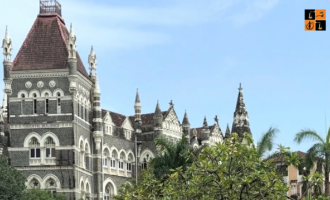
Madras High Court.jpg
16 Mar 2026
Categories: Latest News

In a significant ruling touching upon pension entitlements and the limits of Dearness Allowance claims, the Madras High Court stepped in to examine whether a pensioner employed on compassionate grounds could claim additional Dearness Allowance on her pension despite already receiving similar benefits elsewhere. The dispute raised a broader question about the principle governing pension payments and inflation-linked allowances, specifically, whether a single individual could legally draw multiple Dearness Allowances tied to different sources of income.

The controversy began when a widow, who had been appointed in the transport corporation on compassionate grounds following her husband’s death, approached the Court challenging an administrative order denying additional Dearness Allowance on her regular pension. Counsel for the petitioner argued that although she had been receiving both family pension and regular pension after retiring as a Selection Grade Assistant in 2001, Dearness Allowance had not been paid on her regular pension since her superannuation.

The corporation, however, strongly disputed this claim, asserting that the petitioner had opted for commutation of pension and had been receiving the remaining pension amount along with Dearness Allowance since July 2001. Records of pension payments were also placed before the Court to demonstrate that Dearness Allowance had in fact been disbursed.

Examining the matter, the Court referred to Rule 20A of the Tamil Nadu State Transport Corporation Employees’ Provident Fund and judicial precedents from the Supreme Court. The Court emphasised that the underlying principle behind the rule was straightforward: a single person cannot receive two Dearness Allowances simultaneously. In a pointed observation, the Court stated, “the principle behind the above Rule is that for a single person, there cannot be two Dearness Allowances. The very concept of Dearness Allowance is based upon the effect of inflation upon an individual employee.” 

The Court also noted that the petitioner had approached the Court under a misconception of facts, particularly by overlooking the commutation component of her pension and the payment records produced by the corporation. Finding no illegality in the administrative order, the Court concluded that there was no ground to interfere and consequently dismissed the writ petition.

 

Case Title: Tmt.P.Vanajakshi Vs. The Metropolitan Transport Corporation and Anr

Case No.: WP No. 36589 of 2015

Coram: Hon’ble Mr.Justice C.Kumarappan

Advocate for the Petitioner:  Adv. G.Vijay Priyan, Adv. R.Krishnaswamy,

Advocate for the Respondent: Adv. C. Gauthamaraj, Adv. C.S.K. Sathish

Read Judgment @Latestlaws.com



Download the LatestLaws.com Mobile App
 
 
Latestlaws Newsletter
 

Publish Your Article


Campus Ambassador


Media Partner


Campus Buzz


LatestLaws Guest Court Correspondent

LatestLaws Guest Court Correspondent Apply Now!

 

LatestLaws.com presents: Lexidem Offline Internship Program, 2026


LatestLaws.com presents 'Lexidem Online Internship, 2026', Apply Now!


LatestLaws Partner Event : IDRC


LatestLaws Partner Event : IJJ


Latestlaws Newsletter