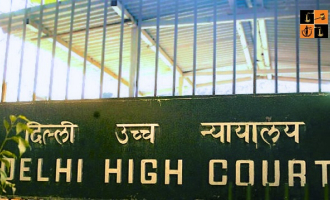
31.October,2015: In a grand function organised today at Plenary Hall of Vigyan Bhawan, New Delhi High Court of Delhi celebrated its 50th Anniversary.
The Chief Guest at the function was President of India Sh. Pranab Mukherjee. It was presided by Chief Justice of India Justice H.L. Dattu. Lt. Governor of Delhi Sh. Najeeb Jung and Chief Minister of Delhi Sh. Arvind Kejriwal were Guest of Honour.
The function was well attended by sitting and retired Judges of Supreme Court and High Court of Delhi. Also present were all the Judicial Officers of District Courts in Delhi. Members of Bar and Law Students were also present.
While welcoming the guests Chief Justice of Delhi High Court Justice G. Rohini shared the historical facts related to establishment of Delhi High Court and its journey so far. She apprised that the High Court of Delhi was established on 31st October, 1966.
Initially, the High Court of Judicature at Lahore, which was established by a Letters Patent dated 21st March, 1919, exercised jurisdiction over the then provinces of the Punjab and Delhi. This position continued till the Indian Independence Act, 1947 when the dominions of India and Pakistan were created.
The High Courts (Punjab) Order, 1947 established a new High Court for the territory of what was then called the East Punjab with effect from 15th August, 1947. The India (Adaptation of Existing Indian Laws) Order, 1947 provided that any reference in an existing Indian law to the High Court of Judicature at Lahore, be replaced by a reference to the High Court of East Punjab.
The High Court of East Punjab started functioning from Shimla in a building called "Peterhoff". This building burnt down in January, 1981.
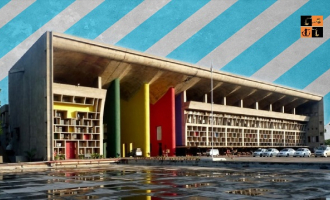
When the Secretariat of the Punjab Government shifted to Chandigarh in 1954-55, the High Court also shifted to Chandigarh. The High Court of Punjab, as it is later came to be called, exercised jurisdiction over Delhi through a Circuit Bench which dealt with the cases pertaining to the Union Territory of Delhi and the Delhi Administration.
In view of the importance of Delhi, its population and other considerations, Parliament thought it necessary to establish a new High Court of Delhi. This was achieved by enacting the Delhi High Court Act, 1966 on 5th September, 1966.
By virtue of Section 3(1) of the Delhi High Court Act, the Central Government was empowered to appoint a date by a notification in the official gazette, establishing a High Court for the Union Territory of Delhi. The appointed date was 31st October, 1966.
The High Court of Delhi initially exercised jursdiction not only over the Union Territory of Delhi, but also Himachal Pradesh. The High Court of Delhi had a Himachal Pradesh Bench at Shimla in a building called Ravenswood. The High Court of Delhi continued to exercise jurisdiction over Himachal Pradesh until the State of Himachal Pradesh Act, 1970 was enforced on 25th January, 1971.
The High Court of Delhi was established with four Judges. They were Chief Justice K.S.Hegde, Justice I.D.Dua, Justice H.R.Khanna and Justice S.K.Kapur. The sanctioned strength of Judges of this High Court increased from time to time. Presently, the sanctioned strength of Judges of the High Court of Delhi is 29 permanent Judges and 19 Additional Judges.
Speaking on the occasion, the President said that he was happy to note that the theme of the Delhi High Court's Golden Jubilee Celebrations is 'JUSTICE FOR ALL'. This phrase, to his mind, implied empowerment of the weak and equal treatment of law irrespective of one's individual identity.
The President said that judiciary, which is one of the three important pillars of our democracy, is the final interpreter of the Constitution and laws. It must help maintain social order by swiftly and effectively dealing with those on the wrong side of the law. As an upholder of the Rule of Law and enforcer of the right to liberty, the role of the Judiciary is sacrosanct. The faith and confidence people have in the Judiciary must be always maintained. For justice to have meaning for the people, it must be accessible, affordable and quick. Access to justice for the poorest of the poor would ensure 'Justice for all'. An affordable judicial system is a must for a country having many citizens at the bottom of the socio-economic pyramid. Quick delivery of justice is the third in the trinity of an effective judicial system, the other two being accessibility and affordability. Delay in administering justice is as good as denial. He emphasized that technology solutions can fasten the process of justice and make it easier for the litigants as well.
The President said the Delhi High Court has earned a reputation for its superior standards and lofty ideals. Landmark judgments passed by this Court have strengthened the legal and constitutional framework of our country. It's Bench and the Bar are known for their intellectual wisdom and legal scholarship. With each passing decade, the Delhi High Court has been served by Judges who have provided intellectual depth, vigour and vitality necessary to create a world-class institution. That this Court has contributed 25 illustrious Judges to the Supreme Court provides eloquent testimony to the high sense of duty prevailing amongst its Judiciary. He said that he was confident that Delhi High Court would always remain the sentinel of justice.
Delhi Chief Minister Sh. Arvind Kejriwal called it to be a historical occassion. He addressed that the judiciary at Delhi shall endeavour to expedite the disposal of cases and try achieve conclude all Civil and Criminal Cases in 6 months time frame. He offered full financial and administrative support to Delhi Judiciary in its expansion plans.His extempore address was welcomed by all present with thunderous applause.
CJI and President also congratulated the Delhi Judiciary for its achievements. Special mention was made of Mediation, Arbitration and Delhi State Legal Services Authority achievements.
The motto of the porgram adopted by High Court of Delhi was '' Justice for All".