Judges enjoy 'absolute protection' under the Judges (Protection) Act, 1985 holds the Gauhati High Court while rapping a writ petitioner for adjoining a Judicial Magistrate, HC and its Registry as 'Respondents' to his plea against the order passed by the said Magistrate.
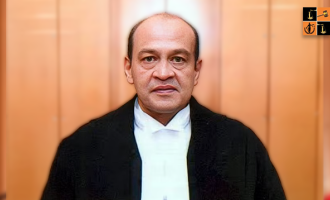
The Single Judge Bench of Chief Justice Ajai Lamba observed that impleading a Judge as a Respondent party, that too by his name, is not encouraged.
He noted:
"The protection available under the Judges (Protection) Act, 1985 is absolute and is available not only to a sitting Judge but also to an Ex-Judge in respect of the actions taken or words spoken by him while discharging his official or judicial functions,"
Recalling Section 3 of the Judges (Protection) Act, 1985 that provides that no Court shall entertain or continue any Civil or Criminal proceeding against any person who is or was a Judge for any act, thing or word committed, done or spoken by him when, or in the course of, acting or purporting to act in the discharge of his official or judicial duty or function.
In this backdrop the Court held thus:
"If in passing every wrong or illegal judicial order, the concerned Judge is sued before the higher judicial forum, it shall result in demoralising the judicial officers, particularly, at the adjudicating level, other than the public losing faith in the judiciary. In case a purported illegal order is passed on wrong facts, law always provides for filing of appeal, revision or writ petition against the ORDER, however, not by impleading the Judge to seek his accountability."
The Court further observed that there was no justification for impleading the Gauhati High Court or the Registrar General as respondents in the matter.
The Court took serious view of the nature of the pleadings and thus accordingly imposed costs of ₹10,000/- payable in favour of the Assam State Legal Services Authority.
"The writ petition is directed against a Judicial Magistrate who passed orders in his judicial capacity. The Sub-Divisional Judicial Magistrate has not only been impleaded by designation, but also by name so as to impute personal action. Likewise, the Gauhati High Court and Registrar General have been impleaded as parties."
"I fail to understand the purpose of impleading the Gauhati High Court or the Registrar General as respondents in the matter. Learned counsel for the petitioner also has not been able to justify impleading the High Court or the Registrar General. This Court cannot permit proceedings of this nature to continue by virtue of which, while challenging a judicial order, Judicial Officers are impleaded, including by name, and by designation, and also the High Court,"
Following the arguement, reliance was placed on Anowar Hussain v. Ajoy Kumar Mukherjee & Ors., AIR 1965 SC 1651, where the Supreme Court referred to another Act for protection of Judicial Officers namely, Judicial Officers' Protection Act, 1850.
The Supreme Court had held thus:
"The statute is clearly intended to grant protection to Judicial Officers against suits in respect of acts done or ordered to be done by them in discharge of their duties as such officers…If the act done or ordered to be done in the discharge of judicial duties is within his jurisdiction, the protection is absolute and no enquiry will be entertained whether the act done or ordered was erroneously, irregularly or even illegally, or was done or ordered without believing in good faith, that he had jurisdiction to do or order the act complained of."
However, the High Court was of the opinion that unlike the Act of 1850, protection under the Act of 1985 is absolute:
"A conjoint reading and understanding of the Act of 1850 (supra) and the Act of 1985 (supra) make it clear that protection available to a Judge under Judicial Officers' Protection Act, 1850 is in respect of any action taken in good faith; whereas the protection available under the Judges (Protection) Act, 1985 is absolute and is available not only to a sitting Judge but also to an Ex-Judge in respect of the actions taken or words spoken by him while discharging his official or judicial functions."
The Court also placed reliance on Savitri Devi v. District Judge, Gorakhpur & Ors., (1999) 2 SCC 577, and highlighted:
"There was no necessity for impleading the judicial officers who disposed of the matter in a civil proceeding when the writ petition was filed in the High Court; nor is there any justification for impleading them as parties in the special leave petition and describing them as contesting respondents.
We do not approve of the course adopted by the petitioner which would cause unnecessary disturbance to the functions of the judicial officers concerned. They cannot be in any way equated to the officials of the Government. It is high time that the practice of impleading judicial officers disposing of civil proceedings as parties to writ petitions under Article 226 of the Constitution of India or special leave petitions under Article 136 of the Constitution of India was stopped. We are strongly deprecating such a practice."
The judgement has been delivered by Chief Justice Ajai Lamba on 15-09-2020.