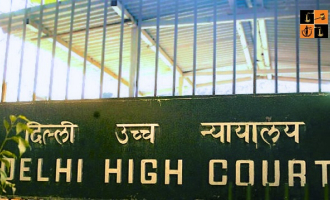
The High Court of Delhi, in the case of Prabhat Ranjan Deo v. UPSC and Ors. comprising of Justice Jyoti Singh, deciding the matter of Jurisdiction of the Court held that the tribunal would function as courts at first instance and all decisions of these tribunals will be subject to scrutiny before a Division Bench of the High Court before whose jurisdiction the matter would reside.
FACTUAL BACKGROUND OF THE CASE
Petitioner successfully qualified the Civil Services Examination in the year 1986 and was allocated Indian Police Service (‘IPS’) and assigned Haryana Cadre. On 01.10.2018, a vacancy arose in the post of Director General Police (DGP), Haryana, pursuant whereto, State of Haryana, on 25.01.2019, sent a list of 11 eligible officers, who had completed 30 years of service, to UPSC for consideration and empanelment. On 18.02.2019, UPSC empanelled three IPS officers, but the Petitioner was not amongst the three. Pursuant to empanelment by the UPSC, Respondent No. 4 herein was appointed as DGP, by State Government of Haryana.
The petitioner in the present petition assails the empanelment made by UPSC and the subsequent appointment of Respondent No. 4 as DGP, State of Haryana vide Appointment Order.
WRIT PETITION DISPOSED of BY THE SC
Appointment of Respondent No. 4 was initially challenged by the Petitioner by filing a Writ Petition, in the Supreme Court under Article 32 of the Constitution of India. Supreme Court vide order dated 25.03.2019 disposed of the writ petition with the following order:
“Having heard learned counsel for the petitioner and upon perusing the relevant material, we are not inclined to entertain the Article 32 petition. The petitioner may approach the jurisdictional High Court if so advised.
CONTENTIONS BY RESPONDENT BEFORE THE HIGH COURT OF DELHI
Respondent, at the outset, raises an objection to the maintainability of the present petition under Article 226 of the Constitution of India and submits that this Court has no jurisdiction to entertain the petition.
Respondent submitted that IPS is an All India Service, and thus Petitioner is amenable to the jurisdiction of Central Administrative Tribunal. The Court of ‘first instance’ for ‘service matters’ in light of the provisions of the Administrative Tribunals Act, 1985 is the Central Administrative Tribunal, as held by the Constitution Bench of the Supreme Court in L. Chandra Kumar v. Union of India, (1997) 3 SCC 261
CONTENTIONS BY PETITIONER BEFORE THE HIGH COURT OF DELHI
The petitioner draws the attention of this Court to the order passed by the Supreme Court. The fulcrum of the argument is that Supreme Court granted liberty to the Petitioner to approach the ‘jurisdictional High Court’ and as the office of UPSC is located within the Territorial jurisdiction of this Court, the jurisdictional High Court is Delhi High Court.
The present petition has been filed in terms of the liberty granted by the Supreme Court and thus it is not open to the Respondents to raise any objection to its maintainability.
COURT FINDINGS AND JUDGMENT
The Court held that;
- The Petitioner is a member of an All India Service, which is covered under Section 14(1)(b)(i) of the Central Administrative Act. Section 14(1)(b)(i) of the Central Administrative Act provides that, save as otherwise expressly provided in the Act, the Central Administrative Tribunal shall exercise on and from the appointed day, all the jurisdiction, power, and authority exercisable immediately before that day, by all Courts in relation to all service matters concerning a member of any All India Service.
- Section 3(q) of the Act defines ‘Service Matters’ as all matters relating to conditions of service and includes matters with respect to tenure, confirmation, seniority, promotion, etc.
As the jurisdiction of the High Courts is concerned, Supreme Court observed that the jurisdiction conferred upon the High Courts under Articles 226/227 and upon the Supreme Court under Article 32 of the Constitution of India, is a part of the inviolable basic structure of the Constitution.
- While this jurisdiction cannot be ousted, other Courts and Tribunals may perform a supplemental role in discharging the powers conferred on the High Courts and the Supreme Court. It was thereafter held that while the Tribunals would function as Courts of ‘first instance’, all decisions of these Tribunals will be subject to scrutiny before a Division Bench of the High Court within whose jurisdiction the concerned Tribunal falls.
- It would, however, be open to the Petitioner to approach the Central Administrative Tribunal for the determination of his grievances on merits. It is made clear that this Court has not expressed any opinion on the merits of the case. The arguments were heard and judgment was reserved limited only to the jurisdiction of this Court to entertain the petition.
Read Judgment @LatestLaws.com