On many occasions, it is not the law but what it appears to convey & the context in which it is framed that holds relevance. This certainly is the case with the Farmers’ Produce Trade & Commerce (Promotion & Facilitation) Bill that is set to become law with its passage in both Houses of Parliament.
This law nowhere states that the current system of minimum support price (MSP)-based procurement of foodgrains (essentially wheat & paddy) by Govt agencies would end. A plain reading of the Bill suggests that such purchases in state-regulated APMC (agricultural produce market committee) mandis will continue as before. The APMCs would not stop functioning either; nothing prevents farmers from selling their produce or traders & processors from buying in these mandis.
All the law does is provide farmers with an alternative platform to sell. This could be a factory premise/processing plant, produce collection centre, cold storage, warehouse, silo or even the farmgate. Transactions in such “trade areas” will not be charged APMC market fee or cess. These levies shall apply only in trades that take place within the boundaries of the regulated market yards or mandis set up under the respective state APMC acts.
Farmers’ perception
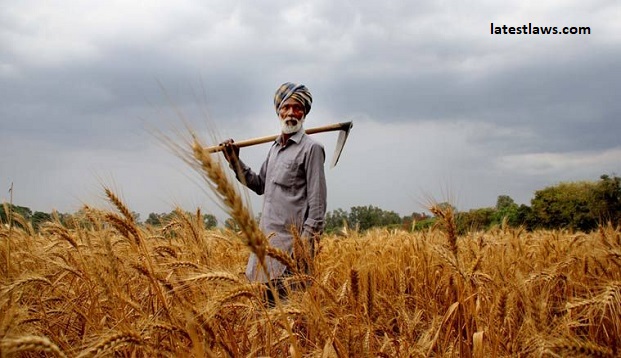
Yet, that’s not how farmers — especially in Punjab & Haryana & probably also MP and Chhattisgarh — perceive the new law. The government has sought to project the legislation as “creating an ecosystem” where farmers will enjoy the “freedom of choice” to sell to anyone, anywhere in the country. Neither farmers nor traders, processors, retailers & exporters will henceforth be forced to sell or buy on the physical premises of APMC mandis.
But the farmers, at least from the said states, seem least interested in the promised freedom. For them, the threat to the existing system, which has worked reasonably well with all its limitations, is what matters.
In 2019-20 alone, government agencies procured 201.14 lakh tonnes (lt) of wheat & 226.56 lt of paddy from Punjab & Haryana. That, at their respective MSPs of Rs 1,925 & Rs 1,835 per quintal, would have been worth Rs 80,293.21 crore. & all these purchases were done in the mandis.
The present “ecosystem” benefits not just farmers. Government agencies procure through arhatiyas or commission agents. The grain brought to the mandis is unloaded & cleaned at the platforms in front of their shops, before being auctioned, weighed, bagged & loaded onto rail rakes or trucks. For all these services, they charge a 2.5% dami or commission fee on top of the MSP. The arhatiyas also make money by financing farmers, who in turn, sell their produce through them.
For farmers, arhatiyas (many of them bigger farmers) & labourers in the mandis, the gains from “freedom” are theoretical. The losses from APMCs being rendered unviable — which can happen if trade moves outside & the government stops buying gradually — are practical & real. What if the neighbouring mandi does not earn enough market fee & turns into a BSNL vis-a-vis a Jio or Airtel?
“For corporates, the first year is chatti (loss making), the second year is khatti (breakeven) & the third year is hatti (profit making). If allowed to buy directly, they will first ensure that the mandis close down without the government doing it,” said Pritam Singh Hanjra, a farmer from Urlana Khurd village in Panipat.
What next
But the questions to ask is: Will the dismantling of APMC monopoly actually lead to their becoming redundant? Secondly, would they result in corporate agri-businesses establishing direct connection with farmers & eliminating market intermediaries?
For farmers in Punjab & Haryana, though, the struggle is for both APMCs & Govt procurement to remain. & that is worth even bartering one’s freedom.
A clue to the answer to the first question lies in Bihar. The state repealed its APMC Act in 2006, yet the Gulab Bagh mandi in Purnea district handles an estimated 5-6 lt of maize arrivals annually. That makes it almost as big as the more famous Khanna or Rajpura APMC of Punjab. Even today, the bulk of Bihar’s 30-40 lt maize production is bought through traders/aggregators doing business for multinational commodity firms & feed mills.
There are further established APMCs in specific commodities — Unjha in Gujarat for jeera, Guntur Mirchi Yard in Andhra for chilli, Lasalgaon & Narayangaon for onions & tomatoes in Maharashtra — that are unlikely to face any existential threat in the near future. The simple reason is that they are patronised equally by farmers & buyers. For them, creating parallel marketing infrastructure for produce is not easy.
As regards the second question, milk is a produce neither traded in mandis nor covered under APMC laws. Yet, most organised private dairies procure it through bulk vendors rather than directly from farmers. Aggregators & intermediaries will remain in the farm marketing landscape even if APMCs cease to exist. Even big corporates will prefer to procure through them & not deal directly with farmers.
For farmers in Punjab & Haryana, though, the struggle is for both APMCs & Govt procurement to remain. & that is worth even bartering one’s freedom.
Source Link