The Author, Chetan Nagpal is a first-year student of the University School of Law and Legal Studies, GGSIPU. He is presently Latestaws Campus Ambassador and Guest Legal Correspondent.
“Equality may be a fiction but nonetheless one must accept it as a governing principle.”
-Bhimrao Ramji Ambedkar
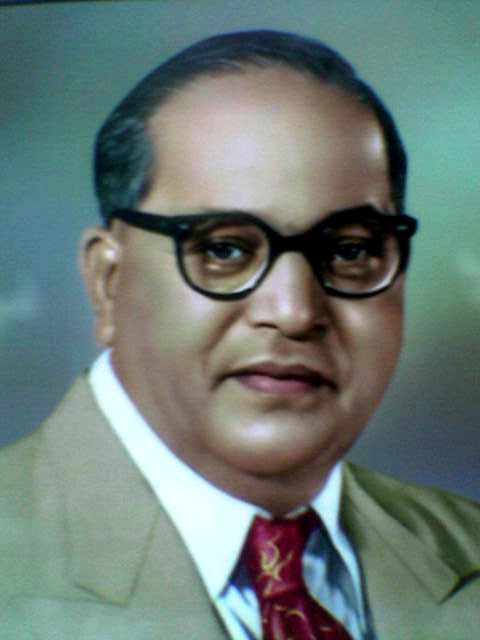
In contemporary times often have we seen many parties who rely upon the upliftment of the Scheduled Caste and Schedule Tribe in their electoral campaign. Today a range of parties including BSP have been working on the same ideal where they try to ensure the constitutional promises made to them have not reneged. The seeds for such political parties, however, were sown almost 80 years back when Dr. B.R Ambedkar, on 19th July 1942 formed India’s first political party exclusively for Scheduled Castes. It was named as Scheduled Castes Federation (SCF) by Ambedkar, who was a staunch supporter of Dalit rights. He was always an influential politician and thus it becomes important for us to understand his ideas of Social Justice.
B.R Ambedkar, a legal luminary, profound economist, a charismatic leader, and most popularly a social reformer, always had an unwavering aim to obliterate any and every sort of inequality that existed in the system. He established an India of equals, a country that provided greater opportunities for people who were historically disadvantaged.[1]
Dr. Ambedkar while addressing the Depressed Classes Conference in Bombay gave a statement that stupefied millions. He asserted that “I had a misfortune of being born with the stigma of an Untouchable. However, it is not my fault; but I will not die a Hindu, for this is in my power.”[2] He was born in the family of Mahar in Maharashtra and later adopted Buddhism as for him it was the most ‘scientific religion’. According to this learned lawyer, Hinduism was filled with various riddles, puzzles, and anomalies. He even called the Vedas a worthless set of books as they promote caste-based inequalities. Hinduism, he believed, disregarded intellect or merit.
Driven by the bigotry, not many were in favor of Ambedkar’s view and were reluctant to accept his ideas. Many including the rightwing RSS were antagonistic to his views as for the Hindu Rashtra and the Hindu discipline were to be given the utmost priority.
Thus to ensure social justice, according to him, ensuring the dignity and empowerment of the so-called ‘untouchable’ caste was indispensable. He also wanted to be liberated from the Hindu domination, as it was resulting in the promotion of the caste system that he opposed.
In order to overcome the inequalities, social justice was to be provided to the subjugated classes. This implies that social justice comes at the zenith of all the justices that the government aims to provide. It must be provided to those who were at the nadir of the social structure according to the Varna system in the Vedas that the Hindus preach.
BACKGROUND
The social injustices prevalent in society have always acted as an obstruction to the overall development of the country. Social stratification has always been a bone of contention among the lower class and the upper class. The religious sanction for the caste division is mentioned in the tenth mandala of rig Veda, with Prajapati as the creator. It was indeed appalling to see how the vedas described the origin of different classes. In the fourfold stratification, Brahmins were claimed to have originated from the mouth of Prajapati, Kshatriya from the chest, Vaishya from thighs, and Shudras from the feet. It is shocking to see such discriminatory subjects in the Vedas. Hence it became important to thus understand the predicament of the classes who used to suffer from ordeals and which led to a sense of alienation amongst the members of that particular group.
The Vedas along with several popular texts associated particular traits with each class: Brahmins were considered to be pure, wise and gentle; Kshatriyas were linked with anger, pleasure, and boldness; Vaishyas were deemed to be hard-working people living off the plow; and Shudras were associated with violence and impurity, worthy of contempt.[3] In addition to this, all the classes excluding the Shudras were considered to enjoy the dwija (twice-born) status.
With all such discriminatory contents, Ambedkar rejected the notion that the Vedas were infallible and did not consider it to be sacred. While the drafting of the constitution, the drafting committee, with Dr. Ambedkar as its head, had to not only keep in mind the interests of the majority community, rather also the minority in order to reach social cohesiveness which will lead to social justice. Initially, achieving social justice was considered a pipe dream, but having a leader like Ambedkar the goal did seem attainable.
CONSTITUENT ASSEMBLY
Most of the countries post-colonization feared what they call the second wave of social injustices. After imperialist domination, many Asian countries went through this pain of injustice which was rather unavoidable until stringent measures were taken. Interestingly, these existed even during colonial exploitation however they were not given much importance as external invasion posed a real and much bigger threat than the internal problems. Post colonization, Ambedkar, a champion of equality and social justice, left no stone unturned in his attempt to do away with the discrimination. Ambedkar in most of his speeches eloquently pointed out the meaning of justice in pursuit of what we can call an egalitarian society. He stressed upon abandoning satyagraha etc. as a means to achieve social justice rather focused on constitutional methods.
Social Justice in its literal sense means that all the benefits or concessions must be shared by all members equally. Ambedkar while debating in the constituent assembly fairly pointed to the need for not being restricted to merely a political democracy but also stretching its arms to social democracy that will benefit in the long run. According to him, political democracy and social democracy complement each other. In Mrs. Valsamma Paul vs Cochin University And Others[4] Ambedkar’s Speech in Volume 11 of the Constituent Assembly Debates was quoted by The Supreme Court as saying that, “Social democracy means a way of life which recognizes liberty, equality, and fraternity as the principles of life. These principles of liberty, equality, and fraternity are not to be treated as separate items in a trinity. They form a union of trinity in the sense that to divorce one from the other is to defeat the very purpose of democracy.”[5]
While the whole of the constituent assembly was busy in the whataboutery, Ambedkar was busy breaking the existing notions of inequalities. He further mentioned the inequality on two fronts which needed to be amended in order to ensure social justice. Social equality was an obvious component, but in addition to this Ambedkar mentioned economic equality as a means to ensure social justice in the newly independent state. Ambedkar contended that if there will be no social justice, we’d live in a paradoxical society where on the political front we will be living with the concept of ‘one man one vote one value’ whereas on the social and economic front we’d still lack the concept of equality. In order to ensure economic equality, industries in his view must be run by the government which will help in narrowing the gap between the rich and poor. If the economy is given a capitalist name, he was worried it would widen the gap between poor and rich and thus have an adverse impact on the society at large. In short, Ambedkar apart from wanting political democracy put all he had to give the economy a socialistic nature so as to achieve social justice. In the words of N.V Gadgil, “Only social ownership will bring in social justice”. Thus, the maternalistic approach became crucial.
OVERCOMING SOCIAL INJUSTICES
Affirmative Action
In hindsight, when we look at this issue of social justice, Ambedkar wanted reform in the existing inequalities against the untouchables and hence he gave out several pragmatic ways to do away with the injustices but also within a legal framework. Thus, he stressed upon the need of affirmative action to uplift the backward classes. With the need for safeguards for the interest of the backward classes for their proper integration in the society, the issue of reservation policy was raised by Dr. Ambedkar in the constituent assembly. In a democracy, everyone should be given equal opportunity, but in Indian society at that time, the very essence of equality was missing and hence he raised several provisions to change the very notion. The prime concern of Ambedkar, the reservation policy, became a bone of contention and yet again opened a Pandora's box. Not many were in his support and had conflicting interests, yet Ambedkar’s tour de force made the assembly not only accept it but set parameters for the same. Initially, the reservation policy was introduced for 10 years, however, it was said that if no substantial progress is seen in the plight of the depressed class, it would hence be increased to 10 more years.
Article 17
Part 3 of the Indian constitution talks about the Fundamental Rights provided to each citizen of India. Article 17 was one of the most innovative provisions of all. Ambedkar’s stout-hearted spirit helped him achieve his ultimate goal of abolishing the ‘untouchability’. Article 17 abolishes untouchability and restricts any form of its practice. According to Dr. Ambedkar, "The untouchability is the notion of defilement, pollution, contamination, and the ways and means of getting rid of that defilement. It is a permanent hereditary stain which nothing can cleanse.”[6]
Socialism
As discussed earlier, Ambedkar contended that in order to overcome social injustices, economic justice becomes sine qua non. Thus, applying socialist credentials to the economy becomes really essential to ensure equality. This will help in narrowing the gap between the rich and the poor which existed in society. The 42nd Amendment Act by introducing the word ‘socialist’ in the preamble has strengthened the constitutional ethos of social and economic justice. [7]
One man, one vote, one value
A gnomic definition of political equality would be, “equality of rights pertaining to the political sphere accorded to citizens on account of citizenship of a nation-state.”[8] Equality is also provided in the political sphere where everybody despite his cast, creed, etc. was given the right to vote and his vote had the same value as another person.
CONCLUSION
Dr. Ambedkar, born a ‘dalit’, had always fought for the equality of the depressed class and for their inclusion in the society. He rejected the discriminatory varna system and wanted to live in modern society free from any such discrimination and differential treatment. He was indeed an advocate of equality and dedicated his life for the betterment of downtrodden. He stood up for equality in all spheres of life including economic and political and thus fought for reservation policy for the depressed class. He, with the idea of positive liberalism and socialism, gave his all in order to uplift those who had faced discrimination all their lives. Ambedkar was seen as a messiah of the depressed classes who through his diligent skills, made the country a better place to live in.
[2]Kancha Ilaiah introduction to Dr. Ambedkar, Riddles in Hinduism 19 (2016).
[3] Abhishek Mittal, A Brief History of Caste System and Untouchability in India, The Logical Indian, September 30,2016.
[4] Mrs. Valsamma Paul v. Cochin University And Others, AIR 1996 SC 1011.
[6] State of Karnataka Vs. Appa Balu Ingale AIR 1993 SC 1126.
[7]Ahmad, S. Waseem, and M. Ashraf Ali. “SOCIAL JUSTICE AND THE CONSTITUTION OF INDIA.” The Indian Journal of Political Science, vol. 67, no. 4, 2006, pp. 767–782. JSTOR, www.jstor.org/stable/41856262. Accessed 21 May 2020.
[8] Samved Iyer, An Essay on Political Equality in India, Readers’ Blog by Times of India, April 14, 2020.