About the University
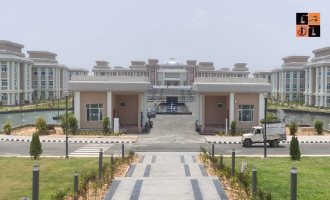
The Central University of Kerala (CUK), established under the Central Universities Act, 2009, is a premier institution committed to academic excellence, innovation, and social responsibility. Accredited with NAAC ‘A’ Grade, the University is among the early adopters of the National Education Policy 2020.
About the Department
The Department of Law, Central University of Kerala, established in 2014 is situated in Thiruvalla Campus of the University. The Department offers post graduate programmes with a double specialisation in Criminal law and Constitutional law and Doctoral programme. The Department focuses on quality legal education, research, and professional skill development.
About the Seminar
The Indian Criminal Justice System is undergoing a major transformation with the enactment of the Bharatiya Nyaya Sanhita, Bharatiya Nagarik Suraksha Sanhita, and Bharatiya Sakshya Adhiniyam, 2023. This National Seminar aims to critically examine the shift towards a victim-centric and technology-enabled justice system, addressing concerns related to forensic science, digital evidence, cybercrime, vulnerable groups, and constitutional safeguards.
Key Themes & Sub-Themes
- Victim-Centric Justice: Reimagining Rights and Remedies of Survivors
- Custodial violence and state liability
- Victim Compensation Jurisprudence in India
- Trauma-informed investigation and prosecution practices under BNSS
- Protection of witnesses and survivors in the digital age
- Victim participation in trial processes and rehabilitation frameworks
- Scientific Policing: The Rise of Forensic and Behavioural Sciences
- BSA and the future of digital and forensic evidence in India
- Value of DNA profiling under BSA
- Role of AI in crime detection, predictive policing and evidence analysis
- Admissibility and ethics of brain fingerprinting, narco-analysis and polygraph
- Legal admissibility of psychological autopsies and behavioural profiling in criminal Investigations
- Protecting Vulnerable Groups: Children, Women and Marginalised Communities.
- Enforcement of the POCSO Act and child-sensitive judicial processes
- Juvenile Justice Act: dealing with children in conflict with the law in the digital era
- Balancing gender neutrality with gender justice: Scope of sexual offences under BNS
- Women and procedural justice: fair treatment within police and court systems
- Intersectional vulnerabilities in the criminal justice system
- NDPS Act Reforms: Balancing Enforcement, Public Health and Human Rights
- Drug Decriminalisation Trends: Should India Reconsider Its Model?
- NDPS vs Human Rights
- Legal reforms and Rehabilitation for drug victims
- Substance use disorders and criminal culpability
- Cyber Crime and Data Protection
- Online Financial Theft and Digital Payment Frauds: Liability of banks, platforms and the State
- Data Protection, Consent and the Right to Privacy in the Digital Age
- Cyber Crimes Targeting Women and Children on Digital Platforms
- Intermediary Liability, Dark Web and Anonymous Digital Transactions
- Digital Evidence, Cyber Forensics and Admissibility in Criminal Trials
Original research papers are invited from academicians, professionals, researchers, and students on the seminar sub-themes.
Submission Guidelines
- Word limit: 3000–4000 words (excluding footnotes)
- Abstract: 300–400 words with minimum 5 keywords
- Citation style: Bluebook (21st Edition)
- Font: Times New Roman (12), Headings (14), Line spacing 1.5
- Co-authorship permitted up to two authors
- Plagiarism limit: Maximum 10%
- Use of AI-generated content is strictly prohibited.
Selected papers will be published as an edited book with ISBN.
How to Submit the Abstract?
Interested candidates can submit entries via the link given at the end of the post.
Registration Fee
| Foreign Academicians / Professionals |
USD 30 |
| Foreign Students |
USD 15 |
| Indian Academicians / Professionals / Others |
INR 750 |
| Indian Students |
INR 500 |
| Co-authorship Fee |
INR 750 |
PLEASE NOTE THAT REGISTRATION CAN BE DONE AFTER THE ACCEPTANCE OF THE ABSTRACT.
Call for Papers Timeline
| Submission of Abstract |
4th February 2026 |
| Communication of Abstract Acceptance |
5th February 2026 |
| Registration and Payment |
22nd February 2026 |
| Submission of Full-Length Paper |
20th February 2026 |
| Registration for Seminar Participation Only |
13th February 2026 |
Contact
Email: cuklawseminar.tcji@gmail.com
Phone: 0469-263813