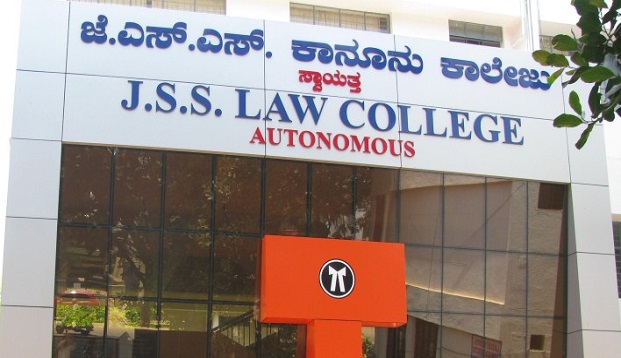
JSS Law College, Autonomous, Mysuru, India
JSS Law College, a professional autonomous college was established in the year 1982. It has been re-accredited by NAAC with ‘A’ Grade and recognized by the UGC as “College with Potential for Excellence.” JSS Law college is the first law college in the country to become autonomous. Since its inception, it is striving to come up with innovative methods of imparting legal education. It has been able to establish itself as one of the best law colleges and students from many foreign countries are studying here. The faculty, staff and students share a deep belief in and commitment to the Institution’s programmes. The teaching and learning process happens in a unique atmosphere of mutual respect, participation and interaction. A verdant, pleasant and clean campus has enhanced the disciplined atmosphere with ICT enabled Class rooms, Auditorium & Smart Rooms.
University of Fortaleza (UNIFOR University), Brazil
The University of Fortaleza (UNIFOR) was founded by industrialist Edson Queiroz in 1973 as an institution for the development of the Northeast region in Brazil. The institution aimed to provide education as a "gender of first necessity" and was recognized by the Ministry of Education for its social function of forming the Northeastern man and professional qualification. UNIFOR has built a history of excellence based on values such as respect for human beings, social responsibility, education, ethics, art, culture, and aesthetics. The institution aimed to reflect Queiroz's vision of excellence in higher education, addressing the low supply of opportunities in higher education and the lack of qualified personnel in the Northeast region. The university project aimed to expand educational availability in Fortaleza, Ceara, and contribute to the social, scientific, technological, economic, cultural, and political development of the region.
Institute of Legal and Policy Research (Virtual NGO)
The Institute of Legal and Policy Research (ILPR) established on 1st January, 2022. Since then it has emerged as a leading virtual think tank in Afghanistan. as an impartial NGO, and independent institution, the ILPR primary objective is to nurture research, refine policies, and foster vigorous public discourse concerning matters affecting public life in Afghanistan. ILPR comprises of legal professionals who recognize the profound impact the legal knowledge can have on individuals' lives. In a world where the legal system often appears complex and daunting, we identify the need for accessible, accurate, and understandable legal information. ILPR brings together Afghanistan's most distinguished intellectuals, policy experts, and individuals who deeply engage in both research and policy formulation. Drawing from diverse academic and professional fields, these minds collaboratively engage in advanced research on a spectrum of policy-relevant issues.
About the Programme
The rapid advances in Artificial Intelligence (AI) and Robotics profoundly impact society and its laws. Robots, humanoid/anthropomorphic or not, e.g., self-driving cars, have a physical presence, make autonomous decisions, and interact with all stakeholders in the society. While some AI robots are already available, e.g., Text editing and autocorrect, navigation app, their intelligence is expected to skyrocket in the next decades, and many prominent scientists predict that they will reach (and potentially surpass) human intelligence. The symbiosis with robots may lead to a civilizational change with far-reaching effects. In a future society where robots and humans are in a symbiotic relationship, philosophical, legal, and societal questions on consciousness, citizenship, rights, and legal entity of robots are raised, such as: Should robots be recognized as a legal entity? How should criminal and civil law deal with their decisions? What are the societal implications? etc. New advances in the field of artificial intelligence are creating new challenges to the existing rules and raising serious ethical questions. Due to the power and complexity of this new technology, influential people, even within the industry, are starting to call for regulation of the sector. Regulation can, indeed, be very impactful, but it also carries risks. Thus, this conference tries to solve this problem by answering whether and how artificial intelligence should be regulated, and if so, which basic principles should it follow to be successful?
Eligibility
Eligible participants include students, academics, professionals, and delegates with an interest or expertise in AI and international policy.
Agenda/ Theme
The conference focuses on legal themes such as AI and Personalhood (Afro-communitarianism), AI Privacy and data protection safeguards, AI and IPR issues (IPR for AI creations and IPR for creation of AI), AI and Human Rights, AI and Labor laws, AI and competition concerns, AI and Malpractice Claims, AI with IQ and EQ, AI and citizen rights, AI and security, AI and Taxation, AI and warfare and terrorism, AI and Liability (Vicarious Liability, Product Liability, Criminal Liability), Future of AI and International Cooperation. The Conference aims to discuss global AI regulation, fostering constructive discussion among professionals and students, offering practical suggestions for regulating AI and addressing major problems. The event will also enhance students' understanding of the complex relationship between technology and legal frameworks.
Programme Outline
Date: 21 September 2024.
Time: 4 PM to 9 PM (Indian Time)
Registration Fees: None (This event is free of charge)
Registration link is here.
Last Date of Registration is 10th September 2024.
Format: Virtual Model UN (Online)
Participants can choose the country from the country matrix. Each participant will be allowed to represent only one country. Countries will be allotted according to preference on a first come, first serve basis.
For further inquiries please contact
Sri. Ashraya S. Chakraborty
Assistant Professor of Law
JSS Law College (Autonomous)
Email: ashrayachakraborty30@gmail.com
Mobile No: +91- 9742260156
Tags :