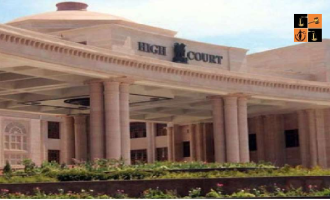
Recently, the Delhi High Court granted regular bail to a young accused in a case arising under the POCSO Act, while examining the delicate line between statutory protection of minors and prolonged pre-trial incarceration. The ruling was delivered in a bail application stemming from allegations of abduction and sexual offence, where the Court cautioned that continued custody cannot be justified when the trial itself has remained stagnant, observing that personal liberty under Article 21 cannot be rendered illusory by procedural delay.
Brief Fact:
The case traces its origin to an FIR registered at Police Station Budh Vihar on the complaint of the victim’s mother, alleging that her daughter had gone missing on 26 November 2023. During investigation, the victim was traced to Murshidabad, West Bengal, and her statement was recorded under Section 164 Cr.P.C., wherein she alleged that the accused had taken her away without consent and maintained physical relations with her, leading to pregnancy. However, the record also revealed a prior incident dated 17 October 2023, when the victim, while accompanying her mother to appear before the Child Welfare Committee (CWC), left the bus stand alone and boarded a bus independently.
Statements of co-accused persons further indicated that the victim and the accused were residing together in West Bengal in a domestic arrangement. At the relevant time, the victim was stated to be around 17 years of age, while the accused was approximately 19 years old. The accused was taken into custody on 7 February 2024 and remained incarcerated while the trial witnessed repeated adjournments due to non-completion of the victim’s testimony.
Contentions of the Petitioner:
Counsel for the petitioner argued that the factual matrix did not disclose a case of coercive exploitation but reflected a relationship between two young individuals close in age, which had evolved voluntarily. It was contended that the petitioner had been in custody for a substantial period, and his right to a speedy trial under Article 21 stood infringed due to repeated failure of the prosecution to secure the presence of the victim for examination-in-chief.
Reliance was placed on judicial precedents, including Dharmander Singh v. State and Ajay Kumar v. State, to submit that courts must assess the nature of the relationship, age proximity, and absence of aggravating factors while considering bail in such cases. The petitioner further pointed to the victim’s prior conduct of leaving on her own as indicative of independent decision-making.
Contentions of the Respondent:
The State opposed the bail application, stressing the seriousness of the charges, including those under Section 6 of the POCSO Act. The prosecution relied heavily on the victim’s statement under Section 164 Cr.P.C., asserting that she had alleged being taken away and subjected to acts without consent. It was further argued that the accused was not acting alone and that his release at this stage could potentially affect the ongoing recording of evidence. The State maintained that until the victim’s testimony was fully recorded before the Trial Court, custody of the accused was necessary to safeguard the process of justice.
Observations of the Court:
After examining the record, the Court noted that while Section 29 of the POCSO Act raises the threshold for grant of bail, it does not mandate mechanical denial. The Court carefully evaluated the surrounding circumstances, including the age proximity of the parties, the background of their association, and the absence of any material suggesting physical force or intimidation at the prima facie stage. Importantly, the Court expressed concern over the prolonged stagnation of the trial, observing that the victim’s examination remained incomplete for over a year due to repeated non-appearance.
Drawing strength from Ajay Kumar v. State, the Court reiterated that the POCSO framework is meant to shield children from abuse, not to convert every youthful relationship into a case of incarceration without trial. The Court further underscored that liberty cannot be sacrificed solely on the basis of allegations when the prosecution itself has failed to advance the trial with due diligence.
The decision of the Court:
Consequently, the Court allowed the bail application and directed the petitioner’s release on regular bail upon furnishing a bond of Rs.10,000 with one surety, subject to strict conditions, including non-contact with the victim or witnesses and regular appearance before the Trial Court. The ratio emerging from the decision is clear: even in serious statutory offences, continued detention cannot be sustained where trial delay is substantial, age proximity exists, and the factual background warrants a nuanced, liberty-oriented assessment, with such observations confined strictly to the bail stage and not influencing the merits of the trial.
Case Title: Sonu Halder vs. State NCT of Delhi
Case No.: Bail Appln. No. 4133/2025
Coram: Justice Vikas Mahajan
Advocate for Petitioner: Adv. Madhv Suri, Akanksha Singh
Advocate for Respondent: Adv. Ajay Vikram Singh (APP), Abhishek Shrivastava
Read Judgment @Latestlaws.com