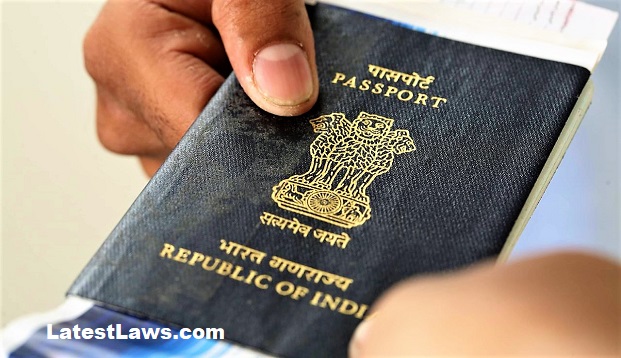
Recently, the Punjab and Haryana High Court held that a condition directing an accused to deposit their passport while granting bail cannot be imposed as a routine measure, and must instead be justified by concrete circumstances indicating a real threat to the administration of justice. The Court examined a challenge to a bail condition imposed by the Sessions Court and intervened to clarify that “the passport is not merely a travel document, but is often used, inter alia, as a proof of nationality and identity.”
Brief facts:
The case arose from an order of the Sessions Court granting anticipatory bail in a private criminal complaint, subject to the condition that the accused surrender their passports before the trial court. The complaint alleged commission of offences under Section 307, Section 323, Section 452, Section 499, Section 500, Section 506, Section 511, Section 148, and Section 149 of the Indian Penal Code, arising from an incident in which the accused were alleged to have forcibly demolished a religious structure and thereafter threatened and assaulted the complainant. When the police did not register an FIR, the complainant pursued the matter through a private complaint, culminating in the Magistrate summoning the accused only for offences under Section 323, Section 452, Section 500, Section 506, Section 511, and Section 149 of the Indian Penal Code. It was against this limited but consequential bail condition, requiring the deposit of passports, that the accused approached the High Court.
Contentions of the Petitioners:
The Petitioners argued that the impugned condition was arbitrary, disproportionate, and unsupported by any material indicating a flight risk. It was submitted that the petitioners had remained on anticipatory bail since 2019 without any allegation of misuse of liberty. Emphasis was placed on the fact that they were summoned for comparatively less serious offences, and that a passport is an essential document frequently required for identification and professional and personal obligations. The condition, it was urged, imposed undue hardship and went beyond the purpose of securing the petitioners’ presence during trial.
Contentions of the Respondents:
On the other hand, the State maintained that the proceedings originated from a private complaint and that no police investigation was underway. The complainant’s counsel supported the Sessions Court’s approach, arguing that the passport condition was intended to guard against the possibility of the accused absconding. It was further submitted that the accused retained the liberty to seek temporary release of their passports from the trial court whenever necessary, and therefore, the condition could not be characterised as excessive or onerous.
Observation of the Court:
Justice Sumeet Goel, while examining the scope of judicial discretion in imposing bail conditions, made a pointed distinction between deposit and impounding of a passport. It observed that “the judicial imposition of a requirement to ‘deposit a passport’ constitutes a regulatory measure inherently distinguishable from the statutory power of ‘impounding a passport’,” noting that impounding is governed exclusively by Section 10(3) of the Passport Act, 1967, and vests only in the Passport Authority.
Emphasising that such a condition cannot be imposed mechanically, the Court cautioned that “this discretionary power of ordering for ‘deposit of passport’ ought not to be exercised in a rote or automatic manner.” Highlighting the broader importance of a passport beyond travel, the Court stressed that “the passport is not merely a travel document, but is often used, inter alia, as a proof of nationality and identity.”
It further held that an order directing the deposit of a passport must be founded on objective material, stating that such a condition is justified only where there are “objective factors indicating a clear and imminent threat to the administration of justice,” and must not be employed “as punitive measure against an under-trial accused, who is presumed innocent until proven guilty.”
The Court also examined the enabling provisions under the Bharatiya Nagarik Suraksha Sanhita, 2023, clarifying that although courts may impose any condition while granting bail, such discretion is not unfettered and must respect the accused’s right to personal liberty under Article 21 of the Constitution.
The decision of the Court:
In light of the foregoing discussion, the Court set aside the condition directing the petitioners to deposit their passports, while directing that they obtain prior permission of the trial court before travelling abroad.
Case Title: Ram Lubhaya and Others v. State of Punjab and Another
Case Number: CRR-134-2020
Coram: Hon’ble Mr. Justice Sumeet Goel
Advocates of the Petitioner: Adv. Sandeep Arora
Advocates of the Respondent: AAG Adhiraj Singh Thind, Adv. Dheerja
Read Judgment@ Latestlaws.com