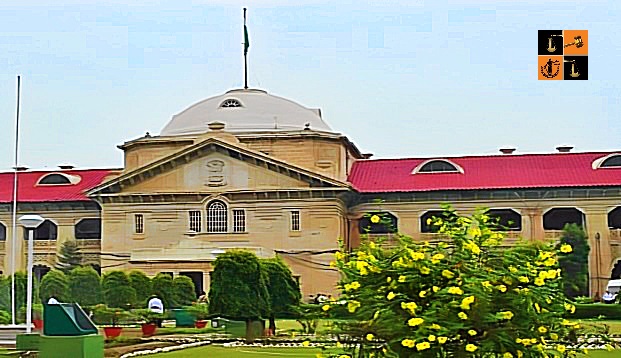
Calling out systemic disregard for judicial authority, the Allahabad High Court has sharply criticised the Uttar Pradesh government for failing to comply with court orders unless compelled by the threat of contempt. In a strongly worded order, the Court held that such conduct reflects “a totally lacklustre attitude for compliance of the directions issued by the Court,” as it dismissed the State’s delayed special appeal filed 345 days after the original judgment.
The case arose from a writ petition, wherein the single judge had directed the State to allow the respondents to continue in service and pay salary arrears within a stipulated period. Despite the clarity of the order, the State failed to comply and instead approached the Court with a special appeal, almost a year later, only after contempt proceedings were initiated by the respondents.
The Division Bench of Chief Justice Arun Bhansali and Justice Jaspreet Singh observed, “The attitude of the officers, in ignoring the orders passed by the Court till such time that notices in the contempt petition are issued, cannot be approved. On many occasions, despite issuance of notices in contempt petition, no action is taken and it is only when the directions are issued for personal presence that for the first time, the officers care for the orders passed by the Court."
The Court found the explanation for the delay wholly unconvincing. While the State claimed that administrative procedures and consultations with Standing Counsel caused the delay, the Bench observed that there was nothing on record to indicate that any real effort was made to act on the single judge’s order in a timely manner.
The Court also noted that the delay affidavit merely recited procedural formalities and invoked vague administrative hurdles, without demonstrating “sufficient cause” under Section 5 of the Limitation Act. It criticised the tendency of State departments to treat limitation periods as a formality and applications for condonation as a matter of entitlement.
“In the entire affidavit, there is no intention to indicate the sufficient cause for seeking condonation of delay, only formality of indicating dates has been fulfilled... It appears that seeking condonation of delay is treated as a matter of right, which conduct on part of the appellants cannot be appreciated/encouraged,” stated the Bench.
Further, the Court relied on the Supreme Court’s ruling in Postmaster General & Ors. v. Living Media India Ltd. & Anr., which held that government agencies are not entitled to special treatment in delay matters merely due to their bureaucratic structure. The Court also referred to State of Kerala v. Akshaya Jewellers, where condonation of a 390-day delay was declined despite similar administrative explanations.
Ultimately, the Court held that the appeal was barred by limitation and that the delay was neither bona fide nor justified. Both the delay condonation application and the special appeal were dismissed.
Case Title: State of U.P. through its Additional Chief Secretary, Department of Basic Education, Government of U.P., Lucknow and ors. Vs. Jai Singh and ors.
Case No.: Special Appeal Defective No. - 276 of 2024
Coram: Chief Justice Jaspreet Singh and Justice Arun Bhansali
Advocate for Appellant: S.C. Anand Kumar Singh
Advocate for Respondent: Advs. Girish Chandra Verma, Vinay Kumar Verma, and Raman Kumar