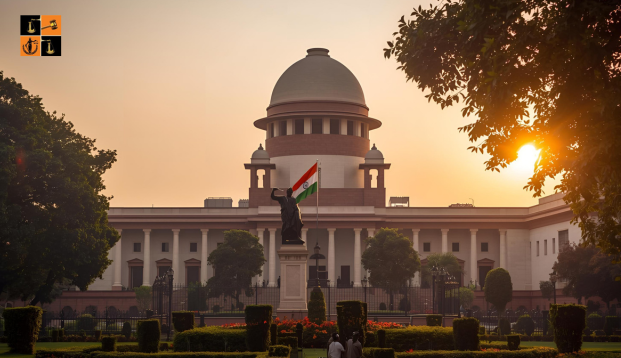
Recently, the Supreme Court set aside a dismissal from service and recovery order against an employee of a cooperative federation, holding that a disciplinary enquiry conducted without examining any witness or holding a proper oral hearing stands vitiated. The Court emphatically reiterated that unless guilt is clearly admitted, an enquiry devoid of evidentiary procedure is no enquiry in the eyes of law, observing that procedural fairness cannot be reduced to a mere formality.
Brief Facts:
The case arose from disciplinary proceedings initiated against an employee of the U.P. Cooperative Federation Limited, who was serving as the in-charge of a paddy procurement centre. He was accused of significant irregularities, including short delivery of 1093.60 quintals of paddy to a processing unit and alleged embezzlement of Rs.2,00,850 through falsified records of de-husked paddy procurement. A charge-sheet and supplementary charge-sheet were issued under the framework of the U.P. Cooperative Societies Act, 1965, the 1975 Regulations, and the 1980 Service Rules.
Following an enquiry, the charges were held proved, leading to his dismissal and a recovery order of over Rs.9.5 lakh. The employee challenged the action before the High Court, contending that the enquiry violated principles of natural justice as no oral enquiry was conducted, no witnesses were examined, and no opportunity for cross-examination was granted. The High Court, however, upheld the disciplinary action, prompting the present appeal.
Contentions of the Appellant:
The counsel for the appellant argued that the entire disciplinary proceeding was fundamentally flawed and contrary to the statutory framework, particularly Rule 84 of the 1980 Service Rules read with Regulation 85 of the 1975 Regulations. It was submitted that despite denial of charges, no oral enquiry was conducted and not a single witness was examined to substantiate the allegations. Relying on the precedent in Chamoli District Co-operative Bank Ltd. v. Raghunath Singh Rana, it was contended that absence of oral enquiry and denial of cross-examination renders the enquiry void, as it strikes at the root of natural justice.
Contentions of the Respondent:
The respondents contended that the appellant’s reply to the charges was evasive and effectively amounted to an admission, thereby dispensing with the need to examine witnesses. Placing reliance on Section 58 of the Indian Evidence Act, 1872, it was argued that admitted facts need not be proved. It was further submitted that the enquiry was based on documentary material and that adequate opportunity of hearing had been afforded, justifying the High Court’s decision.
Observations of the Court:
The Court undertook a detailed examination of the procedural safeguards governing disciplinary proceedings and firmly rejected the respondents’ stance. It held that there was no categorical admission of guilt by the appellant, clarifying that “a departmental charge-sheet is not a plaint that an evasive reply thereto may amount to an admission.” The Court underscored that in service jurisprudence, the burden of proving charges lies squarely on the employer when allegations are denied.
Interpreting Regulation 85 and established precedents, the Court reiterated that a valid enquiry mandates examination of witnesses and affording the delinquent employee an opportunity to cross-examine them. It relied on earlier rulings to reaffirm that “unless the charged employee accepts his guilt in clear terms, an enquiry on the charges drawn against him would have to be held.”
Crucially, the Court emphasized that even in cases relying on documentary evidence, those documents must be formally proved through witnesses unless admitted. It observed that “even in a case based solely on documentary evidence… a witness would have to be examined to prove those documents.” The absence of any witness examination in the present case, despite denial of charges, was held to be a fatal flaw. The Court ultimately concluded that the enquiry was not merely irregular but fundamentally defective, stating that the disciplinary process failed to meet the basic threshold of fairness and due process, thereby vitiating the entire proceedings.
The decisions of the Court:
The Court allowed the appeal, set aside the High Court’s judgment, and quashed the dismissal and recovery order. It granted liberty to the employer to conduct a de novo enquiry within six months, failing which the appellant would be entitled to reinstatement with continuity of service and arrears.
Case Title: Jai Prakash Saini Vs. Managing Director, U.P. Cooperative Federation Ltd. & Ors.
Case No.: SLP (C) No. 2900/2020
Coram: Hon'ble Mr. Justice Sanjay Karol, Hon'ble Mr. Justice Manoj Misra
Advocate for the Petitioner: Adv. Gargi Srivastava
Advocate for the Respondent: Adv. M. C. Dhingra, Adv. Gaurav Dhingra, Adv. Sunny Choudhary
Read Judgment @Latestlaws.com