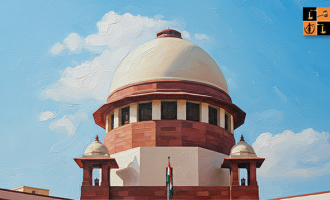
Recently, the Supreme Court held that a bank can be held liable for deficiency in service if it fails to present cheques within their validity period, but compensation must be fair, reasonable, and proportionate to the actual loss suffered. While affirming negligence on the part of the bank, the Court significantly reduced the compensation awarded, cautioning against speculative damages and emphasizing that consumer compensation cannot be based on uncertain or hypothetical loss.
Brief Facts:
The dispute arose when the respondent, a savings account holder with Canara Bank, deposited two high-value CTS cheques totaling over ₹1.06 crore, issued by Assotech Limited. Although the cheques were initially credited, they were subsequently debited and returned due to “connectivity failure” and later marked as “stale.” The respondent alleged that the bank failed to present the cheques within the prescribed validity period under the Negotiable Instruments Act, 1881, thereby depriving her of the opportunity to initiate proceedings under Section 138 of the Act. The National Consumer Disputes Redressal Commission found deficiency in service and awarded 10% of the cheque amount as compensation. Aggrieved, the bank approached the Supreme Court challenging both the finding of negligence and the quantum of compensation.
Contentions of the Petitioner:
Counsel for the appellant bank contended that there was no negligence or deficiency in service, arguing that the delay in cheque presentment was caused by a bank strike, circumstances beyond its control, thus attracting protection under Section 75A of the Negotiable Instruments Act. It was further submitted that the cheques were re-presented within a “reasonable time” as contemplated under Section 105 of the Act, and that the respondent could still pursue recovery against the drawer through other legal mechanisms. The bank also challenged the compensation as excessive and speculative, relying on Section 73 of the Indian Contract Act to argue that damages must correspond to actual, provable loss.
Contentions of the Respondent:
Counsel for the respondent countered that the bank had ample opportunity to re-present the cheques within their validity period but failed to do so without any reasonable explanation. It was argued that RBI guidelines required re-presentation within 24 hours in case of technical returns, and that the bank’s inaction resulted in the cheques becoming stale. This, in turn, extinguished the respondent’s statutory remedy under Section 138 of the Negotiable Instruments Act, especially significant given that the drawer company was undergoing insolvency. The respondent maintained that this constituted clear negligence and justified the compensation awarded by the Commission.
Observations of the Court:
The Court undertook a detailed examination of the statutory framework governing cheque presentment and consumer protection. It emphasized that while delays caused by external factors like strikes may be excused, the obligation to act promptly revives once such impediments cease. The Court found no satisfactory explanation for the bank’s failure to re-present the cheques on the available working days before expiry, observing that “a bank receiving cheques for collection acts as an agent of the customer and is under an obligation to exercise due diligence in presenting the instruments within the prescribed validity period.”
Holding the bank negligent, the Court affirmed that such failure constitutes “deficiency in service” under consumer protection law. However, it drew a sharp distinction between establishing negligence and quantifying damages. The Court noted that the respondent’s alleged loss, particularly the lost opportunity to initiate proceedings under Section 138, was inherently uncertain, observing that the outcome of such proceedings was “within the realm of imponderability.”
Thus, while upholding the finding of deficiency, the Court cautioned against inflated compensation, stressing that damages must be grounded in realistic and demonstrable loss rather than conjecture.
The decision of the Court:
The Supreme Court partly allowed the appeals, upholding the finding of deficiency in service against the bank but reducing the compensation from 10% to 6% of the cheque amount, along with interest. The Court clarified that while banks are duty-bound to act diligently in cheque processing, compensation under consumer law must be reasonable, proportionate, and not based on speculative or uncertain loss, thereby reinforcing the principle that negligence alone does not justify excessive damages.
Case Title: Canara Bank Vs. Kavita Chowdhary
Case No.: Civil Appeal No. 2587 of 2025
Coram: Hon’ble Mr. Justice Ujjal Bhuyan, Hon’ble Mr. Justice B.V. Nagarathna
Advocate for the Petitioner: AOR Brijesh Kumar Tamber, Adv. Vinay Singh Bist, Adv. Prateek Kushwaha, Adv. Arani Mukherjee, Adv. Sahas Bhasin, Adv. Yashu Rustagi
Advocate for the Respondent: AOR Ashish Pandey, Adv. Vinod Agarwal, Adv. Swantra Rai, Adv. Shubham Saxena, Adv. Ashutosh Bhardwaj, Adv. Prateek Rai, Adv. Anmol Goyal, Adv. Aishwarya Sharma
Read Judgment @Latestlaws.com