The Author, Manali Surana is a 2nd year Law student (LLB), Children Welfare Centre Law College, Mumbai University, Mahrashtra. She is currently interning with LatestLaws.com.
The new PM Fund plan seems facing several hot-button issues since its formation. The biggest mystery kept until now is the fund – A government body or a private trust? Looking at the information provided, it is called a government fund by the central government. On the other hand, the fund documents are classified as private trusts. The inconsistency has raised a bunch of questions about Narendra Modi's government's magnificent PM CARES Fund.
Prime Minister's Citizen Assistance and Relief in Emergency Situations Fund (PM CARES Fund) has been registered as a Public Charitable Trust. The trust deed of the fund was signed and registered under the Registration Act, 1908 at New Delhi with the Revenue department on 27th March 2020. The primary objective of this dedicated national fund is to deal with any kind of emergency or distress situation like the present covid-19 pandemic and provide relief to the affected population. The Prime Minister of India, 'Narendra Modi', is the Chairman of the fund, and other trustees include the Minister of Defence, 'Rajnath Singh'; Minister of Home Affairs, 'Amit Shah'; and Minister of Finance, 'Nirmala Sitharaman'. The fund consists entirely of voluntary contributions from individuals and organizations and does not get any budgetary support. Donations to PM CARES Fund qualifies for 80G benefits for 100% exemption under the Income Tax Act, 1961 and counted as Corporate Social Responsibility (CSR) expenditure under the Companies Act, 2013. As well as the fund got exemption under the FCRA and a separate account for receiving foreign donations has been opened. This enables PM CARES Fund to accept donations and contributions from individuals and organizations based in foreign countries. A person can contribute from Rupees 10/- to any limit of amount. Contributions can be made through Net banking, card payment, or by NEFT/RTGS. One can also pay online on a dedicated portal i.e., pmcares.gov.in, or draw a cheque or DD in favor of 'PM CARES Fund' and deliver it to Secretary (Funds), PMO, South Block, New Delhi, Pin-110011 along with the name, address, mobile no. and email ID of the donor.
Since the promulgation of this new plan created by the Prime Minister, it started facing instant opposition by the Congress party. The President of Indian National Congress, Sonia Gandhi questioned the decision of setting up the new fund when there was already existing Prime Minister's National Relief Fund (PMNRF) which is similar in nature and other statutory established funds like the State Disaster Response Fund (SDRF), and the National Disaster Response Fund (NDRF).
The Prime Minister's National Relief Fund (PMNRF) was established in January 1948 by Jawaharlal Nehru to support the displaced people from Pakistan during Partition. However, now, the resources of the PMNRF are utilized to provide relief to the families of those who got killed in natural calamities like cyclones, floods, earthquakes, and to the victims of the major riots or accidents. The NDRF and SDRF are statutory bodies and are governed by the provisions of the Disaster Management Act, 2005, and the audits are done by the Comptroller and Auditor General of India (CAG).
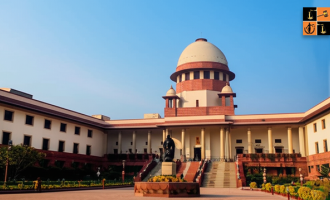
Since then, there have been several demands of transferring the money accumulated in the PM CARES Fund to PMNRF. Petitions were also filed in the Supreme Court after the government did not take note of such objections. Now, the Supreme Court has dismissed the petition seeking transfer of fund or merger of PM Cares Fund with the PMNRF. This ruling formally upholds the separate identity of the PM Cares Fund. Announcing the PM Cares Fund, PM Modi called for donations from individuals from all walks of life as well as organizations. Shortly the news was flooded with millions of donations by various celebrities including film stars, sportspersons, business personalities, and many Political/social activists, who raised motivational calls to endeavour more and more contribution.
So far, an amount of Rs. 3100 Crore has been allocated from it. However, there is no concrete data on exactly how much money has been collected as a whole. Some have made independent calculations to suggest that it had crossed the $1.4 billion mark in less than two months after its launch at the end of March. Many employees had come forward to donate a day or two of their salary to help people affected by the pandemic. This list had also included the Indian Armed Forces. Indian express publication revealed that between April and October, the Indian Navy had contributed a total of Rs 12.41 crores "in respect of officers and sailors" and Rs 4.36 crore "in respect of civilian personnel" of the Navy. The Air Force added that a total of Rs 29.18 crore was contributed from April to October "by IAF personnel to PM Cares Fund". In mid-May, the Additional Directorate General of Public Information of the Indian Army had taken to Twitter revealing that Indian Army personnel had voluntarily contributed Rs 157.71 crores as one day salary for April 2020 towards the fund aid efforts to fight COVID-19. Adani Foundation has contributed Rs 100 crore while T-series honcho Bhushan Kumar has pledged
Rs 11 Crore. Bollywood actor Akshay Kumar has given Rs 25 Crore while cricketer-turnedBJP MP Gautam Gambhir contributed Rs 1 Crore and many more contributions were done.
Even though the Fund collected lots of contributions from all over the nation, several interrogations and objections were raised rapidly.
The controversy has been on the rise since the publication of the trust's documents on the PM CARES website. The document does not mention it as a government trust. The 5.3 point of the trust deed says: "The trust is neither intended to be or is in fact owned, controlled or substantially financed by any government or any instrumentality of the government. There is no control of either the central government or any state government, either direct or indirect, in the functioning of the trust in any manner whatsoever."
As we know the trust was registered on March 27. The very next day, on March 28, the Ministry of corporate affairs issued an office memorandum qualifying PM CARES as corporate social responsibility (CSR) initiative to receive corporate donations. Documents accessed by activist Anjali Bhardwaj through an RTI query revealed that the ministry of corporate affairs while issuing the office memorandum defined PM CARES as a "fund set up by the central government". For two months, this inconsistency has not come out publicly. During that time, corporate donations have been deposited in the fund.
The Congress leader and former finance minister P Chidambaram was the first to criticize the Modi government in August over the inconsistency by questioning that if the fund doesn't form a central government then why is the Prime Minister and other Ministers in charge of the trust and who chose them as trustees. The Modi government has also come under criticism from the opposition over the amount of money being spent on the fund or what sector it is spending. On May 26, the ministry of corporate affairs added the PM CARES fund to the Companies Act retrospectively from March 28. New rules were amended to convert PM CARES Fund into a private entity.
Furthermore, an RTI application seeking details on the PM Cares Fund filed by Advocate Abhay Gupta also came into the most trending news. The application demanded various information related to the fund including the total amount deposited, PAN details are given to open the PM Cares account, the total amount spent to date, and the information about the person who has deposited the highest amount, to date.
On April 1st another RTI application was filed by Harsha Kandukuri, a student of LLM at Azim Premji University at Bengaluru, seeking details regarding the constitution of the PM CARES Fund. The application also asked about the copies of all Government Orders, notifications and other circulars related to the establishment of the PM Cares fund.
Both the applications received the same reply stating that the PM CARES fund is not a public authority, and therefore, the requisite information can't be provided. It quoted that "PM CARES Fund is not a Public Authority under the ambit of Section 2(h) of the RTI Act, 2005. However, relevant information in respect of the PM CARES Fund may be seen on the website – pmcares.gov.in.".
Section 2(h) defines public authority. According to the RTI Act, only such information that is held by or under the control of any public authority can be accessed by the general public through RTI.
Applying the principle of purposive construction, the Hon'ble Supreme Court in the case of D.A.V. College Trust; Management Society v. Director of Public Instructions interpreted that "public authority" may include "bodies which may not have been constituted by or under the Constitution, by an Act of Parliament or State Legislature or by a notification".
Also, in Thalappam Service Co-op Bank Ltd. v State of Kerala, the court held that "A body owned by the appropriate Government falls under Section 2(h)(d)(i) of the Act. A body owned, means to have a good legal title to it having the ultimate control over the affairs of that body, ownership takes in its fold control, finance, etc." In the light of these judgments, it can be innocently inferred that the PM CARES Fund shall be entrusted as a "public authority" and must not be left behind the scope of RTI.
The most paradoxical and problematic issue in PM CARES Fund starts due to lack of transparency. The Modi government has stated that the CAG will not audit the fund. Rather, it will be audited by independent auditors appointed by the trust. The PMO has also refused to make the documents related to the PM CARES fund public. When donations are made from taxpayer funds by government bodies, the public has the right to know where the money is going. If the government has nothing to hide, why not allow the CAG to audit it?
Allowing CAG to audit, will be a great step in the direction of transparency and impregnate public confidence and faith in the fund. This will also ensure that the PM CARES Fund will be accountable to Parliament when the CAG report is placed before it, thereby "upholding parliamentary democracy". In a similar vein, bringing these funds under the ambit of RTI would increase transparency.
As we all know, PM CARES Fund was created to benefit the poor and needy people but seems facing a lot of hurdles. The allegations of cronyism and favouritism concerning spending are particularly of crucial concern. Maybe the motive of the fund was benefiting the affected people but seems confusing to a lot of us. The most worrying part, however, is the fund has clearly not benefited the people who needed help. Let us keep our hope strong towards a healthy nation and let the time reveal and heal everything.