The Author, Manoj Sharma is a Advocate practising in High Court of Delhi and Supreme Court of India for the past more than 25 years
As we say, God does not lock every door; if it closes one door, then it always keeps the other doors open. The world, including the Legal Fraternity, has experienced the worst crisis during the widespread pandemic of Covid-19, and at one point in time, everything was Locked Down, including the Legal Profession.
However, technology came as a boon during a great crisis, and virtual technology brought the entire world together in a virtual mode. The world came under the control of mobile phones and laptops, including education, the legal profession and business. Meetings, classes, and court proceedings were conducted very smoothly and without any significant glitches through smartphones, laptops/computers, iPads, and other electronic devices.
The court proceedings through virtual mode were like justice at your doorstep, which has now become a phenomenon all over the world, bringing not only transparency but also knowledge of the legal profession to the common people. There is no doubt that technology has been developed by the human mind with continuous efforts for years, but technology may have its own limitations. On the other hand, the human mind is limitless.
What we see as a boon may also be a curse. Though the Technology is changing at the speed of light, Legislation is not able to keep up that pace, which is required with the fast-changing times in order to establish an effective mechanism and pass Legislation into Enforceable Legislation. The courts in India, in order to facilitate the speedy procedure, issue notices/summons in traditional and virtual modes. This is a natural consequence of the various agencies having easy access to personal and professional data, including contact details and addresses, which are available in the public domain.
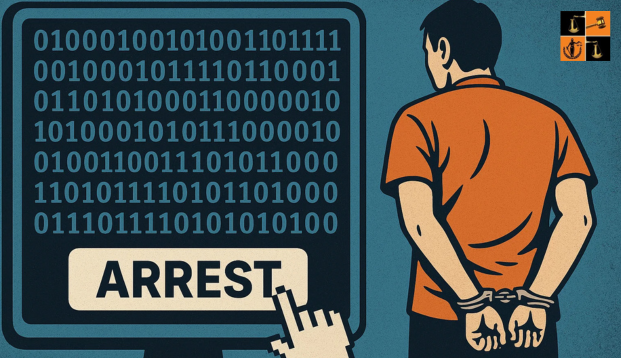
For the past some time, with the Emergence of Technology, we have been hearing about the increase of incidents, rather accidents of Virtual-Arrest where in some of the incidents the soft potentials are retired elders, women and children of tender age and large section of such victims who do not have any legal knowledge, are being targeted by the preparators of the crimes and are being robbed of their hard earned money.
The Bharatiya Nyay Sanhita (BNS) has included cybercrime under “organized crime” in Section 111. This is an important step as it shows how seriously the lawmakers consider cybercrime and its impact on society. By treating it as an organized crime, authorities can take stronger action against cybercriminals. Section 111 of The Bharatiya Nyay Sanhita (BNS) is reproduced below.
- Section 111 of BNS provides for the offence of Organized Crime.
- Section 111 (1) of BNS defines what would constitute ‘Organized crime’:
- Organized crime is defined as any continuing unlawful activity committed by groups of individuals who act together, either singly or jointly.
- The criminal activities that constitute organized crime include:
- Kidnapping
- Robbery
- Vehicle Theft
- Extortion
- Land Grabbing
- Contract Killing
- Economic offences, and
- Cyber-crimes that have severe consequences.
The Hon’ble High Court of Rajasthan in “SUO MOTU-In the matter of tackling the issue of Digital Arrest-Scams, cyber crimes and saving the innocent people from losing their money and lives” took note of the situation and has taken suo motu cognizance in the matter of tackling the issue of digital arrest scams, cyber-crimes, considering the impact on the economy and safety, which is much needed to prevent the abuse of technology by fraudsters and high-tech cyber criminals. Furthermore, the Supreme Court of India in “Satender Kumar Antil V. CBI”, in order to reduce the growing number of digital arrests, prohibits the sending of notices through WhatsApp.
It is further being observed from studies and facts that such crimes are committed in a very calculated manner, as the perpetrators of such crimes have deep and minute details pertaining to the age and financial status of the victims. Further, the perpetrators of such crimes are not within the territory of India but are from other parts of the world, which causes another potential threat to the security and economic stability of our country, calling for immediate steps to control this menace.
Another factor that has been noticed in the commission of such crimes is that the perpetrators of such crimes are tech-savvy and well-acquainted with the usage of the new technology, but are misusing it to make quick money. In fact, many of them are qualified in technology but unemployed and choose the commission of crime to make quick money.
It is often said that prevention is better than a cure, but this is not always true. The Prevention of Digital Arrest and Cyber Crime can be avoided by preventive measures like educating the masses through various media sources, but educating and making people aware of avoiding digital arrest and cyber crime is only one part of it. The crime of any kind is to be prevented, however crimes are being committed and cannot be eroded completely. The Remedial measures are to be evolved at the changing time to ensure remedies to the victims who are trapped and crimes are committed against them despite prevention being taken. Therefore, an effective and enforceable remedial approach needs to evolve through the power of legislation and practical enforceability.
There is an urgent need for our country to be more vigilant and alert on both the legislative and Judicial fronts. Though no doubt that as Preventive measures, steps are being taken to educate people and make them aware so that they do not fall for such traps. However, with utmost urgency Remedial Measures are to be adopted through Passing of appropriate Legislation along with Effective Enforcement agencies by setting up special unit of police for fast investigation and Judicial Mechanism including the establishment of Specials Courts with up-to-date facilities and specially trained Judicial Officers in order to deal with such crimes as a quick Remedial measure to the victims.