The Author, Manas Agrawal a final year Law student pursuing BBA.LLB (Hons.) from Amity Law School, Noida (Amity University).
Abstract:
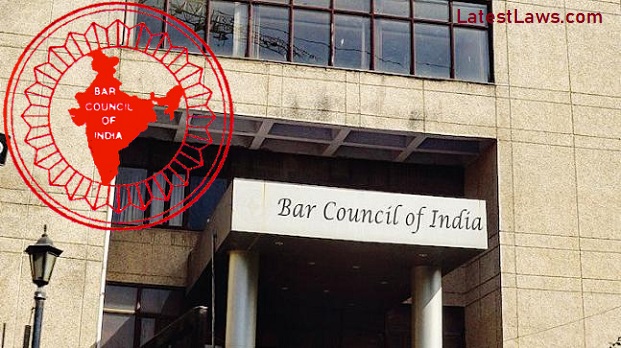
The present Article, the author aims to delve into the depths of “Status of Bar Councils as Body Corporate” with an aim scrutinize such consequences of conferring Bar Councils with the status of Body Corporate. In continuance of the previous article, the successive sections of this article would aim to define and explain the term “body corporate” as well as the intricacies attached with the term especially in Context of Bar Councils, analyzing it purely from the lens of law and further elaborating upon the status of Bar Councils as Body Corporates.
- Meaning and Definition of “Body Corporate”
The phrase “Body corporate” in simple dialect refers to a Corporate entity having legal existence. The term has been defined under S. 2(11) of the Companies Act, 2013.[1] The Definition as provided therein is of inclusive nature, though it does not elaborate upon the essential features or characteristics of a body corporate. However, it is appurtenant to note that the provision specifically delineates what is not included within the definition of the term “body corporate” or “corporation”.
While deliberating upon the meaning of the term “Corporation” it becomes rather necessary to refer to the Supreme Court ruling in the well-known case of The Board of Trustees, Ayurvedic and Unani Tibia College, Delhi v. The State of Delhi and Ors.[2], in which the court cited Halsbury (Laws of England 3rd Edn.) while considering the meaning of “Corporation”, quoted as under.
"A Corporation aggregate has been defined as a collection of individuals united into one body under a special denomination, having perpetual succession under an artificial form, and vested by the policy of the law with the capacity of acting in several respects as an individual, particularly of taking and granting property, of contracting obligations and of suing and being sued, of enjoying privileges and immunities in common, and of exercising a variety of political rights, more or less extensive, according to the design of its institution, or the powers conferred upon it, either at the time of its creation or at any subsequent period of its existence."[3]
In a comparatively recent ruling of Ahmedabad Municipal Corporation and Ors. v. Raju Bhai Soma Bhai Bhardwaj and Ors.[4], the Apex Court via Bench of Justice Dipak Mishra and Justice UU Lalit, while deliberating over the definition of “Corporation” referred to Halsbury (Laws of England 4th Edn.), quoted as under.
“A corporation may be defined as a body of persons (in the case of a corporation aggregate) or an office (in the case of a corporation sole) which is recognized by the law as having a personality which is distinct from the separate personalities of the members of the body or the personality of the individual holder for the time being of the office in question.”[5]
- Advantages Of Incorporation
The aforementioned discussion over the meaning and definition of the term “body corporate” unambiguously indicates towards the fact that, the “Status of Corporation” certainly brings with itself several advantages. Bar Councils whether be it Bar Council of India or any State Bar Council, unlike Human Beings, is invariably the creation of Law, much like any other Company Incorporated under the Companies Act. However, they are certainly clothed with several rights and obligations as well as numerous powers and duties, as prescribed under the Advocate Act, 1961. They can aptly be referred to as an artificial person as being invisible, intangible, however having existence though only in Contemplation or Law. It becomes pertinent to note that Law, in the case of Bar Councils, The Advocate Act 1961 confers upon them individuality and immortality. Incorporation thus offers several advantages in comparison to other non-incorporated organizations which have been discussed in detail further in this section.
- Separate Legal Identity
This principle resonates that Incorporation makes the organization an Independent entity, separate and distinct from its members and consequently, conferring on it a legal personality of its own. Hence, members of a “body corporate” cannot be held liable for its act, as it is a separate legal entity having an identity of its own, distinct from that of its members. This principle of the Independent Corporate existence is well illustrated by the House of Lords vide its decision in Salomon v. Salomon & Co.[6] In this case, the issue brought before the court was, whether despite the company having its own separate legal identity, could a shareholder be held liable for its debt, over and above the capital contribution, so as rendering such a member exposed to unlimited personal liability. The House of Lords ruled that Salomon Co. was a real company complying with all the legal requirements and as such was duly incorporated. Hence it was held to be an independent person with its rights and liabilities appropriate to itself, thus, making Salomon & Co. Ltd liable, and not Salomon.
It is, however, at this stage not wrong to point out that the principle of Independent existence of a company consequent to its incorporation was ratified in India even before the decision of the House of Lords in the Salomon case.[7] Hence, In Re Kondoli Tea Co. Ltd.[8], the Calcutta High Court observed that “a company was altogether a separate person, different from its members and therefore the transfer was as much a conveyance, a transfer of the property, as if its members had been totally different persons”. In this case, the members of the company transferred a tea estate to it and claimed exemption from ad valorem duty, contesting that they themselves being the members of the company, it was in fact a transfer to themselves in another name. The Court however, rejected their contention and ruled that in the eyes of Law, the Company was a distinct independent person, separate from its shareholders.
There are several other cases that ponder and elaborate over the principle of independent corporate existence and how a Corporate body is separate and distinct from its members, having a legal personality of its own.[9]
- Can Sue Or Be Sued In Its Own Name
A direct Consequence flowing from it is that a “Corporation” or “Body Corporate” can sue or be sued in its own name (as it is a separate Legal entity distinct from its members). It has the capacity of suing a person or being sued by another person in its own name. A company, though can be sued or sue in its own name, it has to be represented by a natural person and any complaint which is not represented by a natural person is liable to be dismissed in the same way in which an individual complaint is liable to be dismissed in the absence of the complainant.
Hence in light of the above discussion, it becomes clear that within the metes and bounds of Section 5 of the Advocate Act, 1961[10] which confers the status of “Body Corporate” on all Bar Councils established under the said act, all such Bar Councils shall be a separate legal entity distinct from its members owing to which it is also capable to sue and be sued in its own name.
- A Corporation has Perpetual Succession
The term perpetual succession alludes to constant existence, which indeed implies that a company never dies, even if its members cease to exist. It is rather inevitable that the membership of a company changes from time to time, but that has no effect on the existence of the company. Subsequently, it implies that notwithstanding any change in its membership, the body corporate shall retain the same entity with the same privileges and immunities, estate, and possession.[11] Calcutta High Court observed the principle of Perpetual existence enunciating that “death or insolvency of Individual members does not in any way, affect its corporate existence and the Body Corporate shall continue its existence as usual until its wound up in accordance with provisions of Law”[12]. The company only comes to an end, when it is wound up according to law, as per the provisions of the Companies Act, 2013. In Re Noel Tedman Holdings Pty Ltd,[13] An Australian Court stated that “a company’s members may come and go but this does not affect the legal personality of the company”.
Hence it is clear from the above discussion that a body corporate has a perpetual succession irrespective of its members. Hence bar councils as established and constituted under the Advocate Act, 1961 are conferred with this feature too as has also been categorically mentioned in Section 5 of the Act as “Every Bar Council shall be a body corporate having perpetual succession”[14]
- Can own Separate Property
Incorporation helps the property of the company to be clearly distinguished from that of its members.[15] The property is vested in the corporate body and no changes in individual membership can affect its title the property remains vested in the corporate body whereas the members may come and go but the company may convey, assign, mortgage, or otherwise deal with it. In simple words property of the company is not the property of its members, it is the property of the “body corporate”.[16]
Since a company is termed as a separate legal entity in the eyes of law, it can hold property in its own name and the members cannot claim to be the owner of the company’s property(s). The Supreme Court, in the case of Bacha F. Guzdar v CIT Bombay [17] stated that “a company being a legal person, in which all its property is vested and by which it is controlled, managed and disposed of a member cannot, ensure the companies property on its own name”. In Macaura v. Northern Assurance Co. Ltd.,[18] “a shareholder of a timber company, held all shares of the company but one. He also ensured the timber (asset of the company) on his own name, which was destroyed in a fire. When he sought compensation, it was held that they were not liable to pay any money to the shareholder, in lieu of the timber since he did not own the timber and that timber, which the company owned was not insured.”
- Common Seal
A body corporate is entitled to express its will by means of a Common Seal. In simple words, It is the signature of the corporation. If and when affixed to any document, it binds the corporation for all obligations undertaken in the document. In other words, Common Seal is the official signature of the body corporate and each such body shall have only one seal, on its incorporation. Any document, on which the company’s seal is affixed and is duly signed by the authorized official of the company becomes binding on the company.
Hence it is clear from the above discussion that a body corporate has a common seal and can own separate property movable or immovable in its own name. Hence bar councils as established and constituted under the Advocate Act, 1961 are conferred with this feature too as has also been categorically mentioned in Section 5 of the Act as “Every Bar Council shall be a body corporate a common seal, with power to acquire and hold property, both movable and immovable.”[19]
At this juncture, it is pertinent to note that there are several other advantages of Incorporation such as Limited Liability, Transferability of Shares, Corporate Finances, Centralized management, Permanence of Capital & Stability of the Company, and protection to investors against loss to mention a few. However, such advantages are more relevant in the context of Companies incorporated under the Companies Act, 2013 especially Public and Private companies, and bear very little significance at the topic at hand, hence the author forebears to delve into intricacies attached to advantages.
- Disadvantages Of Incorporation
Despite having several advantages, Incorporation bears with it a few disadvantages too, such as Personal liability of directors or members, expenses and formalism, Company not being a citizen, problem of Double Taxation to mention a few of them. However, such disadvantages bear little or no relevance on Bar Councils as they acquire the status of “Body Corporate” under the Advocate Act, 1961 and not under the Companies Act, 2013. Moreover, Bar Councils are Statutory bodies having regulatory functions rather than being a Company per se in its true sense. Hence it would not be wise to delve into the details of such disadvantages as they lack direct connection with Bar Councils and their “Status as Body Corporate” as conferred under the Act of 1961.
- Judicial Approach
In Commissioner of Income Tax, Bombay v. Bar Council of Maharashtra[20], the question that came up before the Apex Court was whether the “assessee-Council could be taken to be a body intended to advance any object of general public utility falling within Section 2(15) for purposes of Section 11 of the Income Tax Act, 1961”. The Supreme Court while observing that “assessee-Council happens to be a body corporate having perpetual succession and a common seal, with power to acquire and hold property both movable and immovable and to contract, and maybe the name by which it is known sue or be sued” held that “The Bar council of Maharashtra was not involved in any business of profit and the dominant function of council was to ensure quality service of a lawyer, the spread of legal literacy, promote law reforms and provide legal assistance to poor. It stated that benefits to lawyers are incidental and the purpose of the council is advancement of object of general public utility and income derived by it exempted from tax”.
In a Landmark Judgement of Radhelal Gupta v. State Bar Council of M.P. and Ors.[21], The High Court Of Madhya Pradesh (Jabalpur Bench) held that “There is an enormous distinction between a body corporate and its members and, therefore, any attempt to mingle the two in one compartment conceiving them as inseggregable and inseparable is to whittle down the basic normative feature of law.” It further observed that “body corporate has a different connotation and meaning in law. The body corporate is not merely a body of persons. Section 5 of the Act stipulates that a Bar Council is a body corporate and hence, the statute confers on it a distinctive legal status.” The court went on to reiterate that “It can be unhesitatingly stated that an individual member who is a part of the body corporate stands distinctively qua the body corporate for the simple reason, a corporation is a legal person just as much as an individual. The members who constitute the Council which is a body corporate lose their individual entity and a whole comes into being which is called the Bar Council. By no stretch of the imagination, it can be said that the members, 'Prana' of the Bar Council as the body corporate have a separate legal status and the perceptual shift.”
As recently as in 2019, in the case of Ishwar Shandilya v. State of Uttarakhand and Ors.[22], The High Court of Uttarakhand at Nainital after observing that “The State Bar Council is a body corporate having perpetual succession. Its existence is independent of, and is not contingent upon, elected members holding office” held that “Bar was not a private guild but a public institution committed to public justice.” The Hon’ble Court quoted Halsbury’s Laws of England[23] while denunciating the meaning of Corporation.
Further while dealing with the plight of advocated during the ongoing pandemic, the Allahabad High Court in Assistance to the Needy Advocates & Registered Advocate Clerks v. State of U.P.[24] again emphasized on the status of the Bar Council of India as well as Bar Councils of the state as a body corporate and the characteristics invariably attached therewith as prescribed under Section 5 of Act of 1961[25].
- Conclusion
Hence, the Bar Council of India as well as Bar Councils of the state as constituted under the Advocate Act, 1961 are statutory bodies performing regulatory functions and are conferred with the status of “Body Corporate”. Section 5 of the Advocates Act, 1961[26] invariably provides for every Bar Council to be a “Body Corporate” having a common seal and perpetual succession also conferred with power to hold, acquire or dispose of both movable and immovable property. Rendering, a statutory body as that of the bar council of India, with the status of a ‘body corporate’ ensues several Legal consequences. The preceding sections of this article have dealt with such legal consequences at length. Having considered such consequences and the Judicial approach, the purpose of lawmakers to confer Bar Councils with the status or “Corporation” becomes clear. In conclusion, it can be said that the main aim and objective of the legislation behind conferring such status was to strengthen Bar Councils established under the Act and to provide them with greater autonomy along with making their day to day functioning more efficient and effective. Upon a detailed analysis of the purpose of enactment of Section 5 and the Judicial Approach towards it, makes it unambiguous that it has to a large extent achieved the aim for which it was added to the statute book.
References:
[1] Companies Act, 2013 (Act 18 of 2013), Section 2(11) - “body corporate” or “corporation” includes a company incorporated outside India, but does not include— (i) a co-operative society registered under any law relating to co-operative societies; and (ii) any other body corporate (not being a company as defined in this Act), which the Central Government may, by notification, specify in this behalf;
[2] AIR 1962 SC 458.
[3] Halsbury’s Laws of England, (3rd Edition., 1952) Volume 9, page 4.
[4] AIR 2015 SC 2774.
[5] Halsbury's Laws of England, (4th Edition., 1974) Volume 9, paragraph 1201.
[6] Salomon v Salomon & Co. Ltd. (1897) AC 22. In this case, “One Salomon transferred his business of boot making, initially run as a sole proprietorship, to a company (Salomon Ltd.), incorporated with members comprising of himself and his family. The price for such transfer was paid to Salomon by way of shares, and debentures having a floating charge (security against debt) on the assets of the company. Later, when the company’s business failed and it went into liquidation, Salomon’s right of recovery (secured through floating charge) against the debentures stood prior to the claims of unsecured creditors, who would, thus, have recovered nothing from the liquidation proceeds. The claims of certain unsecured creditors in the liquidation process of Salomon Ltd., where Salomon was the majority shareholder, was sought to be made personally liable for the company’s debt.”
[7] Id.
[8] Re Kondoli Tea Co. Ltd (1886) ILR 13 Cal 43.
[9] Praga Tools Corporation v. Imanuel, AIR 1969 SC 1306; Dhulia-Amalner Motor Transport Ltd. v. Raychand Rupsi Dharamsi. AIR 1952 Bom. 337; M/s Eletronics Corporation of India Ltd. v. Secretary, Revenue Deptt., Governemnt of Andhra Pradesh AIR 1999 SC 1734.
[10] Supra Note 4.
[11] George F. Canfield, I. Maurice Wormser, Cases on Private Corporation (2nd Edition, Page 75).
[12] Gopalpur Tea Co. Ltd. v. Peshok Tea Co. Ltd. [1982] 52 Comp Cas 239 (Cal).
[13] (1967) Qd R 56.
[14] Supra Note 4.
[15] Avtar Singh, Indian Company Law, (Eastern Book Company, Lucknow, 15th Edition, 2015) Page 8.
[16] Gramophone and Typewriter Co. v. Stanley, (1906) 2 KB 856 (869); Hyderabad Sind Electric Supply Co. v. Union of India, AIR 1959 Punj. 199.
[17] AIR 1953 Bom 1; 1952 (54) BOMLR 595.
[18] 1925 AC 619.
[19] Supra Note 4.
[20] AIR 1981 SC 1462, 1981 (83) BOM LR 395.
[21] AIR 2002 MP 98, ILR [2002] MP 484.
[22] MANU/UC/0751/2019.
[23] Supra Note 19.
[24] Assistance to the Needy Advocates & Registered Advocate Clerks v. State of U.P PIL No. 569 of 2020.
[25] Supra Note 4.
[26] Ibid.