October 11,2018:
The Author Rashmi Jain is 5th year BBA.LLB (H) student of ICFAI (Indian Chartered Financial Analysis) Law School, Hyderabad. She is currently interning with LatestLaws.com.
Q1: What is the applicability of this Act and the objectives of the Act?
Ans-The Negotiable Instruments Act extends to whole of India except Jammu & Kashmir .It came into force on 1st March, 1882.
Objectives of the Act
- It facilitates the settlement of payments in business as they pass freely from holder to holder due to easy transferability of value of instrument.
- It provides legal protection to different mercantile instruments.
- It presents orderly and authoritative statement of leading rules of law relating to negotiable instrument.
- It provides for the special procedure in case the obligations which have to discharge under the instruments.
- It regulates the different types of negotiable instruments which include Promissory notes, Bills of Exchange and Cheques.
- It explains the capacity and liabilities of the parties to the instrument.
- It provides the understanding of different topics under the Act that are negotiation, assignment, endorsement etc.
- It inculcates faith in the efficacy of banking operations and credibility in transacting business on the negotiable instruments.
Q2: What is the meaning of negotiable instrument?
Ans- ‘Negotiable’ means ‘transferable by delivery’ and the word ‘instrument’ means ‘a written document by which a right is created in favor of some person’
Thus the term ‘Negotiable Instrument’ literally means ‘a written document transferable by delivery’
According to Sec. 13 of the Act, negotiable instrument means ‘a Promissory Note, Bills of Exchange or Cheque payable either to order or to bearer’.
The instruments should follow the given condition of negotiability that are;
- Easy negotiability.
- Transferee can sue in his own name without giving notice to the debtor.
- Better title to a bona fide transferee for value.
Q3: What are the different kinds of negotiable instruments?
Ans- It is covered under two heads that are;
- Negotiable Instruments by Statue: Promissory note, Bills of exchange and Cheque.
- Negotiable Instruments by Usage: Bank note, draft, Share warrants, Bearers, Debentures, Dividend warrants and Treasury bill.
- Promissory Note- According to sec. 4 of the Act a promissory note is an instrument in writing (not being a bank or a currency note) containing an unconditional undertaking, signed by the maker to pay a certain sum of money to, or to the order of, a certain person or to the bearer of the instrument.
- Bills of Exchange- According to sec. 5 of the Act an instrument in writing, containing an unconditional order, signed by the maker, directing a certain person to pay a certain sum of money only to or to the order of, a certain person, or to the bearer of the instrument.
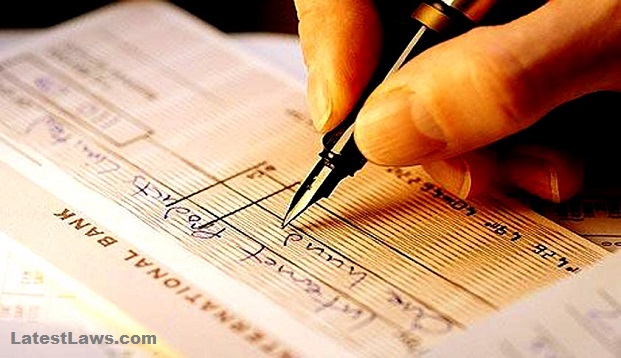
- Cheque - According to sec. 6 of the Act a cheque is an order by the customer of the bank directing his banker to pay on demand, the specified amount, to or to the order of the person named therein or to the bearer.
Q4: What are the differences between various types of Negotiable Instruments?
Ans- Difference between Promissory Note and Bills of Exchange
| Basis |
Promissory Note |
Bills of Exchange |
| No. of parties |
There will be two parties namely maker (debtor) and payee (creditor). |
There will be three parties namely drawer, drawee and payee. |
| Promise to pay |
It contains promise to pay by maker to the payee or his order. |
It contains an unconditional order to the drawee to pay according to the instructions of the drawer. |
| Payable |
It cannot be made payable to the maker himself. |
In this the drawer and payee can be the same persons. |
| Acceptance by the maker |
It can be presented for the payment without the acceptance of the maker. |
It has to accepted by the drawee or someone else for the presentation of the payment. |
| Notice of dishonour |
It is not necessary to send the notice of dishonour. |
It is necessary to serve the notice of dishonour by holder to the drawer and immediate endorsee. |
Differences between Bills of Exchange and Cheque
| Basis |
Bills of Exchange |
Cheque |
| Drawn to |
It is drawn to some person or firm. |
It is always drawn to banks. |
| Crossing |
It cannot be crossed. |
It can be crossed. |
| Grace period |
In this the grace period of 3 days can be given. |
In this no grace period is allowed for the payment of cheque. |
| Stamp duty |
It is necessary to have proper stamp duty. |
No need to pay stamp duty on cheques. |
| Payable |
It is payable on demand cannot be drawn payable to bearer. |
It can be drawn payable to bearer. |
Q5: What are the different kinds of cheques?
Ans- A cheque should be written instrument, unconditional order on a specified banker only and certain sum of money paid to payee that should be payable on demand.
It can be of different types that are;
- Bearer Cheque
- Cross Cheque
- Order Cheque
- Ante and Post dated Cheque
- Banker Cheque
- Travelers Cheque
- Truncated Cheque (E-Cheque)
Q6: Who are the parties in different Negotiable Instruments?
Ans- Parties to Bills of Exchange
Drawer: The maker of a bill of exchange is called the ‘drawer’.
Drawee: The person who is to pay the money by the drawer is called the ‘drawee’,
Acceptor: If someone else accepts the money in place of the drawee then he is called the ‘acceptor’.
Payee: Payee is the person to whom the money is to be paid as directed by the instrument. He is considered to be the actual beneficiary. Where he signs his name and makes the instrument payable to some other person, that other person does not become the payee.
Endorser: When the holder transfers the instrument to someone else, the holder becomes the ‘endorser’.
Endorsee: The person to whom the bill is indorsed is called an ‘endorsee’.
Holder: A person who is legally entitled to the possession of the negotiable instrument in his own name and to receive the amount thereof, is called a ‘holder’.
Parties to a Promissory Note
Maker-He is the person who promises to pay the amount stated in the note. He is the debtor.
Payee- He is the person to whom the amount is payable that is the creditor.
Holder- He is the payee or the person to whom the note might have been endorsed.
Parties to a Cheque
Drawer-He is the person who draws the cheque, i.e., the depositor of money in the bank.
Drawee- It is the drawer’s banker on whom the cheque has been drawn.
Payee- He is the person who is entitled to receive the payment of the cheque.
Q7: In what way the negotiation can be done and what are the different types of endorsements?
Ans- The transfer of an instrument by one party to another so as to constitute the transferee a holder thereof is called ‘negotiation’.
It can be done by every maker, drawer, payee or endorsee – provided the negotiability is restricted.
Modes of Negotiation -
- Negotiation by mere delivery
- Negotiation by endorsement and delivery.
Section 15 talks about the endorsement of instrument when the maker or holder of a negotiable instrument signs the same, otherwise than as such maker, for the purpose of negotiation on the back or face thereof or on a slip of paper annexe thereto, or so signs for the same purpose a stamp paper intended to be completed as a negotiable instrument, he is said to endorse the same, and is called the “endorser.”
An endorsement is completed by the delivery of the instrument to the endorsee.
“An endorsement means an endorsement completed by delivery.”
Types of Endorsement is given under Sec.16(1)
- Blank of General endorsement: The effect of blank endorsement is to convert the order instrument into bearer instrument which may be transferred merely by delivery.]
- Endorsement in full or special endorsement
- Partial endorsement – Sec.56 prohibits
- Restrictive endorsement (Sec.50) – [ the endorsee cannot further negotiate]
- Conditional endorsement (Sec.52): The law permits a conditional endorsement and therefore it does not in any way affect the negotiability of the instrument.
- Sans recourse endorsement (Sec.52) – The endorser expressly excludes his own liability on the NI to the endorsee or any subsequent holder in case of dishonor of the instrument.
- Facultative endorsement: The endorser expressly gives up some of his rights under the Act.
Q8: Who are holder and holder in due course?
Ans- Holder (Sec.8):
- He must be entitled to the possession of the instrument in his own name.
- He must be entitled to receive or recover the amount due thereon from the parties liable thereto.
- Where a NI is a bearer one, any person who is in the possession of such instrument.
- Where a NI is in the name of a partner of a firm, it naturally becomes a holder.
Holder in due course (Sec.9):
- Any person who for the consideration paid becomes the possessor of a NI, before its maturity, in good faith; and
- Without any sufficient reason to believe that any defect existed in the title of the person from whom he obtained it.
Essentials:
- He must be holder in due course.
- He must be holder for valuation consideration.
- He must become a holder of the NI before the date of maturity.
- He must become a holder of the NI in good faith.
Q9: What is dishonour of cheque and what are the penalties in case of dishonour of cheque due to insufficiency of funds in the account?
Ans- Law relating to dishonour of cheque is mentioned from sec.138 to 142 of the Act as amended by Negotiable Instruments (Amendment) Act 2015 which is as follows:
- A person must have drawn a cheque on an account maintained by him in a bank for payment of a certain amount of money to another person from out of that account.
- The cheque has been issued for the discharge in whole or in part of any debt or other liability.
- The cheque has been presented to the bank within the period of three months from the date on which it is drawn or within the period of its validity whichever is earlier.
- That the cheque is returned by the bank unpaid, either because of the amount of money standing to the credit of the account id insufficient to honour the cheque or that it exceeds the amount to be paid from that account by an agreement made with the bank
- The payee or the holder in due course of the cheque makes a demand of the said payment by giving notice in writing to the drawer of the cheque within 30 days of the receipt of the information by him from the bank regarding the return of the cheque as unpaid
- Drawee fails to make the payment within 15 days of the receipt of the said notice
- When a cheque is presented in the concerned bank by the drawee within the stipulated time i.e within the three months from the date of issue the drawee bank issue ‘ Check Return Memo’ to the payee mentioning the reason for non – payment.
Reasons for Dishonour of Cheque
- Insufficient Funds
- Signature not matching
- Account Closed
- Cheque was presented after three months
- Payment stopped by account holder
- Disparity in the words and figures mentioned in the cheque
- In case of a joint account where both signatures are required but only one is there
- Death of the customer
- Insanity of the customer
- Crossing limit of the overdraft
Section 138 of the Act is talks about Dishonor of cheque for insufficiency of funds in the accounts and penalties for the same
Where any cheque drawn by a person on an account maintained by him with a banker for payment of any amount of money to another person from out of that account for the discharge, in whole or in part, of any debt or other liability, is returned by the bank unpaid, either because of the amount of money standing to the credit of that account is insufficient to honor the cheque or that it exceeds the amount arranged to be paid from that account by an agreement made with that bank, such person shall be deemed to have committed an offence and shall without prejudice to any other provisions of this Act, be punished with imprisonment for a term which may extend to one year, or with fine which may extend to twice the amount of the cheque, or with both.