









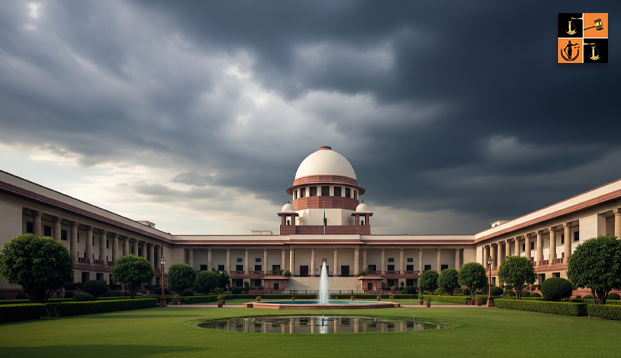
The Supreme Court, issued notice in a matter concerning whether a live-in partner can invoke Section 125 of the Code of Criminal Procedure, 1973 (CrPC) to claim maintenance.
A Division Bench of Justice Pankaj Mithal and Justice Prasanna B. Varale was considering a challenge to a ruling of the Kerala High Court, which had earlier dismissed the petitioner’s objection to the maintainability of such proceedings before the Family Court.
The High Court had previously held that strict proof of a valid marriage is not a prerequisite under Section 125 CrPC. Emphasising its beneficial nature, the court reasoned that where parties cohabit as husband and wife for a significant period, the law presumes a marital relationship. In such cases, denial of maintenance would be unjustified. The High Court noted that the respondent had asserted that she and the petitioner had been living together as husband and wife since two thousand and five, thereby justifying her claim.
Challenging this interpretation, the petitioner argued before the apex court that a live-in relationship cannot confer entitlement to maintenance under Section 125 CrPC. According to him, allowing such claims stretches the scope of the provision beyond its intended framework, rendering the proceedings unsustainable.
After briefly hearing the submissions, the Supreme Court deemed it appropriate to issue notice to the respondent, making it returnable within six weeks. The notice signifies the Court’s willingness to revisit the contentious question of whether cohabitation without a formal marriage ceremony can give rise to a presumption of marriage for the purposes of maintenance.
The issue has been the subject of judicial debate in earlier rulings. In Lalita Toppo v. State of Jharkhand (2015), a Bench led by Justice T.S. Thakur referred questions on the presumption of marriage in live-in arrangements to a larger Bench, including whether such presumption could entitle a woman to maintenance under Section 125 CrPC.
However, in two thousand and eighteen, a three-judge Bench headed by then Chief Justice Ranjan Gogoi declined to answer the reference, observing that live-in partners had more effective remedies under the Protection of Women from Domestic Violence Act, 2005. The Court noted that the Act not only covers maintenance but also provides broader relief, including the right to residence in a shared household.
Subsequently, in Kamala v. M.R. Mohan Kumar, a Bench headed by Justice R. Banumathi upheld maintenance granted by a Family Court to a woman whose marital status was disputed, reaffirming that strict proof of marriage is unnecessary in Section 125 CrPC proceedings, as the provision is designed to prevent destitution and vagrancy.
The present case provides the Supreme Court with another opportunity to clarify the unsettled legal position surrounding the rights of live-in partners under Section 125 CrPC. The matter now awaits further consideration following the respondent’s reply to the notice.
Case Title: KP Raveendran Nair vs. Vasantha K
Coram: Justice Pankaj Mithal, Justice Prasanna B. Varale
Picture Source :



















