









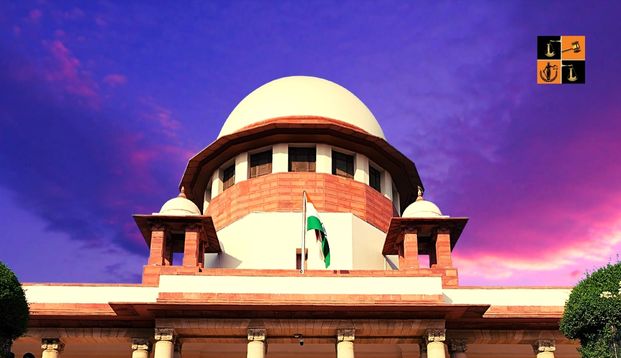
On Thursday, the Supreme Court was informed by Solicitor General of India Tushar Mehta that the President of India has sought clarity on a crucial constitutional issue: whether a State Government can invoke Article 32 to challenge the Union Government, the President, or the Governor.
A five-judge Constitution Bench led by Chief Justice of India BR Gavai, and comprising Justice Surya Kant, Justice Vikram Nath, Justice PS Narasimha, and Justice AS Chandurkar, is currently hearing the Presidential Reference concerning delays in the grant of assent to State Bills under Articles 200 and 201 of the Constitution.
The Solicitor General informed the Court that the President wishes to press the questions raised in the reference, particularly on (i) whether a State can maintain a writ petition under Article 32 for violation of fundamental rights, and (ii) the scope of Article 361, which provides constitutional immunity to the President and Governors from being answerable to any court for acts done in the exercise of their powers.
According to Mehta, the President believes that obtaining judicial clarity on these questions is necessary, given that such issues are likely to recur in future disputes.
Expounding the Union’s stand, Mehta argued that a State Government, as a legal entity, does not possess fundamental rights and therefore cannot invoke Article 32, which exists solely to safeguard such rights. Disputes between States and the Centre, he contended, fall exclusively within Article 131, which grants the Supreme Court original jurisdiction in federal conflicts.
“The State cannot maintain such a writ petition by projecting itself as the guardian of the people’s rights", Mehta submitted, underscoring that Article 131 bars the invocation of Article 32 by States.
He further added that no direction can be issued to the President or Governors in respect of their actions on Bills, as such functions are non-justiciable. In particular, a writ of mandamus under Article 226 is not maintainable against a Governor given the nature of the office.
At this stage, the Bench questioned whether the Governor could be regarded as a representative of the Union Government, noting that the Constituent Assembly debates had described the Governor as a vital link between the Centre and the States.
Mehta clarified that while the Governor is appointed by the President under Article 155, his actions are carried out on the aid and advice of the State Cabinet, not the Union Cabinet. Hence, disputes involving the Governor cannot be placed under Article 131 either.
For the State of Andhra Pradesh, Senior Advocate Siddharth Luthra sought time to obtain instructions, pointing out that Andhra Pradesh has already filed petitions under Article 32 which are pending before the Court.
Last week, the Bench had completed hearing submissions from the Union and supporting States on whether the Court can prescribe binding timelines for the President and Governors to decide on pending Bills. The proceedings are now focused on arguments from States opposing the reference.
Picture Source :



















