









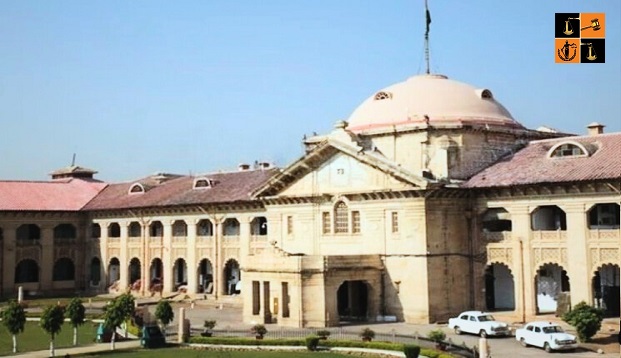
In a significant procedural challenge touching the heart of compassionate appointments, the Allahabad High Court stepped in to scrutinise how government authorities handle competing family claims after the death of an employee in harness. The Court examined whether officials could sidestep statutory rules under the U.P. Recruitment of Dependents of Government Servants Dying-in-Harness Rules, 1974, merely because a registered Will had surfaced, raising serious questions about dependency, family welfare, and administrative abdication of duty.
The controversy began when a Public Works Department employee died in service, triggering rival claims for compassionate appointment from his brother and his estranged wife. The brother approached the Court after his application was rejected on the ground that a registered Will in his favour made it “impossible” to ascertain heirship.
Counsel for the petitioner argued that despite the widow’s legal status, it was the unemployed brother who had cared for the deceased and their aged parents, and that this dependency factor was ignored. The State, however, pointed out that both the brother and the widow had staked claims, and the authority chose not to grant the job to either, citing conflicting documents and uncertainty caused by the Will.
The Court was unimpressed. In a sharp reminder of the law, it held that compassionate appointment is governed strictly by the 1974 Rules, not by testamentary documents. Emphasising the statutory scheme, the Court observed that “the aspect of registered Will in favour of any member of family does not have any role to play with regard to grant of compassionate employment.” What matters, the Bench stressed, is dependency, suitability, and the overall welfare of the family, “particularly the widow and minor members thereof.”
Finding that the authority had completely ignored Rules 2, 6 and 7, the Court held that the rejection order was legally flawed. Consequently, the impugned order was quashed, and the Executive Engineer, PWD, was directed to reconsider both applications afresh, after granting a hearing to all concerned family members, within eight weeks.
Case Title: Ache Lal Vs. State Of U.P. Thru. Addl. Chief Secy. Public Works Deptt. Lko. and Others
Case No.: WRIT - A No. - 14910 of 2025
Coram: Justice Manish Mathur
Advocate for Petitioner: Adv. Aadya Antya, Vedant Srivastava, Virendra Prasad Srivastava
Advocate for Respondent: C.S.C.
Read Judgment @Latestlaws.com
Picture Source :




















