









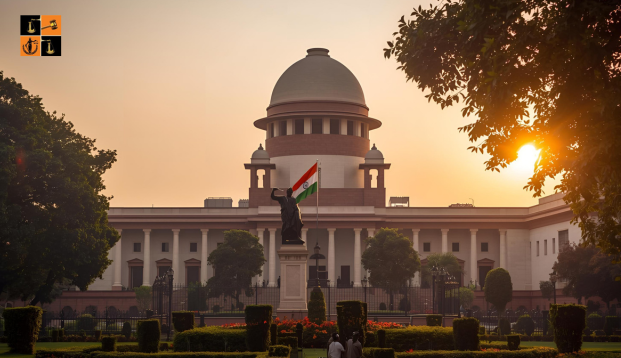
Today, the Supreme Court expressed grave concern over the persistent instances of racial prejudice and cultural insensitivity across India, remarking that such discrimination has no place in a country bound by unity and diversity. “You should be more bothered about it. We are one country,” Justice Sanjay Kumar observed, reacting to a recent incident in New Delhi where a man from Kerala was mocked for wearing a lungi.
The Division Bench of Justice Sanjay Kumar and Justice Alok Aradhe was hearing a writ petition filed in 2015 under Article 32 of the Constitution, calling for concrete measures to protect people from the Northeastern states against racial attacks, harassment, and discrimination across the country. The petition urged the Union Government to step in and frame clear guidelines to safeguard the dignity and security of Northeastern residents, an issue that had previously come before the Court in Karma Dorjee & Ors. v. Union of India.
Following that earlier case, the Ministry of Home Affairs had set up the M.P. Bezbaruah Committee in 2014 to study the challenges faced by people from the Northeast and suggest ways to address them. To ensure these recommendations were actually implemented, a Monitoring Committee was later established in 2016 to track progress and oversee the execution of the Committee’s proposals.
Advocate Gaichangpou Gangmei, appearing for the petitioner, submitted that despite the existence of institutional mechanisms, incidents of racial discrimination continue “with disturbing regularity.” The counsel contended that the Monitoring Committee, mandated to meet quarterly, had only convened 14 times in nine years, falling short of its obligations. It was further argued that the mere establishment of committees and legal provisions is insufficient without concrete action, accountability, and visible improvement in ground-level enforcement.
Appearing for the Union Government, Additional Solicitor General K.M. Nataraj submitted that the petition had lost its relevance since a functional Monitoring Committee was already in place and actively addressing the concerns raised. He referred to the Government’s latest status report, which stated that the Committee had convened 14 times since its formation, most recently in July 2024. The ASG further highlighted several initiatives undertaken by the Government, including the empanelment of advocates through the Delhi State Legal Services Authority to provide legal assistance to Northeastern residents, the establishment of a Special Police Unit for the Northeast Region, and the launch of a dedicated online portal to receive and address complaints relating to racial discrimination.
Additionally, the Union Government pointed to the recent enactment of the Bharatiya Nyaya Sanhita (BNS), Bharatiya Nagarik Suraksha Sanhita (BNSS), and Bharatiya Sakshya Adhiniyam (BSA), asserting that these laws contain adequate provisions to address hate crimes and hate speech.
The Bench appeared unconvinced by the Centre’s submission that the issue had been adequately addressed. Justice Kumar noted that despite the creation of committees and mechanisms, incidents of discrimination continue to surface, reflecting an ongoing failure in social sensitivity and enforcement.
The Court remarked that “such prejudice has no place in a nation bound by unity and diversity,” stressing that institutional responses must translate into actual protection and awareness.
Taking note of the submissions, the Bench directed the petitioner to file a detailed response to the Union Government’s status report. The matter was accordingly adjourned for further consideration.
Disclaimer: This news/ article includes information received via a syndicated news feed. The original rights remain with the respective publisher.
Picture Source :




















