









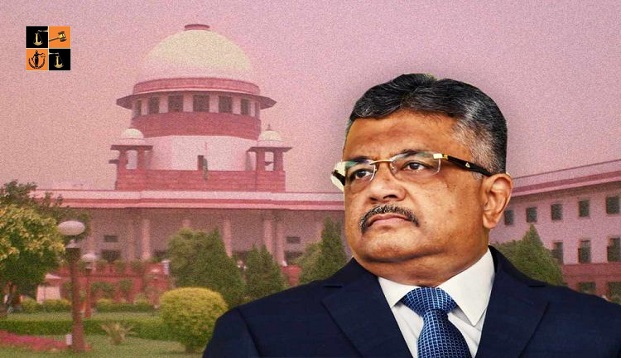
In a significant constitutional hearing before the Supreme Court, Solicitor General Tushar Mehta defended the provisions of Section 3C of the Waqf Act, asserting that the section does not permit arbitrary classification of properties as waqf without due process and judicial scrutiny.
The SG emphasized that there is no wholesale takeover of land by waqf authorities under the amended provision. He clarified that Section 3C merely relates to revenue entries and corrections, and that these procedural mechanisms cannot be equated with a declaration of waqf status. "A property cannot be declared waqf until the dispute over ownership, whether it is government land or otherwise, is conclusively decided," Mehta submitted. He noted that possession of any such property must be taken only in accordance with the law and not through unilateral actions under Section 3C or its proviso.
Addressing concerns around waqf by user, the SG highlighted that such declarations must be registered, and are permissible only in limited scenarios. “The impression that waqf by user is being retrospectively invalidated is misleading,” Mehta remarked, adding that any omission applies prospectively, with exceptions only if the property is registered or is government-owned. He emphasized that waqf by user is a statutory right and not a fundamental one, and thus can be regulated or withdrawn by legislative action.
On the requirement of five years of Islamic practice for valid waqf creation, Mehta clarified that the law only seeks to establish the religious identity of the person making the dedication, not their level of observance. "The law doesn’t demand proof of daily namaz or abstinence from alcohol, it merely ensures the person is Muslim," he stated. He acknowledged challenges in identifying waqf properties historically, noting that many are unknown to the public and misused by mutawallis, and urged for stricter oversight mechanisms.
Further responding to criticisms regarding documentary proof for waqf registration, Mehta dismissed concerns as part of a "false narrative." He explained that the law only requires details to be provided “so far as possible” and does not insist on historic waqf deeds. "Even under the 1923 Act, if documents weren't available, individuals were expected to provide available information on the origin and nature of the waqf," he submitted. He added that the sanctity of the process had been long recognized and that present-day objections over lack of paperwork were misplaced.
In a critical observation, Mehta also submitted that while waqf is an Islamic concept, it is not an essential religious practice, and the inclusion of non-Muslim members on waqf boards is constitutionally valid, as these boards serve secular administrative functions.
The matter, which involves constitutional challenges to certain provisions of the Waqf Act, will continue to be heard by the Supreme Court on Thursday.
Picture Source :



















