









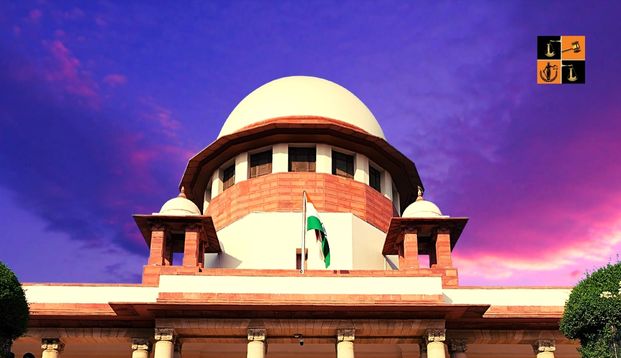
Recently, the Supreme Court heard a significant challenge concerning the collection of a voice sample in a harassment and extortion case, revisiting questions on the scope of a Magistrate’s powers and the protection against self-incrimination. The matter, arising from a Kerala High Court order, brought into focus the delicate balance between investigative needs and constitutional safeguards under Article 20(3).
The case stemmed from the death of a 25-year-old married woman in February 2021, leading to allegations of harassment and counterclaims of misappropriation of cash and jewellery by her family. During the investigation, it was found that the second respondent allegedly acted as an agent for the deceased’s father and threatened a witness linked to an extortion demand.
The Investigating Officer (IO) sought permission from the Magistrate to collect the respondent’s voice sample to verify these claims. The Magistrate allowed the request. However, the respondent challenged this before the Kerala High Court, which set aside the Magistrate’s order, citing a pending reference before a Larger Bench on whether such directions could be issued under the Criminal Procedure Code (CrPC) in the absence of an explicit statutory provision.
Senior Advocate Dama Sheshadri Naidu, appearing for the complainant, argued that the issue was no longer open to debate, as it had already been settled by the Supreme Court in Ritesh Sinha v. State of Uttar Pradesh , which held that a Magistrate has inherent power to direct a person to provide a voice sample for investigation purposes.
Counsel for the respondent, Ranjan Mukherjee, contended that the order was passed under the CrPC, which did not specifically authorize voice sampling. He argued that while Section 349 of the Bharatiya Nagarik Suraksha Sanhita (BNSS), 2023 now empowers Magistrates to order such tests, the provision was not in force at the time, and compelling a witness to provide a sample could infringe upon the constitutional protection under Article 20(3) against self-incrimination.
The Apex Court criticized the High Court for disregarding binding precedent, observing that “A purely academic question covered by a binding precedent of this Court is agitated unnecessarily by the respondent herein and entertained egregiously by the High Court. The High Court has also refused to follow the binding precedent of this Court on the ground that there is a reference made to a Larger Bench. The reference as pointed out by the appellant, has been closed unceremoniously, on default.”
Referring to the Ritesh Sinha judgment and the earlier landmark ruling in State of Bombay v. Kathi Kalu Oghad, the Bench reiterated that giving a voice sample does not amount to self-incrimination “A specimen handwriting or signature or finger impressions by themselves are no testimony at all, being wholly innocuous, because they are unchangeable; except, in rare cases where the ridges of the fingers or the style of writing have been tampered with. They are only materials for comparison in order to lend assurance to the Court that its inference based on other pieces of evidence is reliable. They are neither oral nor documentary evidence but belong to the third category of material evidence which is outside the limit of 'testimony'.”
The Court emphasized that the same principle applies to voice samples, noting that mere collection of a sample does not incriminate a person; only its comparison with other evidence might do so.
The Top Court set aside the Kerala High Court’s order and restored the Magistrate’s direction permitting the collection of the respondent’s voice sample. The Bench held that such a direction is legally valid and does not violate Article 20(3) of the Constitution. It clarified that Magistrates have the authority to order voice sampling for investigation under both the CrPC and the BNSS.
Case Title: Rahul Agarwal V. The State of West Bengal & Anr.
Case No.: Special Leave Petition (Crl.) No. 5518 of 2025
Citation: 2025 Latest Caselaw 974 SC
Coram: Hon’ble Chief Justice B. R. Gavai and Hon’ble Justice K. Vinod Chandran
Counsel for the Petitioner: Sr. Adv. Dama Sheshadri Naidu,AOR Sunil Kumar Sharma,
Counsel for the Respondent: Adv. Ranjan Mukherjee, Adv. Anindo Mukherjee, AOR Rameshwar Prasad Goyal, AOR Kunal Mimani
Read Judgment @Latestlaws.com
Picture Source :



















