









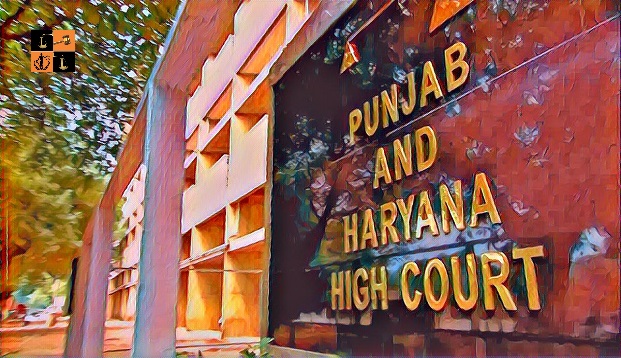
Recently, in a ruling emphasizing adherence to judicial protocol, the Punjab and Haryana High Court set aside a Gurugram Trial Court’s direction ordering the filing of a challan against a police officer, citing non-compliance with the mandatory procedure prescribed under Chapter 1, Part H, Rule 6 of the High Court Rules.
Justice Jasjit Singh Bedi held that the Trial Court’s directive, issued at the conclusion of a criminal trial, was “unknown to law” as it bypassed procedural safeguards and the principle of audi alteram partem.
The controversy stemmed from a 2010 case where the Trial Court, while convicting four police personnel in a corruption case, ordered the Home Secretary and the D.G., CID Vigilance to file a challan against other officers, including the then DSP, within two months. The Court had relied on allegations that the petitioner had allegedly “mercilessly beaten” the complainant and demanded Rs. 1 lakh, but had not been made an accused.
Challenging the order, the petitioner contended that the Trial Court issued adverse directions without hearing him and in clear breach of the procedural channel laid down in the High Court Rules. Senior counsel appearing for the officer argued that such action could only be taken either under Section 193 Cr.P.C. at the stage of cognizance or under Section 319 Cr.P.C. during trial, not after conviction of the co-accused.
Justice Jasjit Singh Bedi observed, “A perusal of The High Court Rules (Chapter 1 Part H Rule 6) (supra) would show that if the conduct of police officers and other officers is to be criticized or any action is to be taken against an officer, then the procedure mentioned in Rule 6 is to be followed i.e. a copy of the judgment is required to be sent to District Magistrate who would forward it to the Registrar, High Court, accompanied by a covering letter given in reference to the Home Secretary’s Circular dated 15.04.1936.”
The Court noted that no such procedure was followed in this case. While referring to the multiple precedents, it further held that before passing adverse remarks or directions against an official, the individual must be granted an opportunity to explain his position.
Reiterating the procedural lapses, the Bench stated that even if the Trial Court believed the petitioner ought to face trial, it “could have resorted to Section 193 Cr.P.C. at the time of taking cognizance or Section 319 Cr.P.C. during the recording of evidence,” but “none of these procedures were adopted.”
Holding the trial court’s course as procedurally invalid, Justice Bedi concluded that “the directions issued in Para 28 of the judgment dated 23.02.2022 and all other consequential proceedings arising therefrom stand quashed qua the petitioner.”
Case Title: Veer Singh DSP Vs. State of Haryana and anr
Case No: CRM-M-15604-2022 (O & M)
Coram: Justice Jasjit Singh Bedi
Advocate for Appellant: Sr. Adv. Vinod Ghai, Adv. Sandeep Kumar Yadav
Advocate for Respondent: AAG Vipul Sherwal, Legal Aid Counsel Sehaj Sandhawalia
Picture Source :




















