









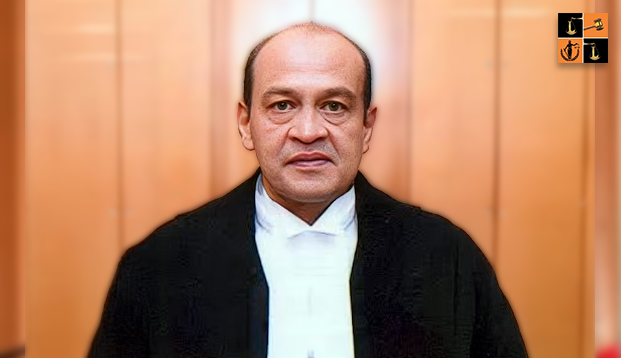
Recently, the Allahabad High Court dismissed a plea challenging the transfer of and oath-taking of Justice Yashwant Varma, holding that such matters are protected under Article 124(4) and Article 217(1)(b) of the Constitution. The Court observed that invoking writ jurisdiction in this context amounts to an impermissible interference with judicial tenure.
A public interest litigation was instituted before the Lucknow Bench of the Allahabad High Court by petitioner Vikas Chaturvedi, seeking the annulment of the transfer of Justice Yashwant Varma from the Delhi High Court to the Allahabad High Court. The petitioner also sought a direction restraining the Chief Justice of the Allahabad High Court from administering the oath of office to Justice Varma. Notably, the plea was filed during the pendency of the transfer, and by the time the matter was heard, Justice Varma had already been administered the oath of office and had assumed judicial duties in Allahabad. The context of the petition arose amidst media reports linking Justice Varma to an alleged incident involving the recovery of currency notes from his official accommodation in Delhi following a fire-related episode. However, no formal proceedings or judicial inquiry into that incident had been brought to the Court’s notice.
The petitioner contended that Justice Varma’s transfer raised serious questions regarding propriety and transparency, especially in view of the alleged circumstances surrounding the fire and purported cash recovery. He argued that the continuation of the transfer and oath process, without a preliminary inquiry, undermined public confidence in the judiciary. The petitioner further sought judicial intervention to prevent the oath-taking ceremony pending a full inquiry.
The Division Bench comprising Justice A.R. Masoodi and Justice Ajai Kumar Srivastava declined to interfere with the transfer or the oath-taking, emphasising the constitutional scheme governing judicial tenure and discipline. The Court remarked, “The protection to tenure is a part and parcel of independence of judiciary as an organ of the State. Therefore, invoking writ jurisdiction of this Court against the impugned action is virtually nothing but to question the tenure regarding which the proceedings on the floor of the two Houses of Parliament remain decisive but nothing has been brought to our notice attracting justiciability.” Further, the bench underscored the constitutional boundaries regarding such challenges, “The Court may hasten to add that the privilege of discussion lies within the precincts of the two Houses of Parliament and not beyond.”
The Court made it clear that any matter relating to the tenure or removal of a judge must proceed under the constitutional framework and not by way of PIL or writ proceedings invoking judicial review.
Dismissing the petition, the High Court concluded that the issues raised by the petitioner were non-justiciable and outside the purview of judicial intervention. The transfer, oath, and assumption of duties by a constitutional court judge were held to be valid and shielded by constitutional protections that are critical to maintaining the independence of the judiciary.
Source Link
Picture Source :



















