









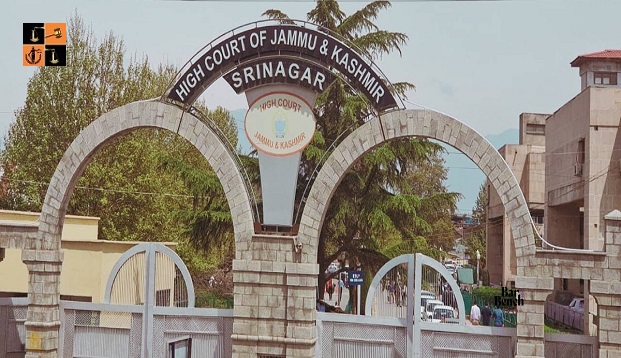
Recently, the Jammu and Kashmir High Court examined a long-pending land acquisition dispute where villagers challenged the compensation fixed for land acquired for the construction of a court complex. The matter became complex because the objection was filed when only a tentative assessment existed, long before the final award was issued. Whether such an objection could still trigger a statutory reference became the key question, turning the proceedings into a debate between strict technical compliance and substantial justice.
The case arose from the acquisition of agricultural land in a village for building a new court complex. After statutory notifications were issued, the Collector assessed compensation at a fixed rate per kanal with an additional percentage as Jabrana and released 80% of the assessed amount. Treating this tentative assessment as an award, the landowners accepted the money under protest and filed objections challenging the rate.
While the objections were still pending, the Government approved the same rate of compensation, and a final award was issued, which repeated the earlier assessment without alteration. No fresh objections were submitted after the final award, but the Collector later forwarded the earlier application as a reference under the land acquisition statute. The Reference Court refused to entertain it, holding the reference incompetent because the objection pre-dated the final award.
It was argued that the villagers genuinely believed the tentative assessment was an award, as they had already been paid a substantial part of the compensation after its issuance. Since the rate appearing in the tentative and final stages was identical, the earlier objection ought to be treated as one against the final award. They contended that substance must prevail over form and that their right to seek reference could not be defeated merely because the Collector chose to describe his assessment as “tentative.”
The opposing side maintained that the statute recognises only a final award under the land acquisition law, and an objection must strictly follow its issuance. Since no formal application was filed after the final award, there was no valid request for reference. The Reference Court, therefore, lacked jurisdiction to entertain a reference forwarded without a statutory foundation.
The High Court examined the statutory scheme and noted that the land acquisition law contains no concept of a “tentative award.” The only recognised award is the one made after Government approval. The Court observed that the villagers may have been misled because compensation was disbursed immediately after the tentative assessment.
The Court emphasized that“we feel that shorn of technicalities, the reference made by the Collector should be treated as valid” It further remarked that the earlier application was still pending when the final award was issued and that the rate of compensation had remained unchanged that “the application… must be treated as an application for reference against the rates fixed by way of final award.” These observations reflected the Court’s inclination toward a purposive interpretation rather than a narrow technical view, particularly where the conduct of the Collector contributed to confusion.
The High Court set aside the order of the Reference Court and directed that the reference be restored for adjudication on merits. It held that the earlier objection, though filed before the final award, should be treated as a valid request for reference because the compensation rate remained unchanged and the application was pending when the final award was made. The matter was remitted for fresh consideration accordingly.
Case Title: Abdul Khaliq Nengroo vs Collector Land Acquisition Pulwama, 2025
Case No.: CM(M) No. 154/2023
Coram: Hon’ble Mr Justice Sanjeev Kumar and Hon’ble Mr Sanjay Parihar
Counsel for the Petitioner: Adv. Malik Mushtaq, Adv. Younis Ahad
Counsel for the Respondent: AC Nowhabar Khan, Sr. AAG Mohsin Qadiri, Adv. Areeb Javed Kawoosa, adv. Shah Aamir
Read Judgement @LatestLaws.com
Picture Source : twitter.com




















