









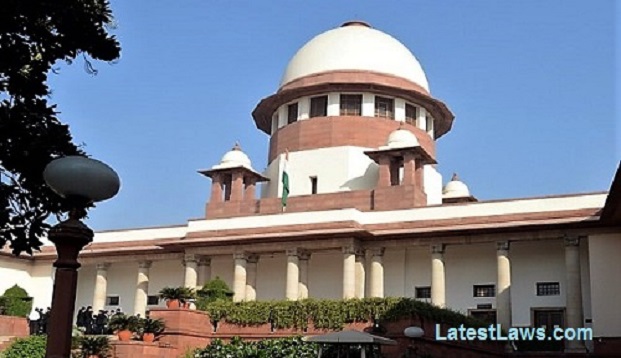
Recently, the Supreme Court raised critical questions about the legal validity of oral pronouncements of judgments, particularly whether such pronouncements could be considered as the final disposal of a case. The issue arose in a plea filed by former DGP Jaffar Sait, challenging the Madras High Court's decision to rehear his case for quashing a money laundering charge, despite an earlier oral ruling in his favour. The Court observed that clarity is needed on the implications of oral judgments in judicial proceedings.
Jaffar Sait had initially succeeded in the Madras High Court, which quashed the Enforcement Case Information Report (ECIR) against him based on the dismissal of the predicate offence. However, the High Court later recalled its order suo moto and reserved judgment after rehearing the matter. This led Sait to approach the Supreme Court, which subsequently stayed the High Court proceedings and sought a report from its registry.
Senior Advocate Sidharth Luthra, representing Sait, argued that the High Court's oral pronouncement of allowing the petition constituted a binding judgment. He contended that the suo moto recall of the order, without any request from the parties involved, lacked legal justification. Luthra further submitted that such actions disrupted the certainty of judicial orders and imposed unnecessary litigation.
The Apex Court bench of Justice Abhay S. Oka and Justice Manmohan, expressed concerns about the legal and procedural implications of oral pronouncements. Justice Oka remarked, “Whether such oral pronouncement that a petition is allowed amounts to disposal or not needs further examination.” He emphasised that the peculiar circumstances of the case required the Court to determine whether an oral judgment could stand as a final order. The bench highlighted procedural issues with the High Court's recall of the order. Justice Oka observed that the initial quashing of the ECIR was unsustainable due to a lack of reasoning. Simultaneously, the subsequent rehearing and recall of the order without notice to the parties also violated established principles of justice. He stated, “If the order is to be recalled, the parties must be heard. The earlier order must remain until the matter is fully addressed.”
The Court also referred to guidelines requiring detailed judgments to be uploaded within 2 to 5 days when only an operative part of the order is pronounced. Justice Oka pointed out challenges in adhering to such timelines in bail cases under NDPS and UAPA laws, where reasons must accompany the operative order. He noted that oral pronouncements without signed operative parts could not constitute a binding judgment. Justice Oka further observed, “This law will have to be laid down. Judges may need to distinguish between oral pronouncements with reasons to be recorded separately and those where even the operative part is unsigned.” He also raised concerns about the financial burden on litigants caused by recalling judgments, emphasising the disproportionate impact on smaller litigants.
The Court allowed both parties to file additional submissions and cited decisions for consideration. The bench scheduled the next hearing for January 8, 2025, with the interim stay on the High Court's proceedings remaining in effect. The Court underscored the necessity of establishing clear legal principles regarding oral pronouncements to ensure judicial consistency and fairness.
Picture Source :



















