









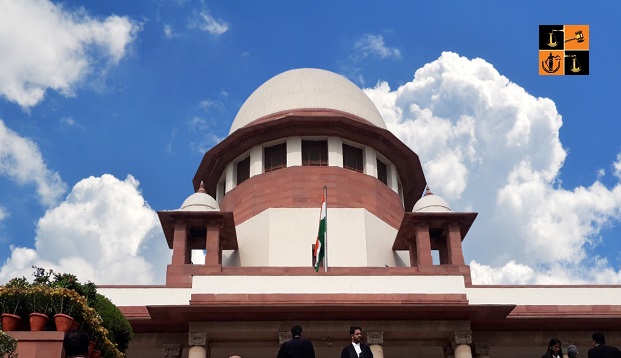
The Supreme Court of India, through the Division Bench of Justice Pankaj Mithal and Justice Prashant Kumar Mishra, expounded that "The Power of Attorney holder who has no knowledge regarding the transaction cannot be examined as a witness. The functions of the General Power of Attorney holder cannot be delegated to any other person without there being a specific clause permitting such delegation in the Power of Attorney; meaning thereby ordinarily there cannot be any sub-delegation".
Brief Facts
The dispute pertains to a road situated over land presently owned by the respondents. The two instant appeals challenge the two courses of proceedings initiated by the person seeking easementary rights and the other seeking declaration against any such rights.
Contentions of the Appellants
The appellants submitted that they were the owners of the land, having no alternative way of access to it except the road in dispute. They claimed to have acquired easementary rights by prescription, that of necessity, and more particularly through the sale deed, which records their right of way.
Observations of the Court
Power Attorney Holder as a witness
The Bench mentioned the evidence of the Power of Attorney holder of the appellants and observed regarding the legal position that a General Power of Attorney holder though acting on behalf of a person, cannot become a witness on behalf of the party represented by him, since no one can delegate his power to appear in the witness box.” The Supreme Court then cited Janki Vashdeo Bhojwani & Anr Vs. Indusind Bank Ltd. & Ors, 2004 Latest Caselaw 697 SC wherein it was held that a PoA holder was allowed to maintain a plaint on behalf of the person he represents, if the said PoA has personal knowledge of transaction in question. The Supreme Court accordingly clarified that “The Power of Attorney holder who has no knowledge regarding the transaction cannot be examined as a witness. The functions of the General Power of Attorney holder cannot be delegated to any other person without there being a specific clause permitting such delegation in the Power of Attorney; meaning thereby ordinarily there cannot be any sub-delegation.”
The Court clarified that in the absence of material showing an easementary right of the original owner over the disputed road, the said owner could not have transferred any right in favour of the appellants.
Easementary Rights in Law
The Supreme Court observed that “‘Easement’ is defined under Section 4 of the Indian Easements Act, 1882 to mean a right which the owner or occupier of a land possesses for the beneficial enjoyment of his land on the other land which is not owned by him, to do and continue to do something or to prevent and continue to prevent something being done on the said land. It may be pertinent to mention here that the land which is to be enjoyed by the beneficiary is called ‘Dominant Heritage’ and the land on which the easement is claimed is called ‘Servient Heritage’. The easementary right, therefore, is essentially a right claimed by the owner of a land upon another land owned by someone else so that he may enjoy his property in the most beneficial manner.”
The Apex Court further pointed towards Section 15 of 1882 Act and explained that “for acquiring any easementary right by prescription, the said right must have been peaceably enjoyed in respect of the servient heritage without any interruption for over 20 years.”
The Supreme Court noted that in the original plaint, no one specifically claimed of themselves or their predecessor-in-interest enjoying easementary rights on the disputed road for over 20 years, but alleged of using and managing the same since ‘last many years’, which was not sufficient to prove 20 years. The Court remarked that “Last many years would indicate use of the said rasta for more than a year prior to the suit or for some years but certainly would not mean a period of 20 or more years.” The Apex Court found the pleadings falling short of the legal requirement for acquiring easementary rights by prescription.
The Supreme Court covered another aspect and stated that, “easementary right by necessity could be acquired only in accordance with Section 13 of the Act which provides that such easementary right would arise if it is necessary for enjoying the Dominant Heritage.” Looking at the findings of the Courts below, the Apex Court did not find the appellants entitled to easementary right by necessity.
Decision of the Court
The Supreme Court rejected the appellants’ claim of having acquired easementary right over the disputed land in any manner and thereby dismissed the instant appeals.
Case Title: Manisha Mahendra Gala & Ors. vs. Shalini Bhagwan Avatramani & Ors.
Case No.: Civil Appeal No. 9642 of 2010
Citation: 2024 Latest Caselaw 226 SC
Coram: Justice Pankaj Mithal and Justice Prashant Kumar Mishra
Read Judgment @LatestLaws.com
Picture Source :




















