









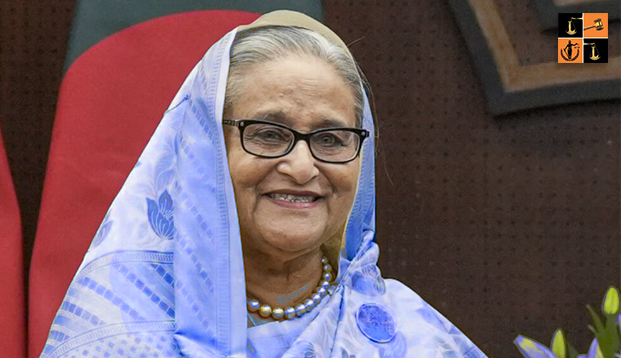
A Dhaka Court sentenced former Bangladesh Prime Minister Sheikh Hasina to death after finding her guilty on multiple charges of crimes against humanity arising from the widespread student-led protests that toppled her government in 2024. The ruling, delivered by Judge Golam Mortuza Mozumder, held Hasina responsible for incitement, issuing orders that allegedly led to killings, and failing to prevent violent excesses during the mass uprising.
The 78-year-old former leader, who fled Bangladesh following her government’s collapse, has been living in self-exile in New Delhi under India’s protection. Her son, Sajeeb Wazed, recently confirmed that India continues to offer her full security at a confidential safe location, extending treatment “akin to that of a head of state.”
In earlier written responses to the media, Hasina expressed gratitude to India for providing refuge, noting that she felt safer in Delhi than she had in Bangladesh under the current interim administration.
Hasina left Bangladesh in August 2024 amid nationwide unrest that resulted in nearly 1,400 reported deaths during clashes between security forces and protesters. The Muhammad Yunus-led interim government later suspended the Awami League, accusing the party of endangering national security and pointing to pending war-crimes investigations against several senior figures.
In an interview to Reuters earlier, Hasina stated she would only return home when a “legitimate government” was in power and when “constitutional order is genuinely restored.” She made it clear she would not go back under any administration formed after elections that excluded her party.
Responding to the judgment, Hasina issued a strong statement dismissing the charges as fabricated. She called the trial process “biased and politically motivated,” maintaining that she would willingly participate in proceedings only before a tribunal she considers independent and impartial. “I am not afraid to face accusations in a forum where evidence is examined fairly,” she said, alleging that the current judicial process lacks credibility.
Diplomatic tensions between New Delhi and Dhaka have escalated since the interim government took charge. India has expressed concern over rising attacks on minorities, particularly Hindus, while Bangladesh has formally sought Hasina’s extradition, a request India has not acted upon.
The strain deepened recently when the Bangladesh foreign ministry summoned India’s Deputy Chief of Mission in Dhaka, objecting to Hasina’s interviews with Indian news outlets. This reaction stood in contrast to Dhaka’s treatment of British and French media, which had interviewed Hasina earlier without provoking diplomatic protests.
Compounding the controversy, Shafiqul Alam, spokesperson for the interim administration, publicly criticised the Indian journalists who interviewed Hasina, describing them as “Indian bootlicking reporters”, remarks that attracted strong diplomatic backlash.
Picture Source :




















