









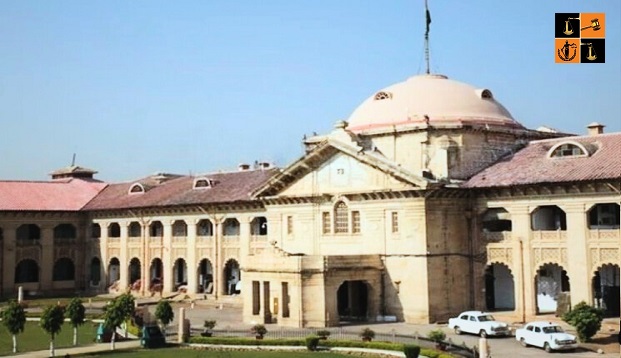
Recently, in a significant pronouncement examining the limits of executive discretion in land acquisition, the Allahabad High Court scrutinised whether the State could lawfully invoke the urgency clause under Section 17 of the Land Acquisition Act, 1894, to bypass the statutory hearing of objections under Section 5A. The case revolved around the Ghaziabad Development Authority’s acquisition of land for a residential project under a planned development scheme, raising the question, can mere apprehension of encroachment or invocation of “public purpose” justify dispensing with the landowners’ right to be heard? Read on to understand how the Court dissected the contours of urgency, procedural fairness, and constitutional protection under Article 14 and Article 300A of the Constitution.
Brief Facts:
The case stemmed from land acquisition proceedings initiated in 2004 by the Ghaziabad Development Authority (GDA) for the construction of a residential colony under a planned development scheme. Notifications were issued under Section 4(1) and later under Section 6 of the Land Acquisition Act, 1894, declaring the acquisition of land for a public purpose. Subsequently, the urgency clause under Section 17(1) and 17(4) of the Land Acquisition Act, 1894 was invoked, thereby dispensing with the statutory requirement of hearing objections under Section 5A. The acquisition was earlier challenged before the High Court, which allowed the petitions. However, on appeal, the Supreme Court remanded the matter to the Court for fresh consideration, observing that certain relevant documents had not been placed before it earlier. Following the remand, the present proceedings came before the Court to examine whether the invocation of the urgency clause under Section 17 was legally sustainable and whether the statutory procedure and planning approvals mandated under the National Capital Region Planning Board Act, 1985, had been duly complied with.
Contentions of the Petitioner:
The Petitioners contended that the invocation of the urgency clause under Section 17 was illegal and arbitrary, as the acquisition was for planned development, which by its very nature does not require immediate possession. It was submitted that no real urgency existed to justify depriving landowners of their statutory right to object under Section 5A. It was further argued that the approvals under the National Capital Region Planning Board Act, 1985, had not been validly obtained, and hence, the acquisition itself lacked legal foundation. The Petitioners relied on several Supreme Court precedents holding that acquisition for development projects, particularly residential or urban planning schemes, cannot be treated as urgent merely because of administrative convenience. Further, the Petitioner asserted that the invocation of Section 17 was a misuse of discretionary power that violated procedural safeguards and deprived landowners of a meaningful opportunity to be heard.
Contentions of the Respondent:
The Respondents, representing the State Government and GDA, defended the acquisition, asserting that the urgency powers were exercised in good faith and in accordance with law. They contended that the land was urgently required for planned public development, and a delay in acquisition would have led to encroachments and complications in implementing the scheme. It was submitted that the threat of illegal occupation posed a real and pressing concern, warranting the invocation of Section 17. The Respondents also argued that adequate material existed before the competent authority to justify satisfaction regarding urgency, and that such satisfaction, being subjective in nature, was not open to judicial review except in cases of malafide or manifest arbitrariness.
Observation of the Court:
The Division Bench of Justice Manoj Kumar Gupta and Justice Anish Kumar Gupta emphasized that the invocation of the urgency clause under Section 17(1) and 17(4) of the Land Acquisition Act, 1894 must meet a very high threshold. The Court reiterated that urgency powers are exceptional and cannot be exercised casually, observing that “the power under Section 17 could be invoked only in cases of urgency or unforeseen emergency. As the provision is an exception to the normal procedure and takes away valuable right of the affected person to object to the proposed acquisition, therefore, exercise of power under the said provision requires a greater degree of care and circumspection.”
The Bench emphasised that the right to object under Section 5A is a substantial statutory right embodying the principle of audi alteram partem, protected under Article 14 and Article 300A of the Constitution. Accordingly, it held that the mere existence of public purpose or apprehension of encroachment cannot justify dispensing with such a right. Referring to established Supreme Court precedents, the Court reaffirmed that “acquisition of land for planned development is a public purpose, it has been held time and again that the same itself is not sufficient to warrant exercise of power under Section 17 of the Act.”
The Court further observed that planned development schemes are executed over several years, and hence invoking urgency in such cases was neither warranted nor bona fide. It remarked, “The present Scheme, which pertains to the development of a residential colony under planned development programme, was not of such urgency that a few months’ delay occasioned by the process of the objections under Section 5-A would have jeopardised the Scheme itself.”
Clarifying the scope of judicial review, the Bench noted that while the opinion of the Government under Section 17 is subjective, it is not beyond scrutiny. The State must demonstrate tangible and relevant material justifying the urgency. The Court stated, “mere existence of public purpose is not sufficient to invest the authority with power to automatically invoke Sections 17(1) and 17(4) of the Act unless urgency is of such amplitude that the same in itself could form basis to dispense with the enquiry.”
Consequently, the Bench found that the delay of more than four years between the initial resolution and the Section 6 notification, combined with the limited scale and non-urgent nature of the project, clearly negated any genuine urgency. The Court held that the invocation of Section 17 was arbitrary, devoid of supporting material, and amounted to a misuse of statutory power.
The decision of the Court:
In light of the foregoing discussion, the Court quashed the notifications issued under Section 17 of the Land Acquisition Act, 1894, holding that dispensing with the inquiry under Section 5A was illegal. Considering that portions of the land had already been developed, the Court balanced the interests of the landowners and the Ghaziabad Development Authority (GDA), permitting GDA to retain the developed areas on payment of compensation under the 2013 Land Acquisition Act, computed as on 1 January 2014, while directing that unretained land shall revert to the original owners free from all encumbrances.
Case Title: Hatam Singh and Ors. Vs. State of U.P. Thru Secy. Housing and Urban Planning and Anr
Case No: WRIT - C No. - 4986 of 2005
Coram: Hon’ble Mr. Justice Anish Kumar Gupta and Hon’ble Mr. Justice Manoj Kumar Gupta
Advocate for Petitioner: Advs. Pankaj Dubey, Pradeep Kumar Sinha, R D Tiwari, and Shiv Kant Mishra
Advocate for Respondent: Sr. Adv. Mahesh Chandra Chaturvedi, Advs. Ashwani K. Mishra, Jagannath Maurya, Mahendra Pratap, Rajesh Dutta Pandey, Tejasvi Misra, and Ved Byas Mishra
Read Judgment @Latestlaws.com
Picture Source :




















