









February 11, 2019:
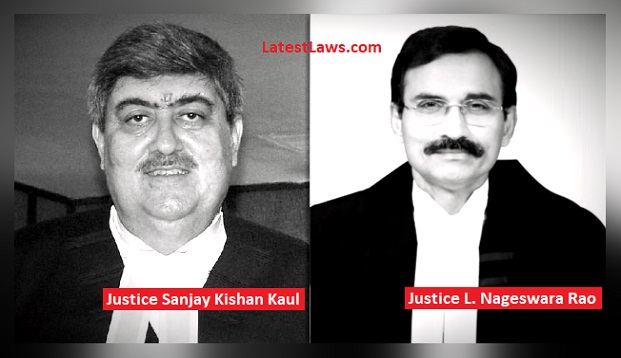
On Monday, the Bench comprising of Justices L. Nageswara Rao and Sanjay Kishan Kaul of Hon'ble Supreme Court while deciding an appeal filed by the State of Uttar Pradesh observes that 'no overt act is alleged against the deceased by which it can be stated that the Respondent was provoked'.
The Trial Court held that the Respondent (Faquirey) had fired at the deceased from his pistol as he had a doubt that the deceased was visiting his house with an evil eye on his wife. Therfore, the respondent was convicted under Section 302 IPC by the trial court and sentenced to undergo life imprisonment.
When the Appeal was filed before the high court, it observed that the intervention of the deceased in the quarrel between the two factions led to the Respondent losing his self control. The High Court was of the opinion that this resulted in grave and sudden provocation.
Observing so, the High Court converted the conviction of the Respondent from Section 302 IPC to Section 304 Part I IPC.
The Hon'ble Bench of the Supreme Court observed, "there is no dispute that the shot fired from the pistol by the Respondent is due to the grudge that he had against the deceased."
According to Exception I to Section 300 IPC, culpable homicide is not murder if the offender causes the death of the person who gave the provocation, whilst deprived of the power of self-control by grave and sudden provocation. It would be relevant to refer to the First Proviso to Exception I which provides that the provocation should be one which is not sought or voluntarily provoked by the offender as an excuse for killing or doing harm to any person.
SC asserts, "....no overt act is alleged against the deceased by which it can be stated that the Respondent was provoked. From the proved facts of this case it appears that the provocation was voluntary on the part of the offender. Such provocation cannot come to the rescue of the respondent to claim that he is not liable to be convicted under Section 302 IPC."
According to the Bench, the provocation in question was voluntary on the part of the offender. Such provocation cannot come to the rescue of the Respondent to claim that he is not liable to be convicted under Section 302 IPC.
The Bench held, "the High Court committed a serious error in converting the conviction of the Respondent from under Section 302 IPC to under Section 304 Part I IPC, without proper appreciation of the scope of Section 300 IPC..... the judgment of the High Court is set aside and the judgment of the Trial Court convicting the Respondent under Section 302 IPC and sentencing him to life imprisonment is restored."
Read Judgment @ LatestLaws.com
THE STATE OF UTTAR PRADESH Vs FAQUIREY 11.02.2019(Downloadable PDF)
Picture Source :




















