









In one of its recent judgment, the Supreme Court has observed that mere intoxication isn't a mitigating factor when the accused was not in a highly inebriated condition.
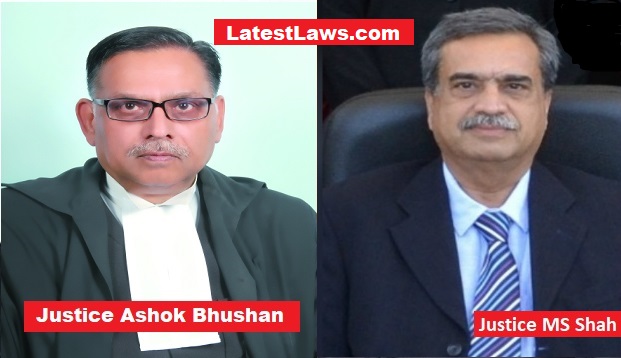
The judgement came out when the bench of comprising of Justice Ashok Bhushan and Justice MR Shah was dealing with a contention that the accused was under the influence of liquor while he poured kerosene and threw matchstick on his deceased wife and set her ablaze and thus he wasn't conscious enough of what he was doing.
The Learned Counsel on his side contended that he tried to save the deceased and poured water to save her.
It was said that the accused acquired injuries as well while doing so.
The Court referred to the decision in Kalu Ram v. the State of Rajasthan (2000) 10 SCC 324 relied on by the accused,
It thus observed:
The Court then also referred to the judgments in Santosh v. State of Maharashtra (2015) 7 SCC 641 and Bhagwan Tukaram Dange v. State of Maharasthra (2014) 4 SCC 270 and dismissed the appeal
On these two above references, it further observed:
The judgement has been passed by Justice Ashok Bhushan and Justice MR Shah on 13-12-2019.
Read Judgement Here:
Share this Document :
Picture Source :



















