









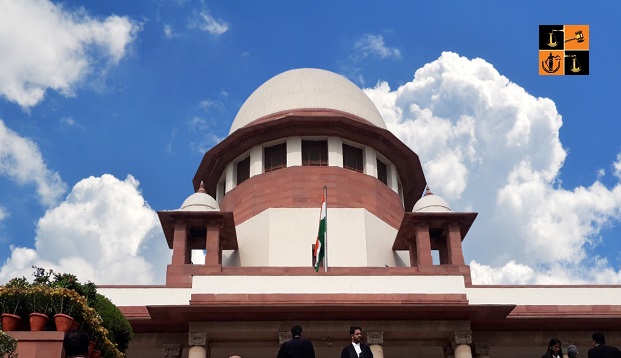
The Supreme Court clarified that petitions challenging the Waqf (Amendment) Act, 2025, will be heard by a Bench led by Justice BR Gavai instead of Chief Justice Sanjiv Khanna, citing the need for detailed hearings and the Chief Justice’s impending retirement. The Court noted that even interim relief would require substantial deliberation.
The petitions arise from the recently enacted Waqf (Amendment) Act, 2025, which received Presidential assent on April 5, following its passage through the Lok Sabha and Rajya Sabha on April 3 and April 4, respectively. The amendment significantly modifies the Waqf Act, 1995, particularly in terms of regulating religious endowments, waqf registration, and the definition of waqf properties.
Following its enactment, several petitions were filed before the Supreme Court, including by prominent political figures such as Congress MP Mohammad Jawed and AIMIM MP Asaduddin Owaisi. These petitions challenged the constitutional validity of the Act, alleging it discriminates against the Muslim community and infringes their rights to manage religious affairs guaranteed under Article 26 of the Constitution.
The petitioners argued that the amendment selectively targets Muslim religious properties by removing the concept of "waqf by user" from the statute. They submitted that this omission adversely affects the religious character of historical mosques, graveyards, and charitable institutions that have existed for centuries without formal waqf deeds. According to them, such a move disrupts the community’s long-standing practices and undermines constitutionally protected religious freedoms.
In opposition, the Central Government defended the legislation by submitting that the amendment aims to curb widespread misuse of waqf provisions. It cited a 116% increase in “auqaf area” after the 2013 amendment as justification for reform. The government contended that there has been rampant encroachment on private and public lands under the guise of waqf, despite a statutory mandate for registration since 1923. The exclusion of "waqf by user," according to the Centre, does not violate the right to dedicate property for religious purposes but merely brings the process in line with statutory formalities.
Addressing concerns about the inclusion of non-Muslim members in the Central Waqf Council and State Waqf Boards, the government submitted that these bodies only perform advisory and supervisory functions in secular matters. The inclusion, it was argued, is minimal and intended to promote inclusivity without infringing on the religious autonomy of the Muslim community.
When the matter came up before the bench headed by Chief Justice Sanjiv Khanna, which also included Justice PV Sanjay Kumar and Justice KV Viswanathan, the Court remarked, “We have gone through the counter and rejoinder. Yes, some points have been raised on registration and some figures which are disputed by petitioners. It needs to be dealt with. I do not want to reserve any judgment or order even in interim stage. This matter has to be heard on any reasonable day. It will not be before me.”
Solicitor General Tushar Mehta, appearing for the Centre, respectfully acknowledged the timing constraints, stating, “We would have loved to pursue your lordship as every contention has an answer... but we cannot embarrass you because there is no time.”
The Apex Court, recognising the complexity and importance of the matter, ordered that the case be listed before a bench headed by Justice BR Gavai for both interim and final adjudication. The matter is expected to be taken up later in the week, ensuring that the issues raised receive detailed judicial consideration.
Picture Source :



















