









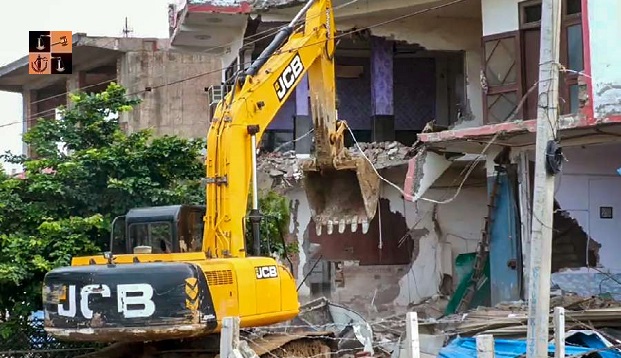
Recently, the Supreme Court addressed the issue of arbitrary demolitions by the executive, declaring that snap demolitions of properties, particularly those of accused or convicted individuals, are unlawful without due process. The Court emphasized that such actions violate fundamental rights, including the right to life, shelter, and the constitutional protections granted to the accused. It stressed that the executive, which holds power as a trustee of citizens, cannot act as a judge to determine guilt and impose punishment through the demolition of properties. The Court outlined specific safeguards to prevent arbitrary demolitions and ensure the protection of individuals’ rights.
The Case arose in the context of the controversial practice of “bulldozer justice”, where public authorities engaged in swift demolitions of properties owned by individuals accused or convicted of crimes. The Court noted that this practice had been allowed to continue across several states, despite its stark opposition to constitutional principles. The judiciary condemned this practice as undermining the rule of law and noted that even those sentenced to capital punishment are entitled to constitutional safeguards, including the right to appeal.
The Counsel for the petitioner argued that the demolitions were arbitrary and violated the basic principles of natural justice, denying citizens their right to shelter and the opportunity to contest the actions taken against them. The petitioner contended that these demolitions were not only excessive but also unlawful, as they were carried out without due process or adequate notice. Whereas, the respondent counsel defended the demolitions, asserting that such measures were justified in certain circumstances, particularly when dealing with unlawful construction or illegal activities. However, they failed to provide sufficient evidence to justify bypassing due process or the constitutional rights of individuals.
The Supreme Court's observations centred on the principle of separation of powers, a cornerstone of the Indian Constitution. The Court emphasized that the executive branch, responsible for enforcing laws, cannot act as the judiciary. Specifically, public authorities do not have the power to declare an individual guilty or impose punishment by demolishing their properties. The Court reminded that such powers are reserved exclusively for the judiciary. This assertion was made in light of the increasing trend of executive overreach in ordering demolitions without following due legal processes. The Court also highlighted the violation of constitutional rights through these demolitions. It pointed out that the arbitrary demolition of properties, especially homes of those accused of crimes, infringed upon the right to life and personal liberty under Article 21 of the Constitution. This includes the right to shelter, which is a fundamental aspect of an individual’s dignity. The Court specifically questioned how the state could justify such demolitions when even those convicted of the most serious crimes, like capital punishment, are entitled to constitutional safeguards, including the right to a fair trial and appeal.
To address these issues the Court issued directives aimed at curbing arbitrary demolitions. It ruled that a 15-day notice period must be given before any demolition takes place. This would allow the affected parties the opportunity to challenge the order or vacate the premises voluntarily. The Court reasoned that a short waiting period would not cause significant harm to public authorities and would ensure that the affected individuals had the opportunity to assert their rights. The decision reinforced the importance of respecting due process and ensuring fairness in executive actions. The Court introduced the concept of accountability for public officers. It made it clear that officials who failed to adhere to the new guidelines would be personally liable to pay compensation for their actions. This was a strong message to ensure that public authorities cannot act with impunity and must be held accountable for their decisions. The Court’s directive aimed to prevent further violations of citizens’ rights and ensure that executive actions are conducted within the limits of the law.
Further, the Court made specific exceptions to its decision. It clarified that its ruling would not apply in cases where a court of law had issued a demolition order or where structures were found to be illegally built in public spaces. These exceptions were meant to ensure that the judgment did not interfere with lawful demolitions authorized by the judiciary or actions related to public safety.
Picture Source :



















