









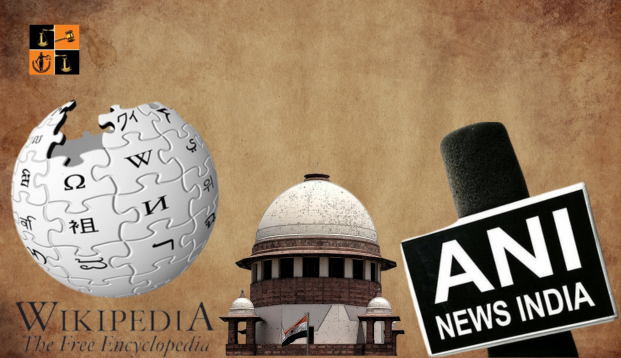
The Supreme Court was seized of a matter involving Asian News International (ANI) and the Wikimedia Foundation concerning allegedly defamatory content published on Wikipedia. The matter arose from an interim relief granted by the Delhi High Court, directing Wikipedia to remove certain statements made about ANI on its platform. These statements allegedly portrayed ANI as a "propaganda tool" of the current central government.
The suit filed by ANI before the Delhi High Court alleged that the Wikimedia Foundation, which hosts Wikipedia, permitted anonymous users to make and retain defamatory edits on ANI’s page. On April 2, the single judge of the High Court directed the removal of the impugned content. This order was subsequently affirmed by the Division Bench upon appeal.
Before the Apex Court, the counsel representing ANI argued that the content hosted on the Wikipedia platform was defamatory in nature and continued to remain publicly accessible despite ANI’s objections. It was further contended that the Wikipedia model, which permits unverified and anonymous edits, enables unchecked dissemination of false and damaging statements without accountability. The petitioner maintained that such publication violated its reputation and sought immediate removal of the objectionable content. While the counsel for the respondents, including the Wikimedia Foundation, defended the open-edit model of Wikipedia, it was also highlighted that the matter involved complex questions of intermediary liability, requiring a nuanced determination under the Information Technology Act, 2000.
The Bench comprising Justice Abhay S. Oka and Justice Ujjal Bhuyan did not delve into the merits of the dispute but focused on the procedural aspect. The Court observed that the orders passed by the Division Bench of the High Court needed to be set aside to ensure procedural propriety and allow for adjudication before the appropriate forum. The Court further remarked, “We deem it appropriate to leave the question of interim relief open to be decided afresh by the learned Single Judge before whom the suit is pending.”
Accordingly, the Supreme Court allowed ANI the liberty to approach the Single Judge of the Delhi High Court once again for seeking interim protection in accordance with law. In conclusion, the Apex Court set aside the prior orders of the Delhi High Court and restored the matter to its initial stage, thereby enabling ANI to pursue appropriate interim relief through due process.
Picture Source :




















