









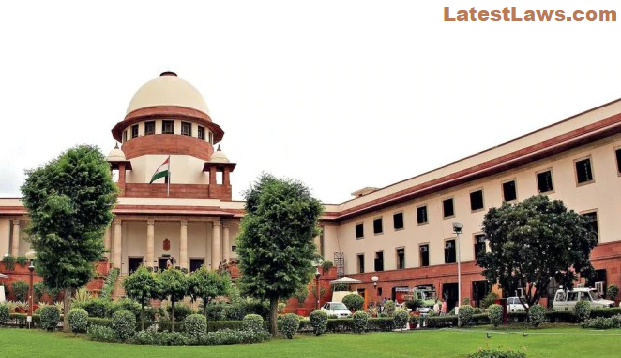
On 15th Sep 2020, the Supreme Court of India, in the case of Jeet Ram v. The Narcotics Control Bureau, Chandigarh comprising of Justice Ashok Bhushan, Justice R. Subhash Reddy, and Justice M.R. Shah held that the where accused offers false answers in examination under Section 313 Cr.PC, same also can be used against him.
Factual Background
Accused was found with the possession of Charas. When asked, the appellant has replied – there is nothing in it. Then notice under Section 50 of the NDPS Act was given to the accused and the appellant has consented to search the same by the NCB officials. Thereafter the bag was searched and the officers have found 13 Kg. of charas. The charas was divided into two portions of 6½ Kg. each and two packets were made which were marked as ‘X’ and ‘Y’ respectively.
Further, in the statement recorded as contemplated under Section 67 of the NDPS Act, the appellant has admitted that for various reasons he was indulged in the trade of charas to increase his income. Thereafter a Panchnama was drawn which was signed by the appellant and he was arrested on 19.06.2001. The two samples of ‘X1’ and ‘Y1’ along with a letter were sent through PW-2 Hayat Singh to Chemical Analyst for analysis, who has vide his report opined that both the samples were of charas. On the said basis, the appellant-accused was charged and challan for the offence under Section 20 of the NDPS Act.
Appellant Contentions & Submissions
The Appellant submits before the court that the
It is mainly contended by learned counsel for the appellant that the well-considered judgment of the trial court acquitting the appellant from the charge, is reversed by the High Court without recording cogent reasons. It is submitted that having regard to evidence on record, the view taken by the trial court was possible to view, and even assuming that another view is possible, the same is no ground to interfere with the judgment of the trial court.
He submitted that the High Court has committed an error in relying on the testimony of official witnesses to hold the appellant-accused guilty of the charge
Additional Solicitor General Submissions
On the other hand, it is argued by Sri Aman Lekhi, learned Additional Solicitor General appearing for the respondent-NCB, that the findings recorded by the trial court are erroneous and contrary to the evidence on record, as such, it is always open to the High Court in appeal to reappreciate the evidence and set aside such erroneous view taken by the trial court. It is submitted that though the prosecution has proved its case beyond a reasonable doubt, on mere surmises and presumptions the trial court has found that the case of the prosecution is unnatural and the same is correctly overturned by the High Court.
Supreme Court Findings & Judgment
The Supreme Court in its findings stated that the view taken by the trial court was not at all possible, having regard to the evidence on record and findings which are erroneously recorded contrary to the evidence on record was rightly set aside by the High Court.
As submitted by the learned Additional Solicitor General appearing for the prosecution, it is always open to the appellate court to reappreciate the evidence, on which the order of acquittal is founded, and appellate courts are vested with the powers to review and come to their own conclusion.
Further, the Supreme Court held that the, “It is also fairly well settled that where accused offers false answers in examination under Section 313 Cr.PC, same also can be used against him. The further onus was on the appellant to explain the possession and in absence of the same being discharged, the presumption under Section 54 of the NDPS Act also will kick in.”
The Court in its judgment stated that the judgment of the High Court does not suffer from any infirmity so as to interfere with the judgment of conviction. At the same time we find force in the submission of the learned counsel for the appellant in sentencing the appellant for 15 years’ rigorous imprisonment with a fine of Rs.2,00,000/-. Having regard to peculiar facts and circumstances of the case and in view of the fact that the incident occurred in the year 2001 and as the appellant claimed to be a priest in the temple, who is now aged about 65 years, we deem it appropriate that it is a fit case to modify the sentence imposed on the appellant. Accordingly, the sentence awarded on the appellant is reduced to a period of 10 (ten) years, while maintaining the conviction and the penalty as imposed by the High Court.
The order of sentence dated 31.12.2012 passed by the High Court stands modified. The appeal is partly allowed to the extent indicated above.
Read Judgment @Latestlaws.com
Share this Document :Picture Source :



















